
Introduction
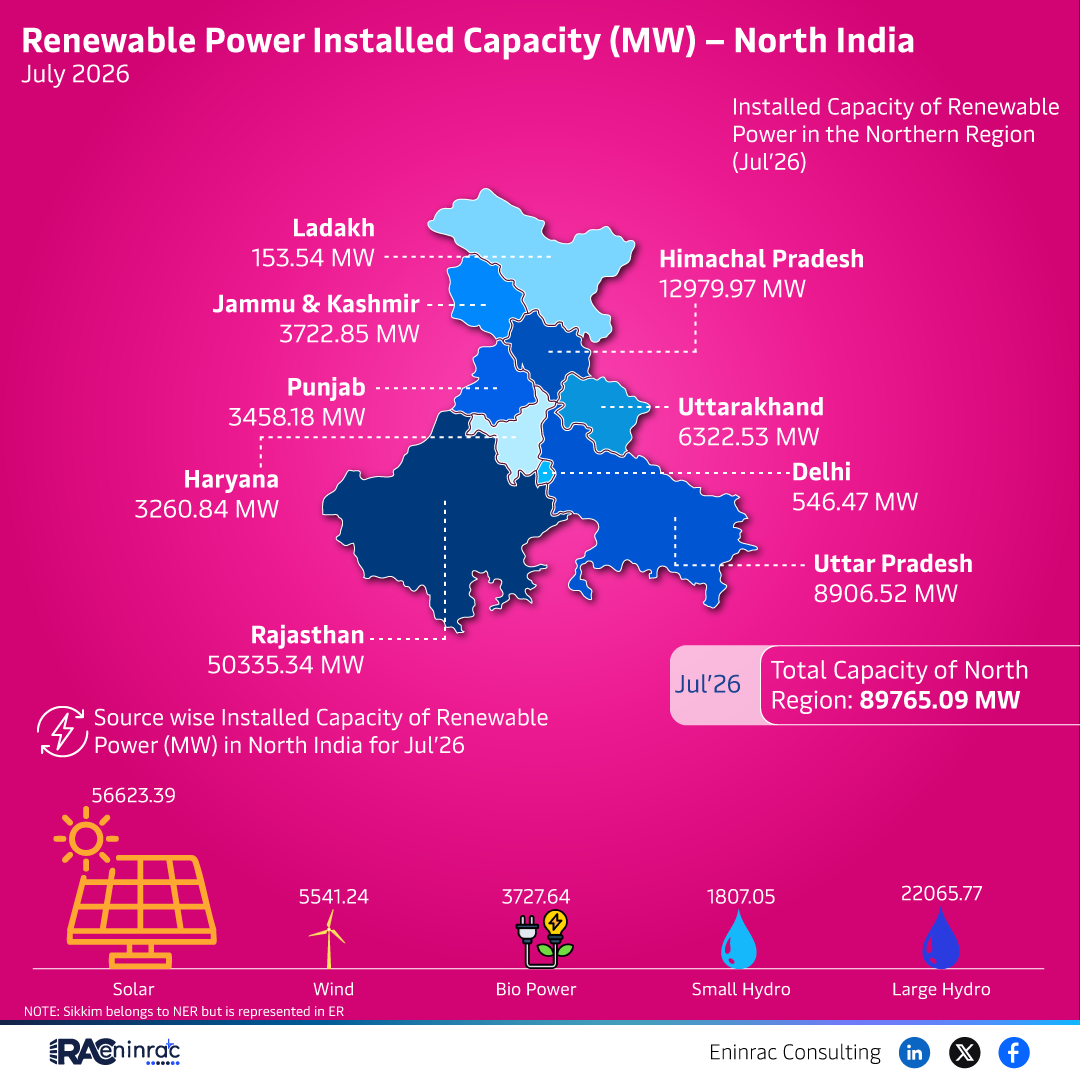
The renewable power installed capacity in North India reached a notable milestone in August 2026, with a combined 56,623 MW across the region. This figure reflects rapid expansion of solar, wind, biomass and hydro resources in key northern states such as Rajasthan, Uttar Pradesh, and Himachal Pradesh. Understanding these numbers helps investors, policymakers and energy professionals gauge market growth, regional disparities and future development opportunities.
What Does the Data Reveal About This Topic?
What does the data reveal about renewable capacity in North India? The dataset shows Rajasthan leading with over 50,335 MW, accounting for roughly 89 % of the region’s total capacity. Uttar Pradesh follows with 8,907 MW, while Himachal Pradesh, Uttarakhand and Haryana contribute between 3,200 MW and 6,300 MW each. Smaller states like Ladakh and Jammu & Kashmir add under 400 MW, highlighting a concentration of large‑scale projects in the western and central belts.
State‑wise Comparison of Renewable Power Sources
When the installed capacity is broken down by technology, solar accounts for roughly 5,541 MW and wind for 3,728 MW, together supplying over 15 % of North India’s renewable mix. Biomass contributes a modest 2‑9 MW, while small and large hydro plants fill the remainder, the exact split not disclosed in the source. Rajasthan’s dominance is driven primarily by large‑scale solar farms and wind corridors, whereas Uttar Pradesh’s capacity is a blend of solar rooftop projects and biomass units. Himachal Pradesh and Uttarakhand, nestled in the Himalayas, lean heavily on hydro, especially small hydro installations that complement their rugged terrain.
Impact on Sectors and Industries
The surge in renewable capacity reshapes the energy landscape for multiple sectors. Power generators gain access to new tariff structures and green certificates, while equipment manufacturers see heightened demand for solar panels, wind turbines and hydro turbines. Financial institutions are revising risk models to accommodate project‑level financing, and state governments are drafting incentives to attract private investment. Consumers benefit from reduced reliance on fossil‑fuel imports, leading to lower electricity tariffs in the long run. Moreover, the data signals opportunities for ancillary services such as energy storage, grid modernization and EV charging infrastructure across the northern belt. The renewable surge also drives job creation in construction, operation and maintenance, supporting regional employment goals.
Key Takeaways
- Rajasthan holds about 89 % of North India’s renewable capacity.
- Solar and wind together supply over 15 % of the region’s power mix.
- Uttarakhand and Himachal Pradesh rely heavily on hydro resources.
- Small states contribute less than 1 % of total installed capacity.
- Biomass remains a marginal source with single‑digit megawatt figures.
- Growth trends attract investors, policymakers and infrastructure developers alike.
FAQs
Which state leads renewable capacity in North India?
Rajasthan dominates with roughly 50,335 MW, representing about 89 % of the total installed renewable capacity across the northern region as of the August 2026 reporting period.
What is the total renewable installed capacity for North India?
The combined installed capacity reaches 56,623 MW, covering solar, wind, biomass and hydro assets across all northern states in August 2026.
How does solar capacity compare to wind in the region?
Solar contributes about 5,541 MW while wind adds approximately 3,728 MW, making solar the larger contributor but both together still represent a modest share of the overall mix.
Which technologies are most prominent in Himachal Pradesh and Uttarakhand?
Both states rely heavily on hydro power, especially small hydro projects that fit the mountainous terrain, with limited solar and wind installations.
Why is biomass generation so low in North India?
Biomass capacity remains under 10 MW due to limited feedstock availability, higher costs, and greater focus on solar, wind and hydro projects in the region.