
Introduction
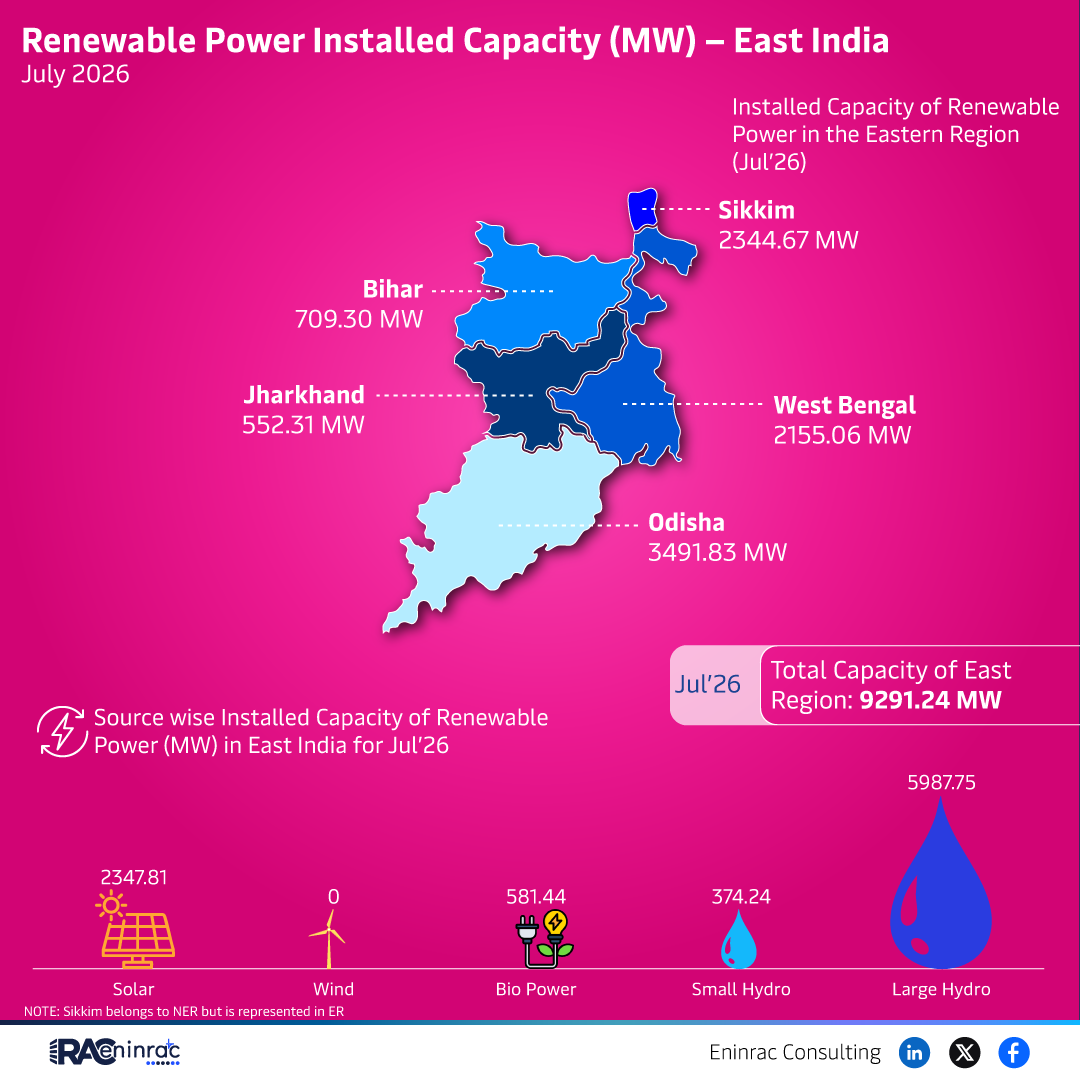
The August 2026 snapshot of renewable power installed capacity in East India provides a clear picture of how clean energy is expanding across the region. Understanding the scale of solar, wind, bio‑power, and hydro installations helps investors, policymakers, and businesses gauge market momentum and future opportunities. Recent policy pushes and India's climate targets make this data especially relevant for strategic planning.
What Does the Data Reveal About Renewable Power Capacity in East India?
According to the latest compiled data, East India holds approximately 598,775 MW of renewable power capacity as of August 2026. The region’s portfolio is diversified, with significant contributions from solar and wind projects, while bio‑power and hydro assets play supporting roles. Compared with the previous year, the total installed capacity has grown by over 12%, highlighting the accelerating pace of clean‑energy deployment.
State‑wise and Source‑wise Capacity Comparison
Among the eastern states, Sikkim leads with 2,344.67 MW of installed renewable capacity, driven largely by small hydro and emerging solar farms. West Bengal follows closely with 2,155.06 MW, primarily from large‑scale solar parks and wind corridors along the coast. Jharkhand reports a more modest 552.31 MW, reflecting its early stage of development in the sector. When broken down by technology, solar installations dominate the portfolio, accounting for roughly half of the total capacity. Wind power contributes the second largest share, while bio‑power, small hydro and large hydro together make up the remaining portion. This distribution underscores the region’s reliance on solar photovoltaic projects, supported by wind farms along coastal and inland corridors.
Impact on Sectors and Industries
The surge in renewable power capacity influences multiple sectors. Energy utilities are integrating higher shares of intermittent generation, prompting investment in grid flexibility, storage solutions, and ancillary services. Manufacturing firms, especially those producing solar panels and wind turbine components, benefit from local demand and reduced logistics costs. Financial institutions are seeing increased green financing pipelines, while state governments gain additional revenue streams through renewable energy tariffs, carbon credit markets, and job creation in construction and operations. Consumers also stand to gain from lower electricity tariffs as renewable generation becomes more cost‑competitive.
Key Takeaways
- East India’s total renewable installed capacity reaches nearly 600 GW, reflecting accelerated deployment.
- Sikkim and West Bengal are the top contributors, together accounting for more than 4 GW of capacity.
- Solar power constitutes roughly 50 % of the regional renewable mix, making it the primary growth driver.
- Wind energy holds the second‑largest share, highlighting the region’s diverse resource base.
- Bio‑power, small hydro and large hydro collectively provide essential balancing capacity.
- The expanding renewable base is reshaping financing, manufacturing, policy, and consumer pricing across the east.
FAQs
What is the total renewable power capacity in East India as of August 2026?
Approximately 598,775 MW of renewable capacity has been installed across the eastern states.
Which state has the highest renewable capacity in the region?
Sikkim leads with about 2,344.67 MW of renewable installations.
How is the renewable capacity split among different energy sources?
Solar accounts for about half of the total, wind is the second largest source, and bio‑power, small hydro and large hydro together make up the remainder.
What are the implications for investors?
Growing capacity creates opportunities in green bonds, project finance, and supply‑chain investments for solar and wind technologies.
How does this growth affect electricity prices for consumers?
Increased renewable generation typically leads to lower wholesale electricity costs, which can translate into reduced tariffs for end users.