
Introduction
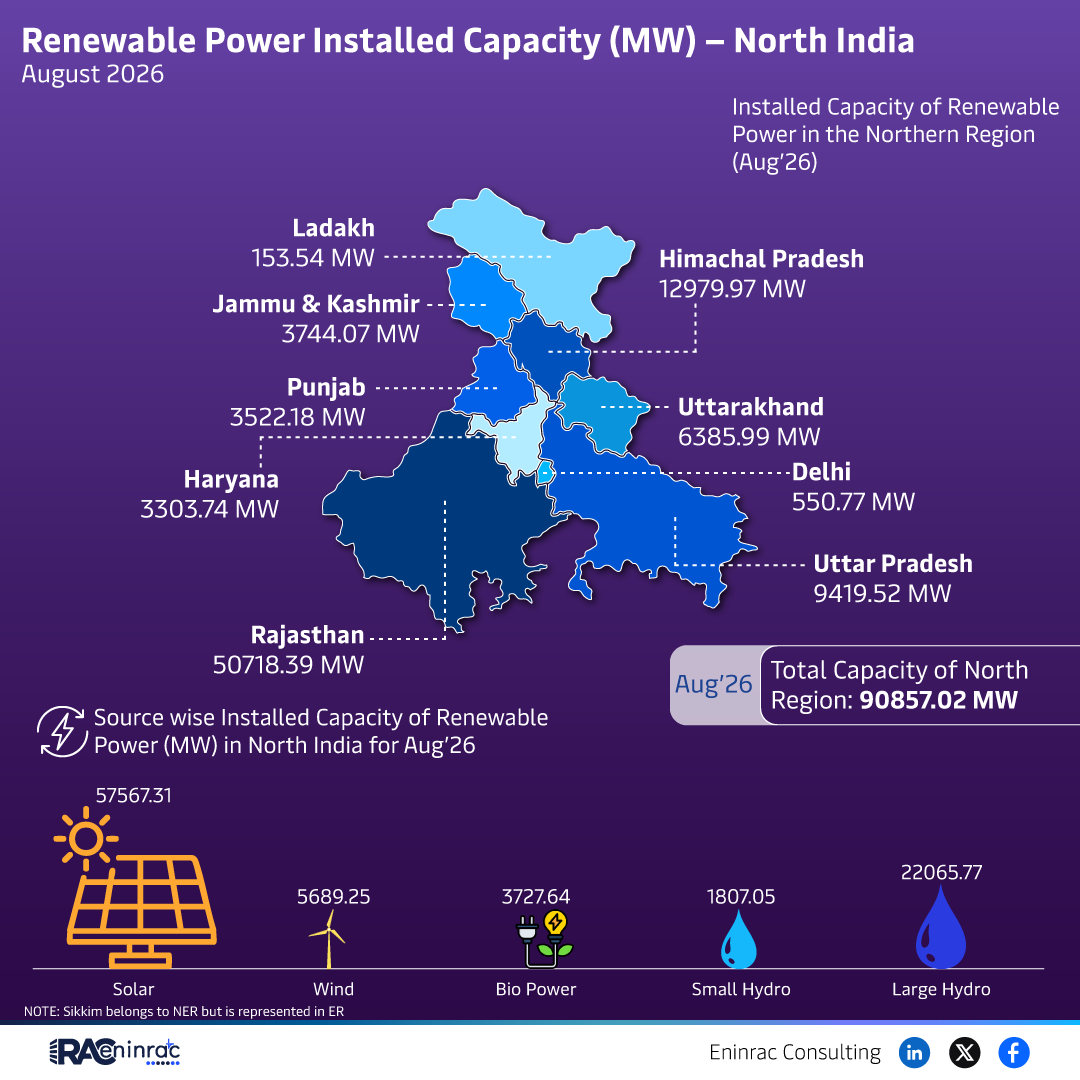
North India renewable power capacity reached a remarkable 90,857 MW in August 2026. This figure combines solar, wind, bio‑power, small hydro and large hydro installations across the northern states. The data highlights how each state contributes to the region’s clean energy mix and underscores the rapid growth of renewable infrastructure in India’s northern belt.
What Does the Data Reveal About This Topic?
When we ask “What does the August 2026 data tell us about renewable power in North India?”, the answer is clear: Rajasthan dominates with over 50,000 MW, followed by Uttar Pradesh and Himachal Pradesh. Smaller states such as Ladakh and Jammu & Kashmir still play a role, but the bulk of capacity comes from the larger, more industrialised regions. The breakdown by technology shows solar leading the portfolio, with wind and hydro providing complementary sources.
State‑wise Comparison of Installed Capacity
Rajasthan’s 50,718 MW accounts for more than half of the total regional capacity, making it the premier hub for solar farms and utility‑scale projects. Uttar Pradesh follows with 9,419 MW, driven largely by a mix of solar and wind farms. Himachal Pradesh contributes 3,744 MW, primarily from hydro resources, while Uttarakhand adds 6,386 MW through a combination of small and large hydro schemes. Punjab’s 550 MW and Haryana’s 3,304 MW illustrate the growing importance of distributed solar installations in agricultural zones. Even remote Ladakh records 154 MW, showcasing the reach of renewable technologies into high‑altitude areas.
Impact on Sectors and Industries
The surge in North India renewable power capacity influences multiple sectors. Energy‑intensive industries benefit from cleaner electricity, reducing carbon footprints and operational costs. Investors see a widening pipeline of projects, especially in solar PV and hydro, prompting increased funding and joint‑venture opportunities. Policymakers can leverage the data to refine state‑level incentives, grid integration plans and transmission upgrades. Moreover, the agricultural sector gains from off‑grid solar solutions that support irrigation and cold‑storage, while rural communities experience improved access to reliable power.
Key Takeaways
- Rajasthan alone supplies more than 55 % of North India’s renewable capacity.
- Solar remains the dominant technology, followed by wind and hydro.
- Uttar Pradesh and Himachal Pradesh are the second and third largest contributors.
- Small hydro projects are expanding in Uttarakhand, enhancing regional grid stability.
- Even low‑population areas like Ladakh are integrating renewable installations.
- The total installed capacity of 90,857 MW positions North India as a key driver of India’s renewable targets.
FAQs
Which state has the highest renewable power capacity in North India?
Rajasthan, with 50,718 MW, leads the region by a wide margin.
What renewable technologies are most prevalent in the north?
Solar power dominates, followed by wind, bio‑power and both small and large hydro installations.
How does renewable capacity affect local industries?
It provides cleaner, lower‑cost electricity, helps industries meet sustainability goals, and attracts new investment.
Are there any upcoming projects in smaller states?
Yes, states like Ladakh and Jammu & Kashmir are planning additional solar and small hydro projects to boost their share.
What is the total renewable capacity of North India as of August 2026?
The region’s installed renewable capacity totals 90,857 MW.