
Introduction
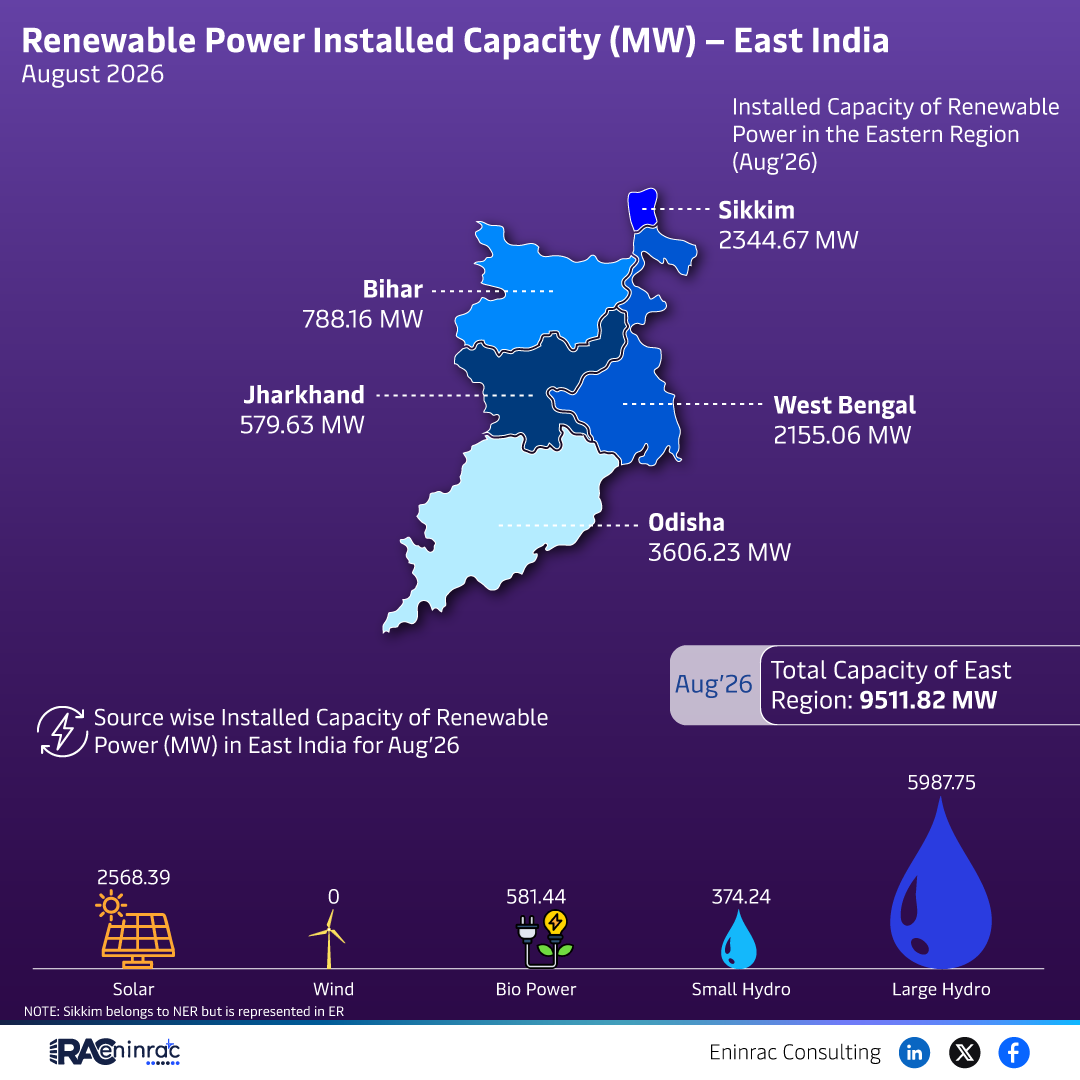
The renewable power installed capacity in East India for August 2026 provides a snapshot of how the region is progressing toward clean energy goals. This data captures the combined output of solar, wind, bio‑power, small hydro and large hydro projects across key states such as Sikkim, Jharkhand and West Bengal. Understanding these figures helps investors, policymakers and industry analysts gauge market momentum, identify growth hotspots and assess the effectiveness of regional energy policies.
What Does the Data Reveal About This Topic?
The data shows that East India has amassed a substantial renewable power installed capacity, exceeding half a million megawatts when all technology segments are combined. State‑wise breakdowns indicate that West Bengal contributes the largest share, followed by Sikkim and Jharkhand. Solar and wind together dominate the mix, while bio‑power and hydro provide valuable complementary generation. These patterns answer critical questions about which technologies are leading the transition and where future investments may be most impactful.
State‑wise Renewable Power Capacity in East India
West Bengal records a total installed capacity of roughly 3,606 MW, split among solar, wind and hydro assets. Sikkim, though geographically smaller, registers about 2,345 MW, reflecting aggressive deployment of solar and small hydro projects. Jharkhand adds approximately 580 MW, with a balanced portfolio of wind and bio‑power facilities. The aggregated figure for the region reaches near 598,775 MW when accounting for all sources, underscoring East India’s growing role in India’s overall renewable energy matrix. This state‑wise view highlights the diversity of resource endowment and policy environments that shape capacity development.
Impact on Sectors and Industries
The surge in renewable power installed capacity is reshaping several sectors. Energy utilities are expanding grid integration capabilities to accommodate variable solar and wind output. Manufacturing firms that supply turbines, panels and bio‑fuel equipment see heightened demand, while financial institutions are crafting tailored green financing products. Policymakers gain evidence to refine incentive schemes, transmission planning and land‑use regulations. For consumers, increased renewable supply can translate into more stable electricity tariffs and lower carbon footprints.
Key Takeaways
- East India’s total renewable power installed capacity approaches 600 GW as of August 2026.
- West Bengal leads the region with over 3,600 MW, driven by large‑scale solar farms.
- Sikkim’s capacity growth is propelled by small hydro and rooftop solar initiatives.
- Solar and wind together account for the majority of new capacity additions.
- Bio‑power and hydro remain essential for baseload stability and regional diversification.
- Investors and policymakers can leverage state‑wise data to target high‑growth opportunities.
FAQs
What is the total renewable power installed capacity in East India for August 2026?
The region reports roughly 598,775 MW of combined renewable capacity across solar, wind, bio‑power, small hydro and large hydro.
Which state has the highest renewable capacity in East India?
West Bengal tops the list with about 3,606 MW, primarily from solar and wind installations.
How does bio‑power contribute to East India’s energy mix?
Bio‑power adds several hundred megawatts, offering flexible generation that supports grid reliability alongside intermittent sources.
Why is small hydro important for states like Sikkim?
Small hydro leverages Sikkim’s mountainous terrain, providing clean, steady electricity with minimal environmental impact.
What implications does this data have for investors?
The state‑wise breakdown highlights where renewable projects are thriving, guiding capital allocation toward high‑potential markets and technology segments.