
Introduction
India’s western region is witnessing a rapid expansion of its national highway network. As of July 2026, dozens of highway projects are under construction, delivering vital connectivity for trade, tourism, and regional development. This overview examines the latest figures for Maharashtra and the union territories of Dadra & Nagar Haveli and Daman & Diu, highlighting project volume, length, and the broader implications for infrastructure investors and policymakers.
What Does the Data Reveal About This Topic?
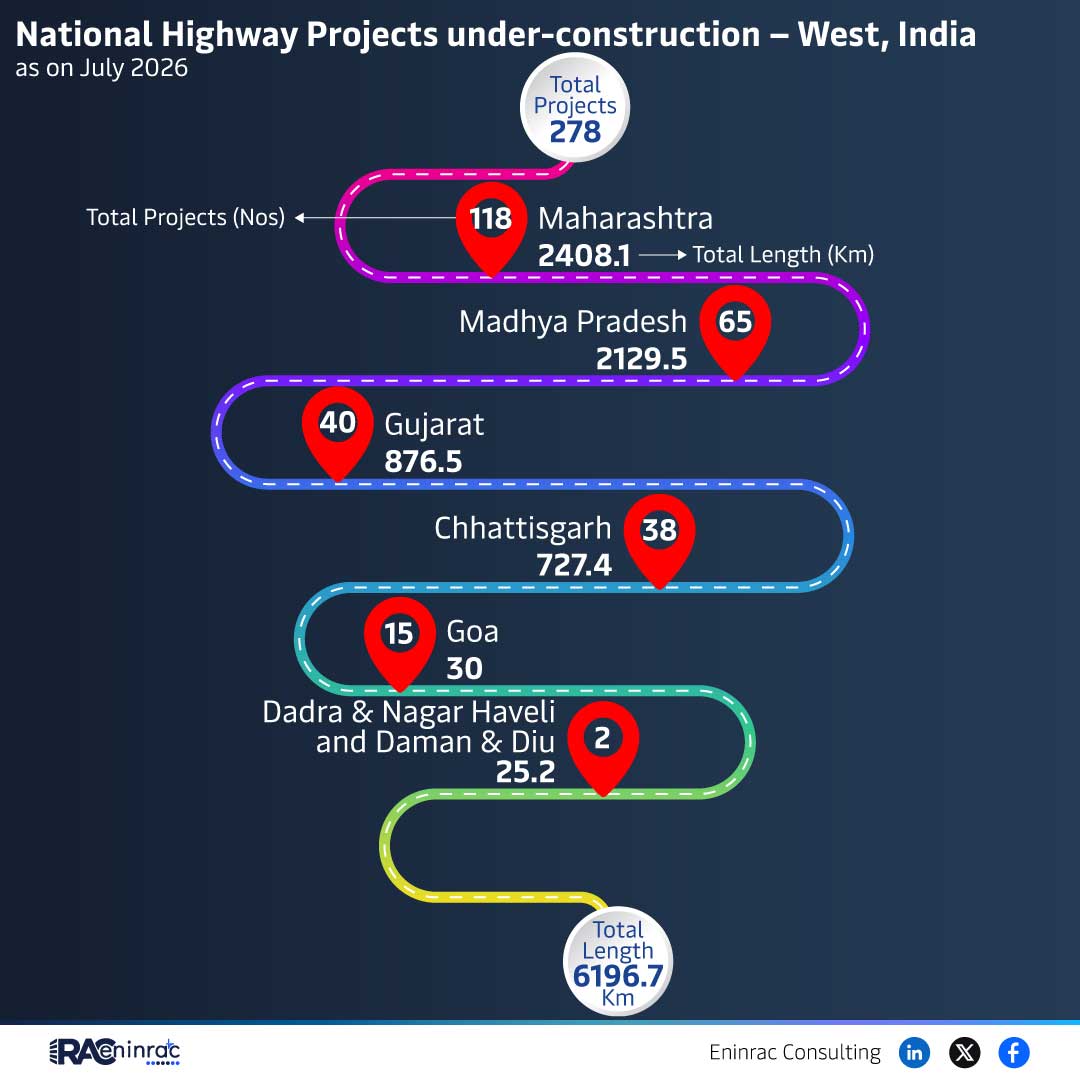
The data shows that Maharashtra alone accounts for over 2,408 listed projects, indicating a massive pipeline of road work. In contrast, the combined length of projects in Dadra & Nagar Haveli and Daman & Diu totals just 25.2 km, reflecting the smaller geographic footprint but still essential links for these territories.
Regional Comparison: Maharashtra vs Dadra & Nagar Haveli and Daman & Diu
Maharashtra dominates the western highway landscape with more than 2,400 active projects, spanning a variety of phases from land acquisition to final paving. The sheer number suggests both a high demand for improved corridors and strong government commitment to fund large‑scale road infrastructure. By comparison, Dadra & Nagar Haveli and Daman & Diu together host a modest 25.2 km of under‑construction highways. While the length is limited, these projects are strategically placed to connect remote towns to the national grid, enhancing local commerce and tourism. The disparity underscores how population density, economic activity, and state‑level budgeting shape the scale of highway initiatives.
Impact on Sectors and Industries
The surge in national highway projects under construction West India influences several sectors. Construction firms and equipment manufacturers see heightened demand for material, machinery, and labor. Financial institutions experience increased loan activity tied to infrastructure bonds. Logistics companies anticipate smoother freight routes, reducing transit times and costs. Policymakers gain leverage to attract private‑public partnership capital, while residents benefit from improved road safety and access to markets. The data also signals attractive opportunities for investors focused on long‑term infrastructure assets.
Key Takeaways
- Maharashtra drives the majority of under‑construction highway activity in western India with over 2,400 projects.
- The union territories of Dadra & Nagar Haveli and Daman & Diu contribute a modest 25.2 km of new road length.
- High project density in Maharashtra reflects its large population and economic weight.
- Shorter corridors in smaller territories aim to integrate isolated areas into the national network.
- Infrastructure growth fuels demand across construction, finance, and logistics industries.
- Investors can target regional road projects as stable, long‑term assets backed by government policy.
FAQs
How many national highway projects are under construction in Maharashtra as of July 2026?
Maharashtra has about 2,408 highway projects currently under construction.
What is the total length of under‑construction highways in Dadra & Nagar Haveli and Daman & Diu?
The combined length of new highways in those territories is roughly 25.2 km.
Why does Maharashtra have far more projects than the smaller union territories?
Because Maharashtra’s larger population, higher economic activity, and greater budget allocations drive more extensive road development.
What benefits do these highway projects bring to the logistics sector?
Improved connectivity reduces travel time, cuts fuel costs, and enhances supply‑chain reliability for logistics providers.
Are there investment opportunities linked to these western Indian highway projects?
Yes, investors can access infrastructure bonds, public‑private partnership models, and equity stakes in construction companies.