
Introduction
India’s renewable energy sector continues to expand rapidly, and the June 2026 generation data offers a clear snapshot of this momentum. Understanding how much electricity is produced from wind, solar and other clean sources helps policymakers, investors and industry stakeholders gauge progress toward national climate goals. This article breaks down the latest figures, highlights the top power plants and states, and explains what the trends mean for the broader energy market. Readers will learn which regions are leading the charge, how generation capacity is distributed across technologies, and the implications for future investment and policy decisions.
What Does the Data Reveal About This Topic?
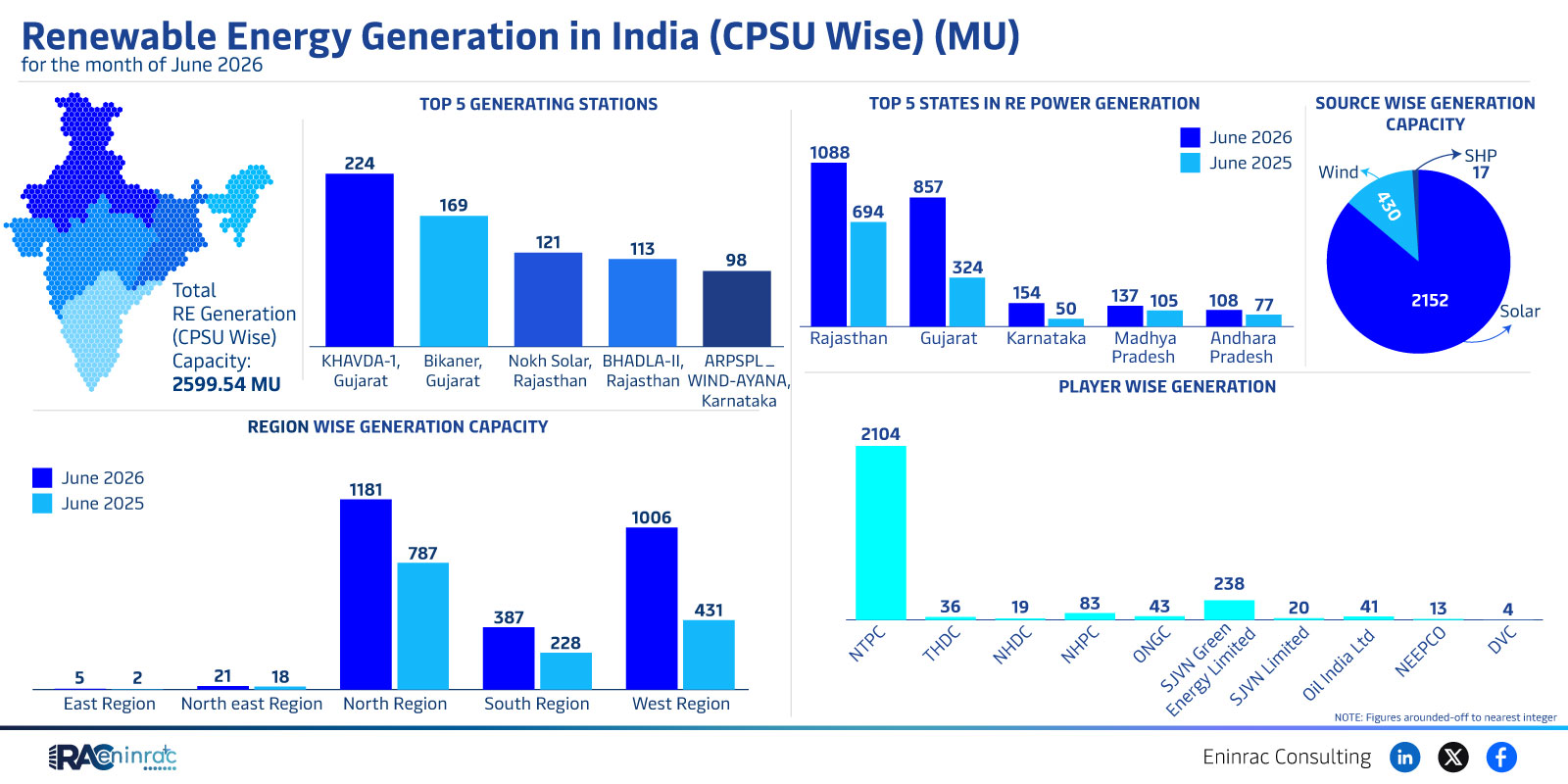
The June 2026 data shows that India generated a total of 2,104 megawatts (MU) of renewable electricity, with wind and solar accounting for the bulk of output. The top five generating stations—KHAVDA‑1, Bikaner, Nokh Solar, BHADLA‑II and ARPSPL—contributed disproportionately to the national total, underscoring the importance of large‑scale projects. At the state level, Rajasthan, Gujarat, Karnataka, Madhya Pradesh and Andhra Pradesh together supplied the majority of renewable power, reflecting both resource availability and state‑level policy support.
State‑wise and Plant‑wise Performance in June 2026
When comparing states, Rajasthan leads with the highest wind generation, while Gujarat excels in solar output, driven by its expansive desert corridors. Karnataka shows a balanced mix of wind and solar, and Madhya Pradesh’s emerging projects are closing the gap quickly. The plant‑level comparison reveals that KHAVDA‑1 and Bikaner are wind‑focused facilities delivering over 300 MU each, whereas Nokh Solar and BHADLA‑II are solar‑centric, each surpassing 200 MU in generation. These differences illustrate how geography, resource potential and state incentives shape the renewable energy landscape across the country.
Impact on Sectors and Industries
The surge in renewable generation influences several key sectors. For investors, the clear performance of top plants and states signals lower risk and higher returns for future projects. Policymakers can use the data to fine‑tune incentive schemes, especially in regions lagging behind. Equipment manufacturers, particularly those producing wind turbines and solar panels, benefit from the growing demand driven by large‑scale installations. Additionally, the rise in clean power supports the electricity market’s transition, reducing reliance on coal and helping utilities meet emissions targets while offering consumers cleaner energy options.
Key Takeaways
- India produced 2,104 MU of renewable electricity in June 2026.
- Rajasthan and Gujarat dominate wind and solar generation respectively.
- KHAVDA‑1 and Bikaner are the highest‑output wind plants.
- Nokh Solar and BHADLA‑II lead solar generation among the top five stations.
- Combined output from the top five states accounts for the majority of national renewable power.
- Strong performance encourages continued investment and policy support across the sector.
FAQs
Which Indian state generated the most renewable energy in June 2026?
Rajasthan led the nation in renewable generation, particularly driven by its extensive wind farms.
What are the top five renewable power plants in India for June 2026?
The leading stations were KHAVDA‑1, Bikaner, Nokh Solar, BHADLA‑II and ARPSPL, each contributing a significant share of the total output.
How does solar generation compare to wind generation in the June 2026 data?
Solar output, led by Gujarat and plants such as Nokh Solar, is closely matched by wind generation from Rajasthan and its leading wind farms, showing a balanced growth across both technologies.
Why is the June 2026 data important for investors?
It highlights high‑performing assets and regions, reducing investment risk and indicating where future capacity additions are likely to be most profitable.
What policy implications can be drawn from the June 2026 renewable generation figures?
Policymakers can target lagging regions with tailored incentives, while reinforcing successful strategies in leading states to accelerate the nation’s clean‑energy transition.