
Introduction
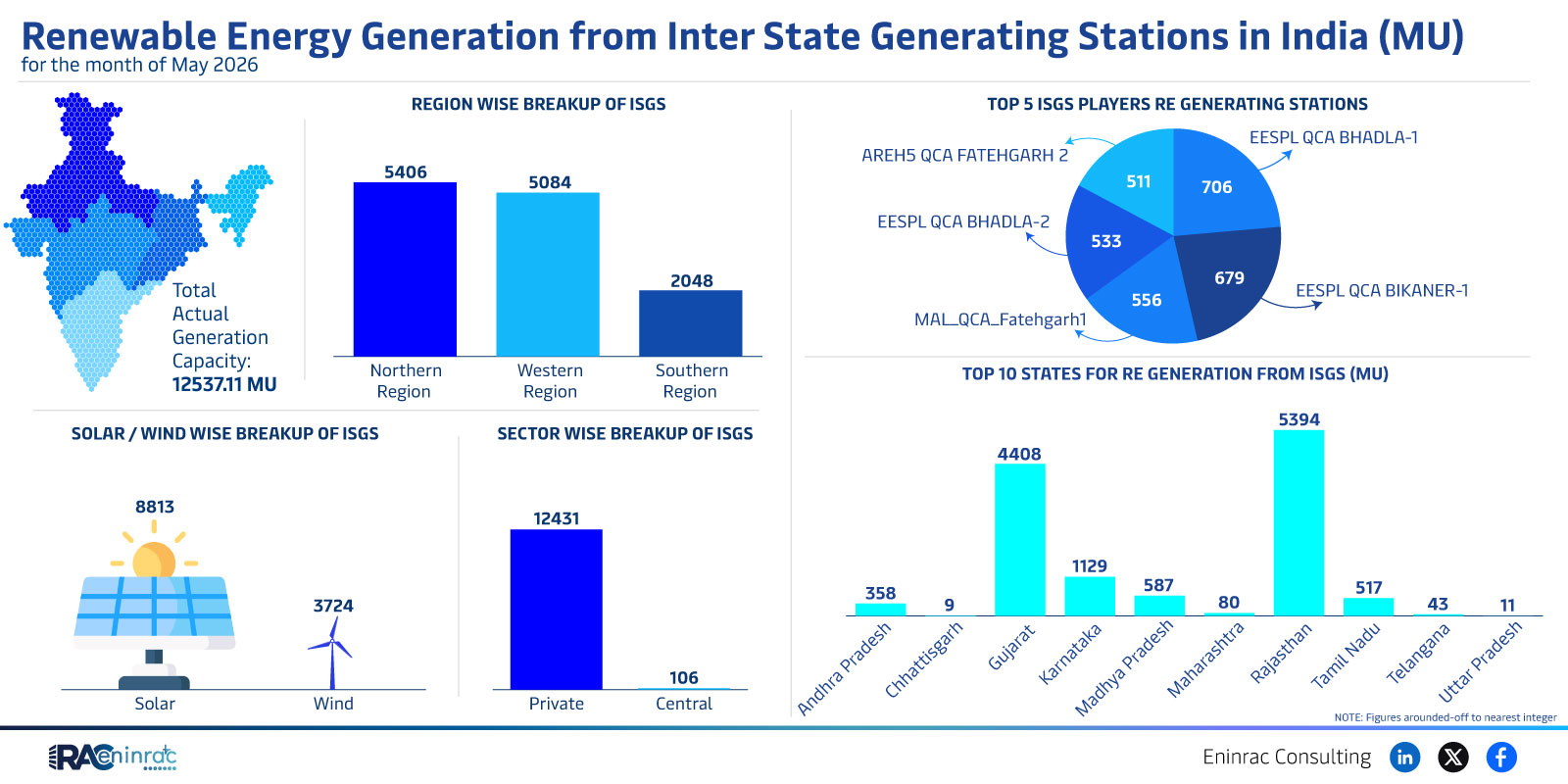
India's inter‑state generating stations (ISGS) play a pivotal role in delivering renewable electricity across the country. In May 2026 the total actual generation capacity from ISGS reached 12,537.11 million units (MU), reflecting the accelerating shift toward clean power. This data set breaks down generation by region, by energy source such as solar and wind, and highlights the top contributing states and companies. Understanding these figures helps investors, policymakers, and industry observers gauge the health of India's renewable sector, identify emerging opportunities, and anticipate future policy directions. The following sections unpack the numbers, compare regional performance, and examine the broader impact on related industries.
What Does the Data Reveal About This Topic?
What does the May 2026 ISGS data tell us about renewable energy generation in India? The figures show a strong north‑west concentration, with the Northern region contributing 5,406 MU and the Western region 5,084 MU, while the Southern region added 2,048 MU. Solar generation dominates the mix at roughly 12,431 MU, followed by wind at 3,724 MU and a modest private sector share of about 106 MU. The top five ISGS players, including EESPL QCA Fatehgarh and Bhadla stations, together account for a large share of total output, underscoring the importance of large‑scale solar farms in the national energy portfolio.
Regional Performance: North, West, and South Comparisons
When comparing the three major regions, the Northern and Western zones together produce more than 10,000 MU, accounting for roughly 84% of the total ISGS output in May 2026. The Northern region's 5,406 MU reflects high solar capacity in states such as Punjab and Haryana, while the Western region's 5,084 MU is driven by Rajasthan's expansive solar parks. The Southern region, at 2,048 MU, lags behind but still contributes a meaningful share, primarily through wind installations along the coast. This disparity highlights the geographic advantages of desert and semi‑arid zones for solar farms, as well as the growing importance of wind resources in the south.
Impact on Sectors and Industries
The strong performance of solar generation from ISGS influences multiple sectors. Equipment manufacturers for photovoltaic panels experience heightened demand, while financing firms see increased opportunities for green bonds and project financing. The private sector's modest 106 MU indicates room for growth in independent power producers that can complement state‑run assets. Policymakers can leverage the regional data to tailor incentive schemes, for example, by encouraging wind expansion in southern states to balance the solar‑heavy north‑west mix. Investors gain insights into which companies—such as EESPL QCA Fatehgarh and Bhadla—lead the market, guiding portfolio allocations toward high‑performing assets.
Key Takeaways
- India's ISGS generated 12,537.11 MU of renewable energy in May 2026.
- Northern and Western regions together supplied over 80% of total output.
- Solar power dominates with more than 12,000 MU, while wind contributes under 4,000 MU.
- Top five ISGS players account for a significant share of generation capacity.
- Private sector participation remains limited but presents growth potential.
- Regional disparities suggest policy focus on expanding wind in the South.
FAQs
What is the total renewable generation from ISGS in May 2026?
The total actual generation capacity reported was 12,537.11 million units (MU).
Which region contributed the most renewable energy?
The Northern region led with 5,406 MU, closely followed by the Western region at 5,084 MU.
How much solar energy was generated by ISGS?
Solar generation accounted for approximately 12,431 MU of the total output.
Who are the top ISGS players in May 2026?
Leading stations include EESPL QCA Fatehgarh, EESPL QCA Bhadla‑1, and EESPL QCA Bhadla‑2 among the top five.
What opportunities exist for private investors?
With private sector generation at only about 106 MU, there is significant room for new projects, financing arrangements, and partnerships to expand independent renewable capacity.