
Introduction
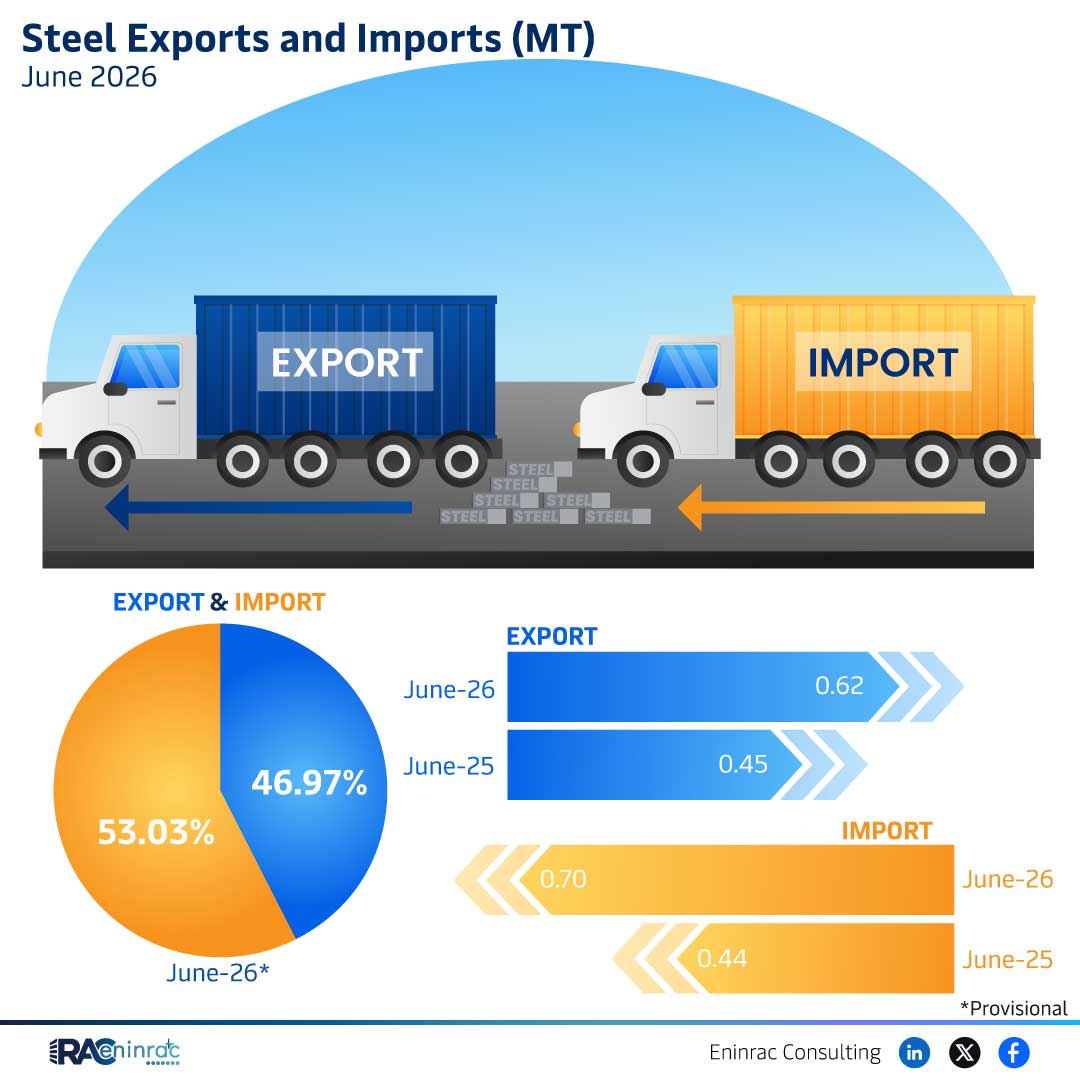
The provisional June 2026 report on steel exports and imports compiled by Eninrac Consulting offers a concise snapshot of global metal movement at a critical time for industrial supply chains. Understanding this data matters because steel underpins construction, automotive manufacturing, and energy infrastructure worldwide. Readers will learn about the volume balances between exporting and importing nations, regional performance variations, and the broader market implications that affect investors, policymakers, and industry leaders.
What Does the Data Reveal About This Topic?
The data indicates that total steel exports slightly exceeded imports in June 2026, suggesting a modest trade surplus for major exporting economies. Why does this matter? A surplus often reflects strong production capacity and higher demand in downstream sectors, while a narrowing gap may signal shifting consumption patterns or supply chain disruptions. The provisional figures also highlight which regions are net exporters versus net importers, providing a basis for deeper analysis of trade policies and market dynamics.
June 2026 Trade Snapshot
A comparative interpretation of the provisional numbers shows that traditional steel powerhouses such as China and the European Union continue to dominate export volumes, whereas emerging economies in Southeast Asia and Latin America remain net importers. The data points to a gradual increase in export growth rates for Asia‑Pacific, while European import demand appears to stabilize after a period of volatility. These trends suggest that regional production shifts and investment in modern steelmaking technologies are influencing the global balance of trade.
Impact on Sectors and Industries
Steel trade balances affect multiple sectors. Construction firms monitor import costs to price projects accurately, while automotive manufacturers rely on steady steel supplies for production schedules. Investors use export‑import differentials to gauge the health of industrial economies and to anticipate price movements in related commodities such as iron ore and coal. Policymakers may adjust tariffs or subsidies based on these trends to protect domestic manufacturers or to encourage strategic imports that support infrastructure development.
Key Takeaways
- June 2026 shows a slight global surplus in steel exports over imports.
- China and the EU remain the top exporting regions.
- Asia‑Pacific import demand is rising but stabilizing.
- European import levels have steadied after recent fluctuations.
- Trade balances influence construction, automotive, and investment decisions.
- Policymakers may adjust trade measures in response to emerging trends.
FAQs
Why are steel export numbers important for the global economy?
Export volumes reflect production capacity and demand, influencing pricing, investment, and economic growth across multiple industries.
Which regions are the biggest steel exporters in June 2026?
China and the European Union lead the world in steel exports, followed by other major producers in North America and Asia‑Pacific.
How do steel import trends affect construction costs?
Higher import volumes can increase competition and lower prices, while reduced imports may raise material costs for builders.
What role does Eninrac Consulting play in this data?
Eninrac Consulting compiled and provisionally released the June 2026 steel trade figures, providing a reliable source for market analysis.
Can investors use this data to anticipate market movements?
Yes, trade imbalances often signal shifts in supply and demand that can affect related commodity prices and stock performance.