
Introduction
Renewable energy generation from Inter State Generating Stations (ISGS) in India is a critical indicator of the nation’s progress toward a low‑carbon future. The August 2026 data captures a snapshot of how electricity from solar and wind assets is moving across state borders, influencing market dynamics, investment decisions, and policy formulation. This article explains the key figures, highlights leading players and regions, and shows what the trends mean for stakeholders ranging from policymakers to private investors.
What Does the Data Reveal About This Topic?
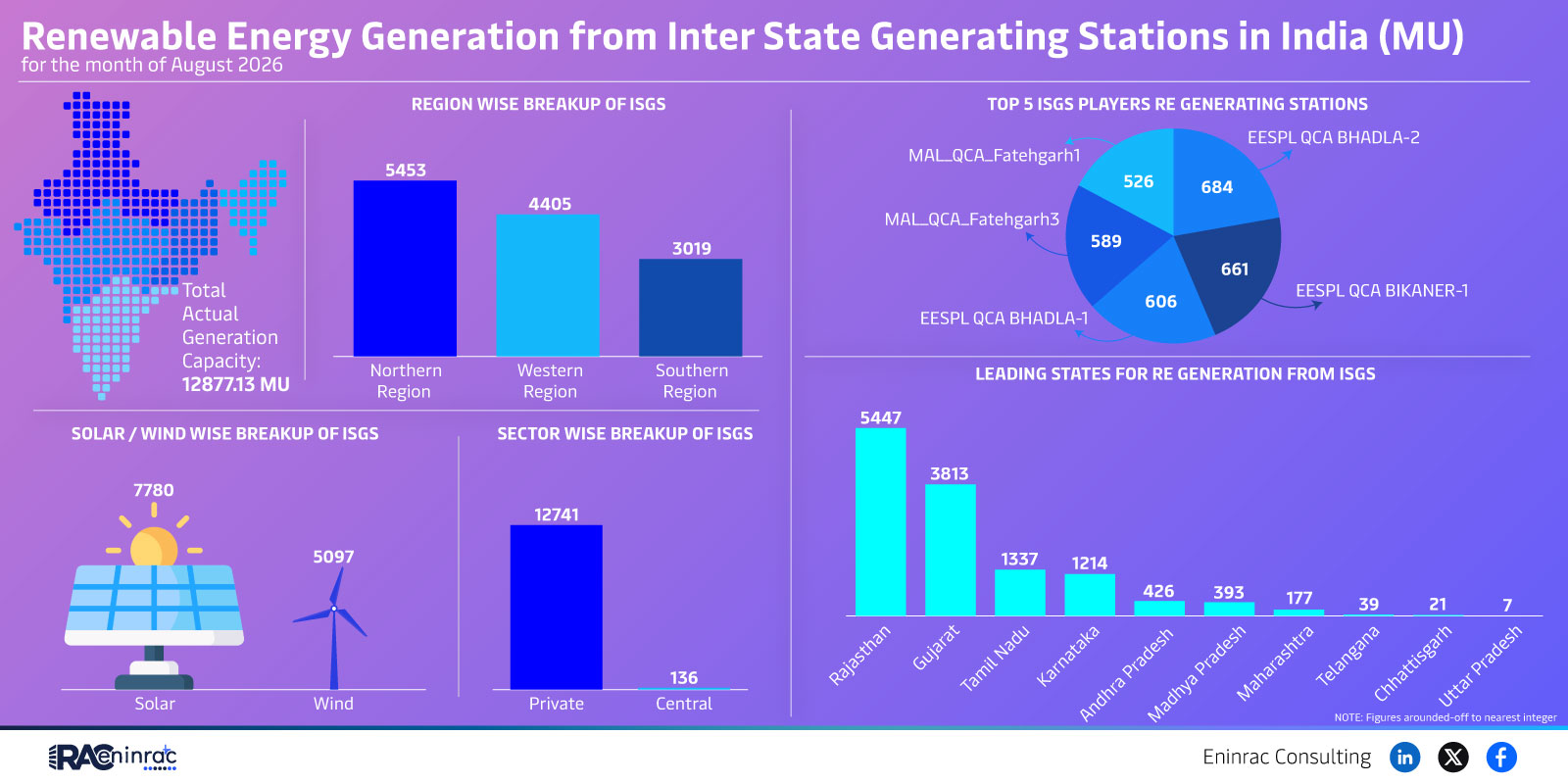
What does the August 2026 ISGS data tell us about renewable power flows? The figures show a total generation of roughly 13.37 million megawatt‑units (MU) transferred between states, with solar contributing about 7,780 MU and wind around 5,097 MU. The top five ISGS players—EESPL QCA Bhadla‑2, MAL QCA Fatehgarh 1, MAL QCA Fatehgarh 3, EESPL QCA Bikaner‑1, and another unnamed entity—account for a significant share of this movement, underscoring the concentration of capacity in a few large projects.
Regional and Sectoral Breakdown of ISGS Generation
When we examine the data by geography, the North, West, and South zones emerge as the leading regions for inter‑state renewable transfers. The private sector dominates the generation mix, followed by central government‑owned projects, reflecting the strong push by independent power producers to develop large‑scale solar farms in Rajasthan and Gujarat and wind parks in Tamil Nadu and Karnataka. The sector‑wise split shows that solar output remains higher than wind, yet wind’s share is steadily rising, hinting at a more balanced renewable portfolio in the coming years.
Impact on Sectors and Industries
The surge in ISGS renewable flows affects multiple layers of the energy ecosystem. For utilities, higher inbound solar and wind MU improve grid stability and reduce reliance on fossil‑fuel peaking plants. Investors see the concentration of generation in proven hubs as a signal of lower risk and higher returns, prompting further capital allocation to new solar‑wind hybrid projects. Policymakers can use the regional data to fine‑tune transmission planning, ensuring that bottlenecks are addressed and that renewable curtailment is minimized. Finally, consumers benefit from increasingly affordable clean electricity as inter‑state trade intensifies competition.
Key Takeaways
- Renewable energy generation from ISGS reached 13.37 million MU in August 2026.
- Solar contributed roughly 7,780 MU, while wind added about 5,097 MU.
- The top five ISGS players, led by EESPL QCA Bhadla‑2 and MAL QCA Fatehgarh sites, dominate inter‑state transfers.
- North, West, and South regions are the primary conduits for renewable power flow.
- Private sector projects outweigh central projects, highlighting strong market‑driven growth.
- Increasing wind share suggests a move toward a more diversified renewable mix.
FAQs
Which states contributed most to the ISGS renewable generation?
Rajasthan, Gujarat, Tamil Nadu and Karnataka lead the charge, with large solar farms in the West and wind installations in the South supplying the bulk of inter‑state power.
How does ISGS data affect renewable energy investors?
High generation volumes and clear regional leaders provide confidence in project viability, encouraging further investment in new solar‑wind assets and transmission upgrades.
What is the role of private versus central projects in this data?
The private sector accounts for the majority of the generated MU, reflecting aggressive capacity additions by independent developers, while central projects play a supportive but smaller role.
Why is the solar‑wind mix important for India’s energy future?
A balanced mix reduces reliance on any single technology, improves grid stability, and maximizes utilization of varied climatic conditions across the country.
Can policymakers use this data to improve grid infrastructure?
Yes, by identifying high‑flow corridors and potential bottlenecks, planners can prioritize transmission lines and storage solutions to accommodate growing renewable transfers.