
Introduction
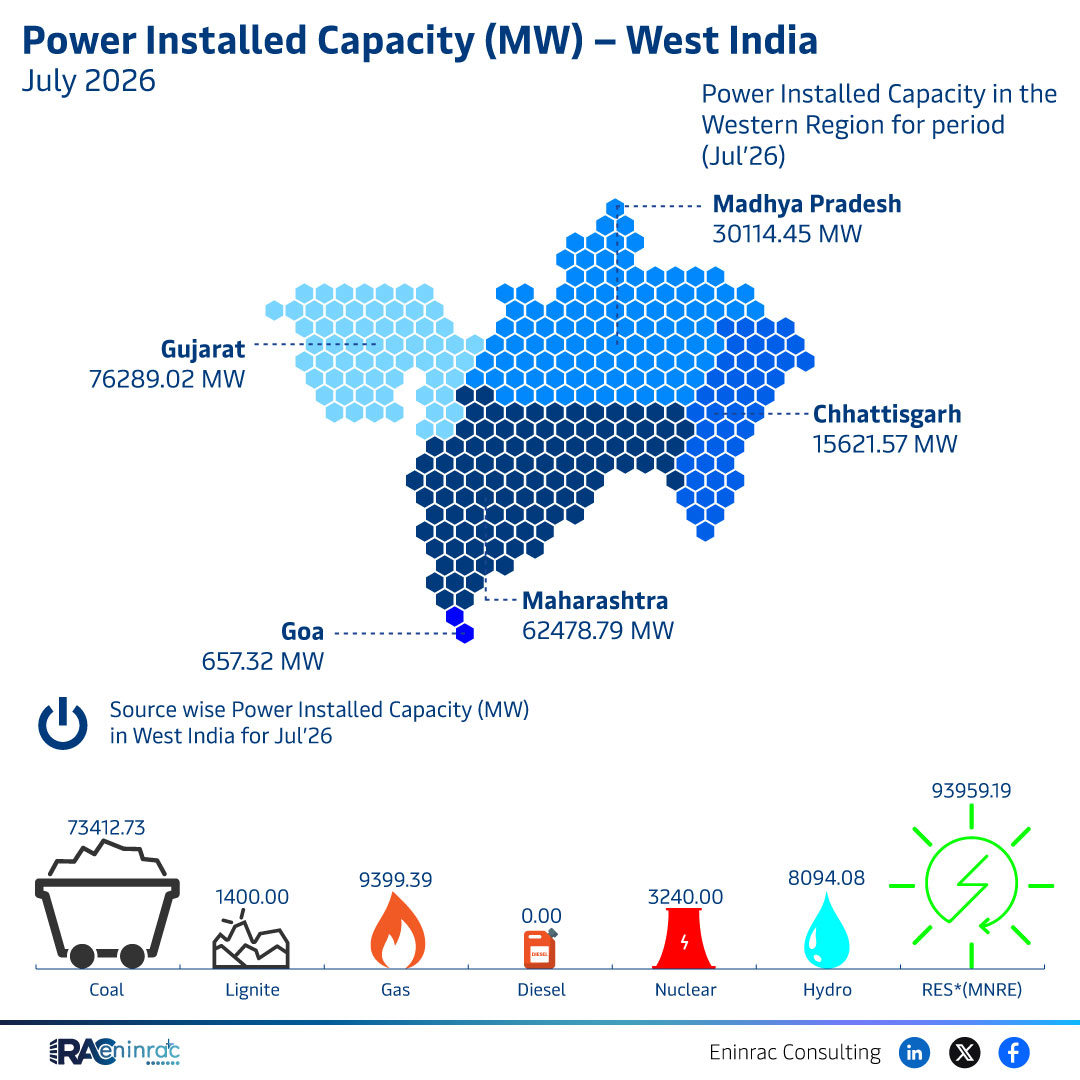
West India power installed capacity in July 2026 provides a snapshot of the region’s electricity generation potential across both conventional and renewable sources. The data highlights the contribution of major states such as Gujarat, Maharashtra, Madhya Pradesh and Chhattisgarh, and breaks down capacity by fuel type, including coal, lignite, gas, diesel and renewable energy. Understanding this capacity landscape is crucial for investors, policymakers and industry analysts who monitor supply‑side dynamics, grid planning and sustainability goals. This article analyses the state‑wise figures, compares conventional versus renewable shares, and discusses implications for the broader Indian power market. By examining the July snapshot, stakeholders can gauge growth trends, assess regional reliability and align future investments with India's net‑zero commitments.
What Does the Data Reveal About This Topic?
What does the July 2026 data reveal about West India power installed capacity? The figures show that Gujarat leads the region with approximately 76,290 MW, followed closely by Maharashtra with roughly 62,480 MW. Madhya Pradesh contributes about 30,114 MW while Chhattisgarh adds around 15,622 MW. On the source side, coal‑based plants account for about 9,400 MW and lignite around 8,100 MW, whereas gas, diesel and renewable sources together make up roughly 5,900 MW. These numbers illustrate a dominance of conventional thermal generation, yet renewables are steadily increasing their share.
Statewise Capacity Comparison
Statewise capacity comparison highlights significant disparities among the western states. Gujarat’s installed capacity of 76,289 MW represents more than one‑quarter of the region’s total, driven by a mix of large thermal plants and expanding solar farms. Maharashtra’s 62,479 MW reflects strong industrial demand and recent additions in wind power along the coastal belt. Madhya Pradesh, while geographically central, contributes 30,114 MW, largely from coal and emerging hydro projects. Chhattisgarh’s 15,622 MW is modest but shows a growing share of biomass and small‑scale renewable installations. The data also reveals that coal and lignite together supply roughly 17,500 MW, underscoring the continued reliance on conventional fuels, whereas renewables (hydro, solar, wind) account for just under 6,000 MW, indicating room for further diversification.
Impact on Sectors and Industries
The capacity distribution in West India influences multiple sectors. Power‑intensive industries such as aluminium, cement and chemicals depend on the reliable supply from coal and gas plants, which currently dominate the mix. Renewable growth opens opportunities for green manufacturing, electric vehicle charging networks and corporate sustainability pledges. Investors track the capacity numbers to assess project pipelines, financing needs and policy risk. Policymakers use the data to calibrate tariff structures, incentivise renewable auctions and plan transmission upgrades. Consumers benefit from potential reductions in electricity tariffs as the share of low‑cost solar and wind expands, supporting broader economic development.
Key Takeaways
- Gujarat holds the highest installed capacity in West India at over 76,000 MW.
- Maharashtra follows with more than 62,000 MW, driven by industrial demand.
- Coal and lignite together provide the bulk of generation, exceeding 17,000 MW.
- Renewable sources contribute under 6,000 MW, showing growth potential.
- Capacity trends influence investment decisions across conventional and green energy sectors.
- Policymakers can use the data to balance grid reliability with renewable integration.
FAQs
Which western state has the highest installed power capacity in July 2026?
Gujarat leads with approximately 76,289 MW of installed capacity.
What share of West India capacity comes from renewable sources?
Renewables account for just under 6,000 MW, roughly 7‑8% of the total regional capacity.
How does coal capacity compare to renewable capacity in the region?
Coal‑based capacity (~9,400 MW) is more than one and a half times larger than all renewable capacity combined.
Why is Maharashtra’s capacity significant for the national grid?
Maharashtra’s 62,479 MW supports a large industrial base and contributes crucial baseload and renewable power to the national grid.
What trends are expected for West India power capacity after 2026?
Analysts anticipate continued growth in solar and wind installations, gradual reduction of coal reliance, and increased private investment in green projects.