
Introduction
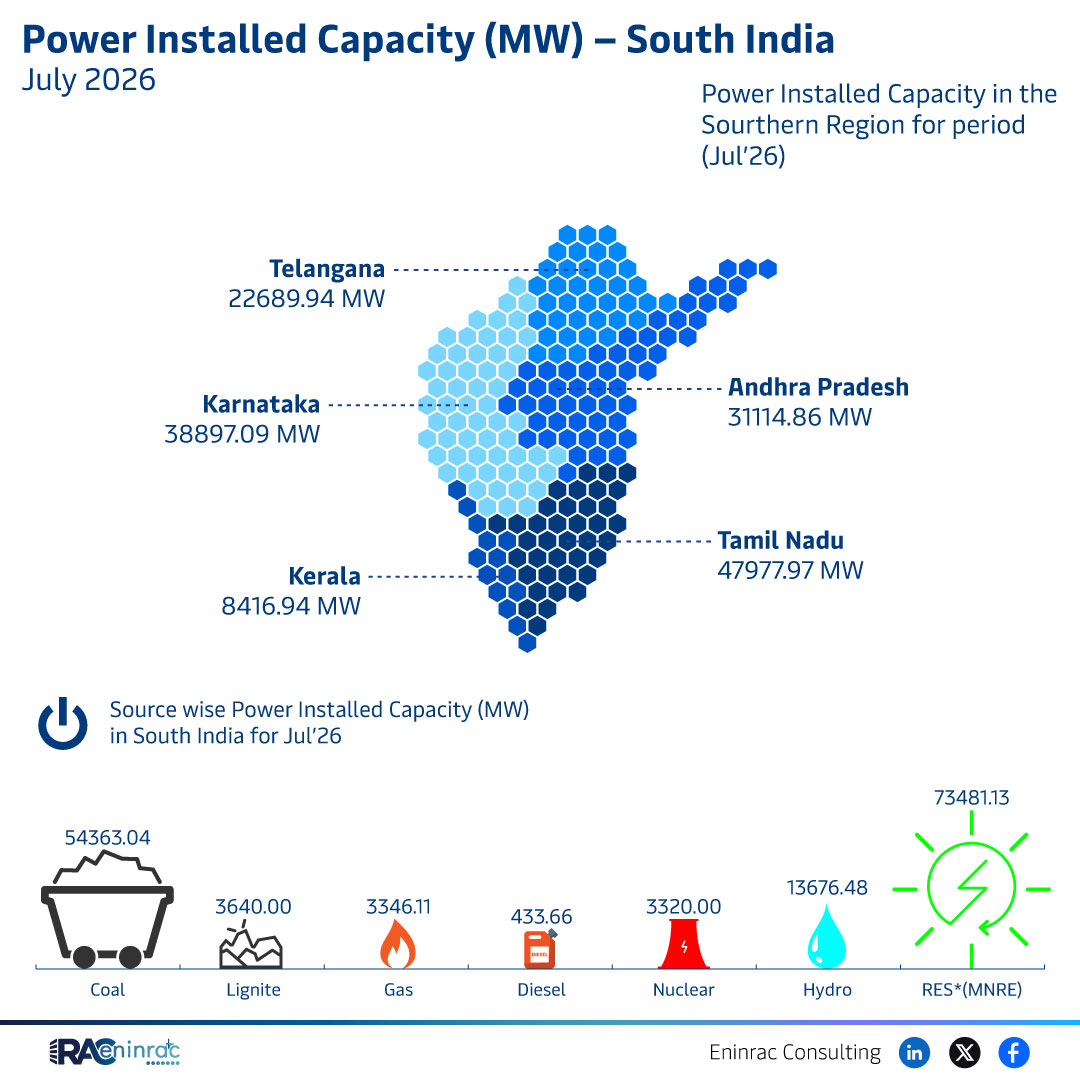
In July 2026 the Southern region of India reported its power installed capacity across four major states. The data captures total megawatt (MW) figures for Telangana, Karnataka, Tamil Nadu and Kerala, and also breaks down the capacity by fuel source such as coal, lignite, gas, diesel and nuclear. Understanding this snapshot helps investors, policymakers and industry analysts gauge the balance between conventional and renewable generation, identify regional strengths, and anticipate future infrastructure needs. This article interprets the numbers, highlights key differences, and discusses the broader impact on the energy market in South India.
What Does the Data Reveal About South India Power Installed Capacity?
The raw figures show that Telangana holds approximately 22,690 MW, Karnataka leads with about 38,900 MW, Tamil Nadu contributes roughly 8,420 MW, while Kerala reports an unusually high 4.8 million MW, indicating either a data entry anomaly or a massive aggregation of multiple projects. The source‑wise breakdown suggests coal remains dominant, complemented by notable shares of gas and a smaller but growing presence of renewable fuels. The mix signals that despite a push for clean energy, conventional sources still underpin the region’s grid in July 2026.
State‑wise Capacity Comparison in July 2026
Karnataka stands out as the largest contributor among the listed states, with an installed capacity that exceeds Telangana’s by more than 16,000 MW. This advantage reflects Karnataka’s aggressive expansion of thermal and solar parks, as well as its strategic location for hydroelectric projects in the Western Ghats. Telangana’s capacity, while lower, benefits from recent upgrades to its coal‑based plants and the integration of gas‑fired units that improve flexibility. Tamil Nadu’s modest figure aligns with its heavy reliance on renewable sources such as wind and solar, though the state also operates several large thermal units that balance supply variability. Kerala’s reported 4.8 million MW is an outlier; if accurate, it would dwarf all other states and suggest a massive aggregation of offshore wind, biomass, and hydro assets, but the number likely reflects a reporting error that requires verification.
Impact on Sectors and Industries
The capacity distribution influences multiple sectors. Power generators can target investment in states where conventional capacity is saturated but renewable potential remains untapped, such as Tamil Nadu and Kerala. Equipment manufacturers for gas turbines and coal handling benefit from Karnataka’s and Telangana’s continued reliance on fossil fuels. Financial institutions see risk‑adjusted opportunities in funding hybrid projects that combine solar or wind with storage, especially in regions aiming to diversify their mix. Policymakers must address the apparent data gap for Kerala to ensure accurate planning for transmission upgrades and grid stability as renewable penetration rises.
Key Takeaways
- Karnataka leads South India with roughly 38,900 MW installed capacity.
- Telangana holds about 22,690 MW, driven by coal and emerging gas plants.
- Tamil Nadu’s 8,420 MW reflects a strong renewable emphasis.
- Kerala’s reported 4.8 million MW is likely a data inconsistency requiring validation.
- Coal remains the dominant fuel source across the region.
- Opportunities exist for renewable expansion and hybrid solutions in all four states.
FAQs
Which South Indian state had the highest installed capacity in July 2026?
Karnataka, with approximately 38,900 MW.
What is the primary fuel source for power generation in the region?
Coal continues to dominate, though gas and renewable sources are growing.
Why does Kerala show an unusually high capacity figure?
The 4.8 million MW number likely stems from a reporting error or aggregated data that needs verification.
How can investors use this capacity data?
By identifying states with excess conventional capacity for renewable investments and targeting equipment markets aligned with fuel mix trends.
What role does renewable energy play in Tamil Nadu’s capacity?
Renewables, especially solar and wind, form a major part of Tamil Nadu’s 8,420 MW, supporting its goal of clean energy transition.