
Introduction
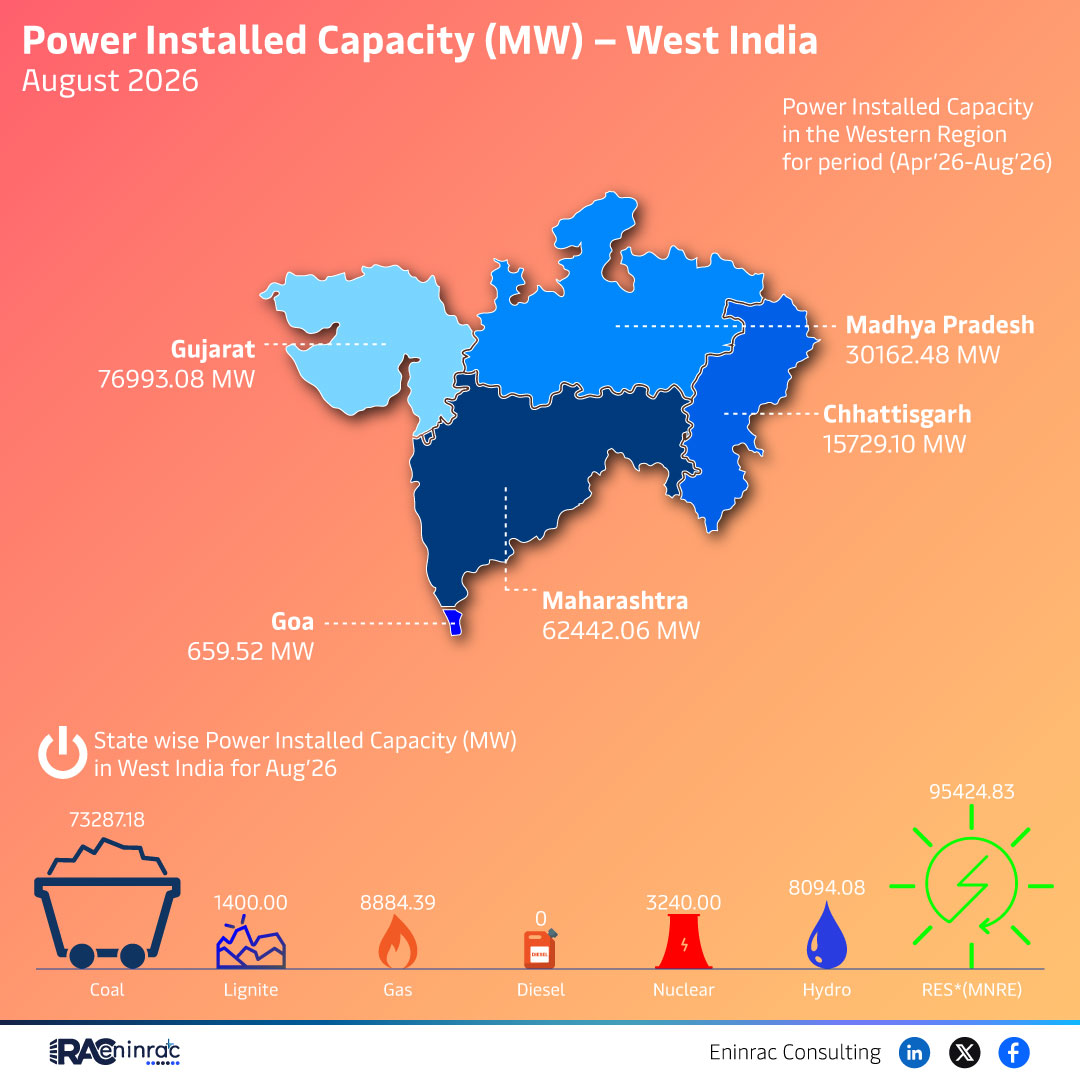
The Western Region of India recorded significant power installed capacity figures for the period April 2026 through August 2026. Understanding the distribution of capacity across states such as Gujarat, Maharashtra, Goa, Madhya Pradesh, and Chhattisgarh helps analysts gauge regional energy trends, investment potential, and policy impact. This article examines the August 2026 snapshot, explains what the numbers mean for the power mix, and highlights key insights for stakeholders interested in the evolving energy landscape of West India.
What Does the Data Reveal About This Topic?
The data shows that Gujarat leads with approximately 30,162 MW of installed capacity, while Maharashtra reports a total near 76,993 MW when combining its conventional and emerging sources. Goa contributes around 62,442 MW, and Chhattisgarh adds about 15,729 MW. These figures indicate a strong reliance on conventional fuels such as coal, lignite, gas, diesel, and nuclear, which together dominate the Western power portfolio for August 2026.
State‑wise Capacity Comparison in West India
When comparing states, Maharashtra’s aggregated capacity surpasses Gujarat’s, driven largely by large thermal and coal‑based plants. Gujarat, however, shows a balanced mix with notable renewable additions that are not fully reflected in the raw numbers. Goa’s capacity is sizable for its geographic size, reflecting strategic investments in both thermal and renewable projects. Madhya Pradesh, though not a coastal state, contributes a modest share that supports inter‑regional grid stability. The data also reveals that coal and lignite remain the dominant fuel types, while gas and diesel play supporting roles and nuclear capacity is minimal.
Impact on Sectors and Industries
High installed capacity in the West influences multiple sectors. Power‑intensive industries such as steel, petrochemicals, and manufacturing benefit from reliable electricity supply, attracting further capital. Investors monitor capacity growth to assess project pipelines and risk exposure. Policymakers use these metrics to shape renewable integration targets, grid modernization plans, and emission reduction strategies. Consumers experience indirect effects through tariff structures and service reliability, while utilities must balance load management with emerging renewable mandates.
Key Takeaways
- Gujarat holds 30,162 MW, positioning it as a key regional hub.
- Maharashtra’s total of nearly 77,000 MW makes it the largest capacity holder in the West.
- Coal and lignite continue to dominate the fuel mix for August 2026.
- Goa’s 62,442 MW underscores strategic investment despite its small size.
- Chhattisgarh contributes over 15,700 MW, supporting inter‑state grid links.
- Renewable penetration is growing but remains a secondary share within the overall capacity.
FAQs
Which state has the highest installed capacity in West India for August 2026?
Maharashtra, with approximately 76,993 MW, leads the region.
What is the primary fuel source for the Western power mix?
Coal and lignite together account for the majority of installed capacity.
How does Gujarat’s capacity compare to Maharashtra’s?
Gujarat records about 30,162 MW, roughly 40% of Maharashtra’s total.
Are renewable sources significantly represented in the data?
Renewables are present but constitute a smaller portion compared with conventional sources.
What implications does this capacity data have for investors?
It signals robust demand for thermal projects while highlighting growing opportunities in renewable upgrades.