
Introduction
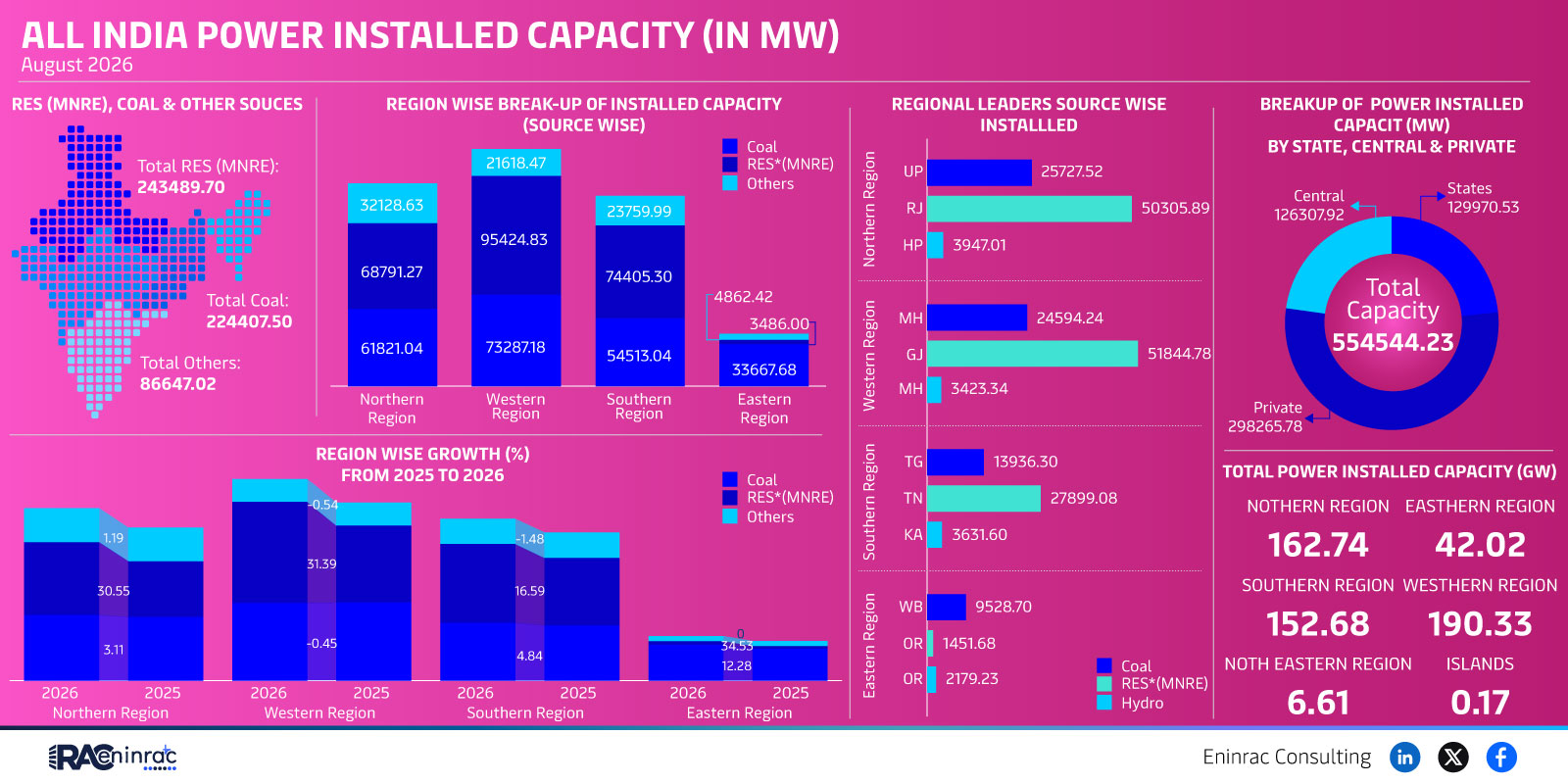
India’s power sector continues to evolve rapidly, and the latest figures for August 2026 provide a comprehensive view of the nation’s installed capacity. With a total of 554,544 MW across renewable, coal and other sources, the data highlights how the energy mix is shifting, which regions are leading growth, and what this means for investors and policymakers. This article breaks down the numbers, explores regional performance, and discusses the broader impact on India’s economy and climate goals.
What Does the Data Reveal About This Topic?
The raw data shows that renewable energy (RES) installed capacity stands at 243,489.70 MW, coal at 224,407.50 MW, and other sources contribute 86,647.02 MW. This indicates that renewables now account for roughly 44% of total capacity, narrowing the gap with coal. The figures also show a clear regional disparity, with the Western region housing the largest share of installed capacity at 190.33 GW, followed by the Northern region at 162.74 GW. The question is: how does this distribution influence future energy planning?
Regional Capacity Highlights
When we compare the four major regions, the Western region leads with 190.33 GW, driven by high solar and wind installations. The Northern region follows with 162.74 GW, reflecting strong government initiatives in Himalayan hydro projects and large‑scale solar farms. The Southern region, at 152.68 GW, benefits from extensive wind corridors along the coast, while the Eastern region lags behind with only 42.02 GW, highlighting potential for further development. State‑level data shows Maharashtra contributing the highest capacity (approximately 2,459,424 MW) across all sources, underscoring its pivotal role in the national grid.
Impact on Sectors and Industries
The shift toward a higher share of renewable capacity influences multiple sectors. Power generators are increasingly allocating capital to solar and wind projects, while coal‑based plants face pressure to modernize or retire. The private sector, which holds 298,265.78 MW of the total capacity, is poised to benefit from policy incentives targeting clean energy. For investors, the growing renewable share signals opportunities in green bonds, infrastructure financing, and technology partnerships. Policymakers must balance reliability, especially in regions with lower capacity, against climate commitments.
Key Takeaways
- India power installed capacity 2026 totals 554,544 MW, with renewables at 44% share.
- Western region holds the largest installed capacity at 190.33 GW.
- Maharashtra remains the top state contributor across all energy sources.
- Renewable growth is outpacing coal, but coal still supplies a substantial 224,408 MW.
- Private sector ownership accounts for more than half of total capacity.
- Regional disparities suggest untapped potential in the Eastern region.
FAQs
What is the total installed power capacity in India for 2026?
The total installed capacity is 554,544 MW, encompassing renewable, coal and other sources.
How much renewable energy capacity does India have in 2026?
Renewable energy capacity stands at 243,489.70 MW, representing about 44% of the total mix.
Which region has the highest installed capacity?
The Western region leads with 190.33 GW of installed capacity.
What role does the private sector play?
The private sector contributes 298,265.78 MW, making up more than half of the nation’s power capacity.
How does coal capacity compare to renewables?
Coal capacity is 224,407.50 MW, slightly lower than renewable capacity but still a major part of the energy mix.