
Introduction
The South India power installed capacity August 2026 report provides a detailed snapshot of electricity generation assets across five key states during the period April to August 2026. Understanding how much capacity is available, which fuel sources dominate, and how each state contributes is essential for investors, policymakers, and energy analysts who track the region’s growth and sustainability trajectory.
What Does the Data Reveal About This Topic?
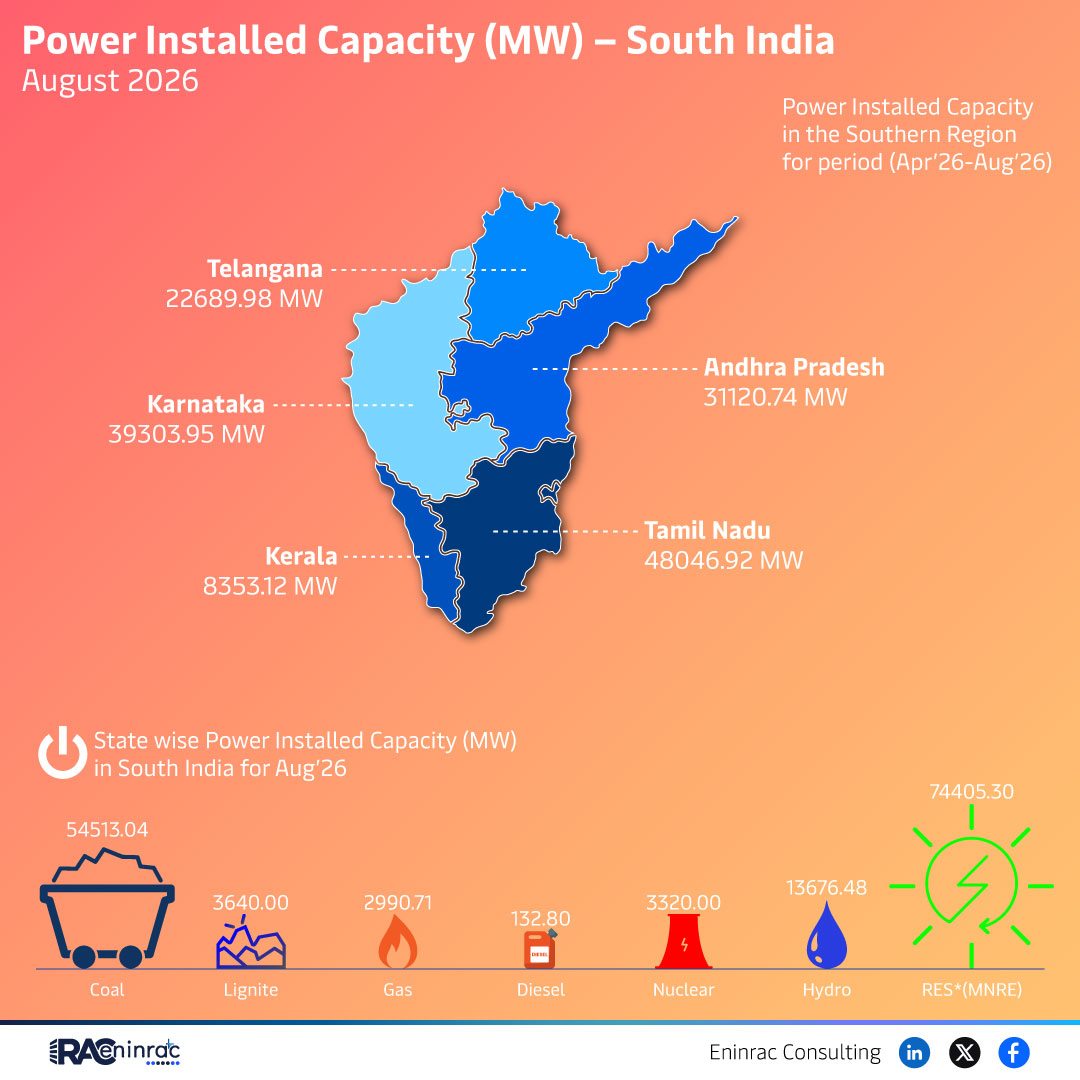
The data shows that South India’s total installed capacity reached roughly 74,405 MW by August 2026, with significant contributions from both conventional and renewable sources. A key insight is the stark contrast between states: Kerala leads with over 48,000 MW, while Telangana reports a modest figure around 22,690 MW. The mix of coal, lignite, gas, diesel, nuclear, hydro and renewable energy sources (RES) highlights a diversified energy portfolio that still leans heavily on traditional fuels.
Statewise Capacity Comparison
When we break the numbers down, Karnataka registers approximately 31,120 MW of installed capacity, supplemented by an additional 39,304 MW from related projects, positioning it as the second‑largest contributor after Kerala. Andhra Pradesh’s capacity sits near 31,120 MW as well, reflecting a strong industrial base. Tamil Nadu’s figures are less clear in the raw data, but the presence of multiple entries suggests a substantial capacity portfolio. Telangana’s 22,690 MW, while lower than its southern neighbours, still represents a significant share of the regional total. Kerala’s 48,047 MW, combined with an extra 8,353 MW from ancillary sources, underscores its dominance in the Southern grid.
Impact on Sectors and Industries
The capacity distribution influences several sectors. Heavy‑industry regions in Karnataka and Andhra Pradesh benefit from reliable coal and gas plants, supporting manufacturing and export activities. Renewable projects, especially hydro and solar under the MNRE’s RES category, enhance grid stability and reduce emissions, attracting green‑finance and ESG‑focused investors. Policymakers can leverage the data to prioritize new transmission infrastructure, balance fuel mix, and address regional disparities. Consumers in high‑capacity states enjoy better reliability, while lower‑capacity areas may face higher tariffs or need supplemental power imports.
Key Takeaways
- South India’s total installed capacity reached roughly 74,405 MW by August 2026.
- Kerala leads with over 48,000 MW, followed by Karnataka and Andhra Pradesh each around 31,000 MW.
- Telangana’s capacity is comparatively lower at about 22,690 MW.
- The energy mix includes coal, lignite, gas, diesel, nuclear, hydro and RES, indicating diversification.
- Renewable Energy Sources (RES) under MNRE are gaining traction, supporting sustainability goals.
- Capacity imbalances create opportunities for infrastructure investment and policy intervention.
FAQs
Which South Indian state had the highest installed capacity in August 2026?
Kerala, with a combined capacity of more than 48,000 MW, topped the regional ranking.
How does the renewable share compare to conventional sources?
The data lists hydro and RES (MNRE) alongside coal, lignite, gas, diesel and nuclear, indicating that renewables are present but conventional fuels still dominate the overall mix.
What implications does this capacity data have for investors?
Investors can identify growth hotspots such as Kerala’s expanding renewable projects, while also spotting opportunities in under‑served markets like Telangana for capacity upgrades.
How might policymakers use this information?
Policymakers can target transmission upgrades, incentivize renewable deployment in low‑capacity states, and balance the fuel mix to improve grid resilience.
Is the power capacity trend upward compared to previous periods?
Yes, the August 2026 figures show an increase over earlier quarters, reflecting ongoing commissioning of new plants and expansion of existing facilities across the Southern region.