
Introduction
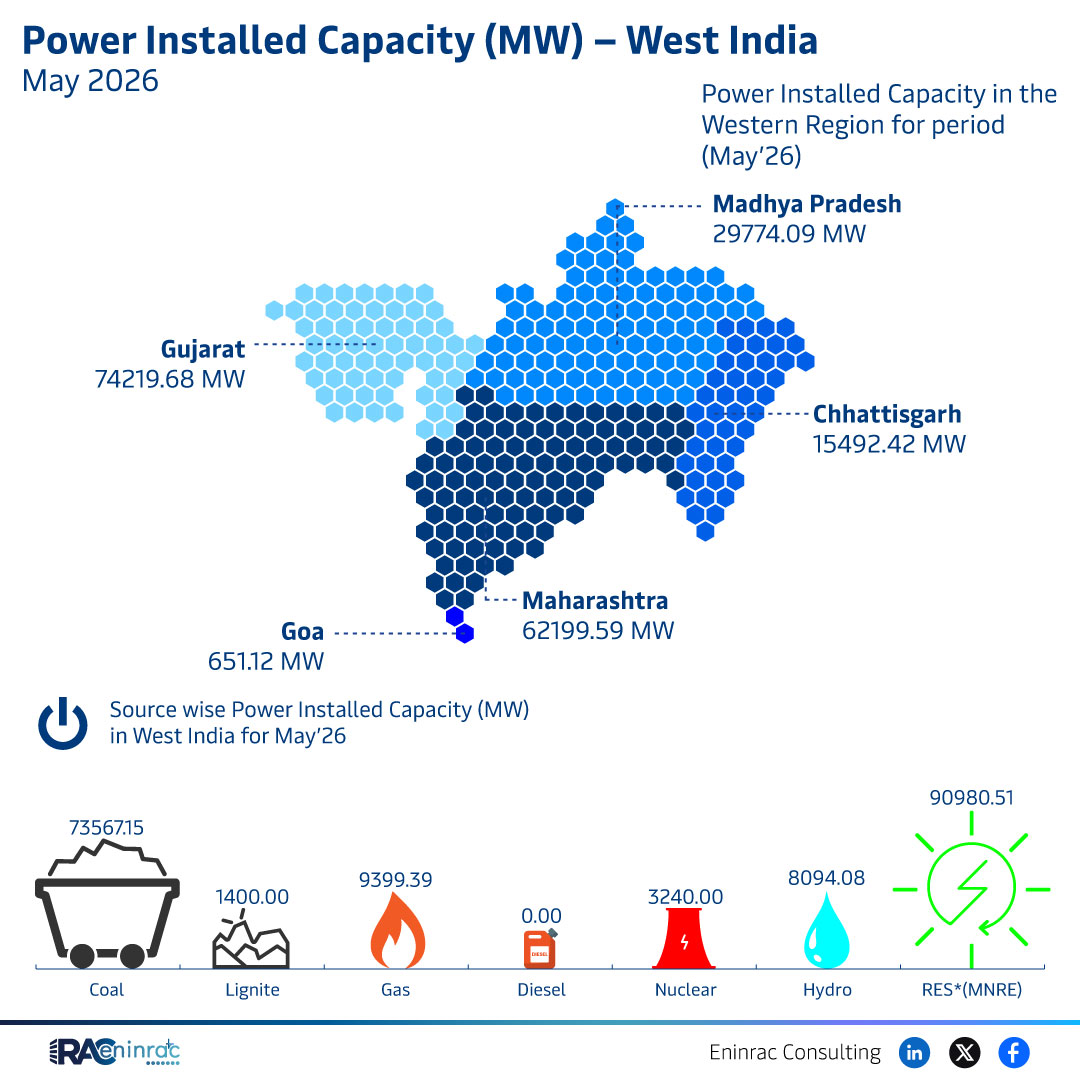
The Western region of India recorded its power installed capacity for May 2026, highlighting the contribution of each state and the mix of energy sources. Understanding this data is essential for investors, policymakers, and industry analysts who track energy trends and regional development.
What Does the Data Reveal About This Topic?
The data shows that Gujarat leads with 74,219.68 MW, followed by Maharashtra at 62,199.59 MW and Madhya Pradesh with 29,774.09 MW. The mix includes coal, lignite, gas, diesel, nuclear, hydro and renewable sources, indicating a diversified energy portfolio across West India.
State‑wise Capacity Comparison in West India
Gujarat’s capacity of over 74 GW surpasses other states, reflecting strong industrial demand and robust infrastructure. Maharashtra’s 62 GW positions it as a close second, driven by urban consumption and manufacturing hubs. Madhya Pradesh, while not a coastal state, contributes nearly 30 GW, showing the spread of generation assets inland. Smaller contributors like Goa add just over 650 MW, underscoring the disparity between major and minor players.
Impact on Sectors and Industries
The capacity distribution influences several sectors. Heavy industry and manufacturing benefit from reliable coal and gas plants, while renewable growth supports green tech investments. Hydro and nuclear capacities provide grid stability, essential for IT and services sectors in Maharashtra and Gujarat. Investors can gauge risk and opportunity by examining the balance between conventional and renewable sources.
Key Takeaways
- Gujarat holds the highest installed capacity in West India at 74,219.68 MW.
- Maharashtra follows with 62,199.59 MW, driven by urban demand.
- Madhya Pradesh contributes 29,774.09 MW, highlighting inland generation.
- The energy mix includes coal, lignite, gas, diesel, nuclear, hydro and renewables.
- Renewable sources are expanding, supporting India’s clean energy goals.
- Capacity disparities create investment opportunities in under‑served states.
FAQs
Which state has the largest power capacity in West India?
Gujarat leads with 74,219.68 MW of installed capacity.
How does Maharashtra’s capacity compare to Gujarat’s?
Maharashtra has 62,199.59 MW, about 12,000 MW less than Gujarat.
What energy sources are included in the West India mix?
The mix comprises coal, lignite, gas, diesel, nuclear, hydro and renewable energy.
Why is renewable energy important for West India?
Renewables help meet clean energy targets, reduce emissions and attract green investments.
Can investors find opportunities in smaller states like Goa?
Yes, the lower capacity in Goa indicates potential for new projects and infrastructure development.