
Introduction
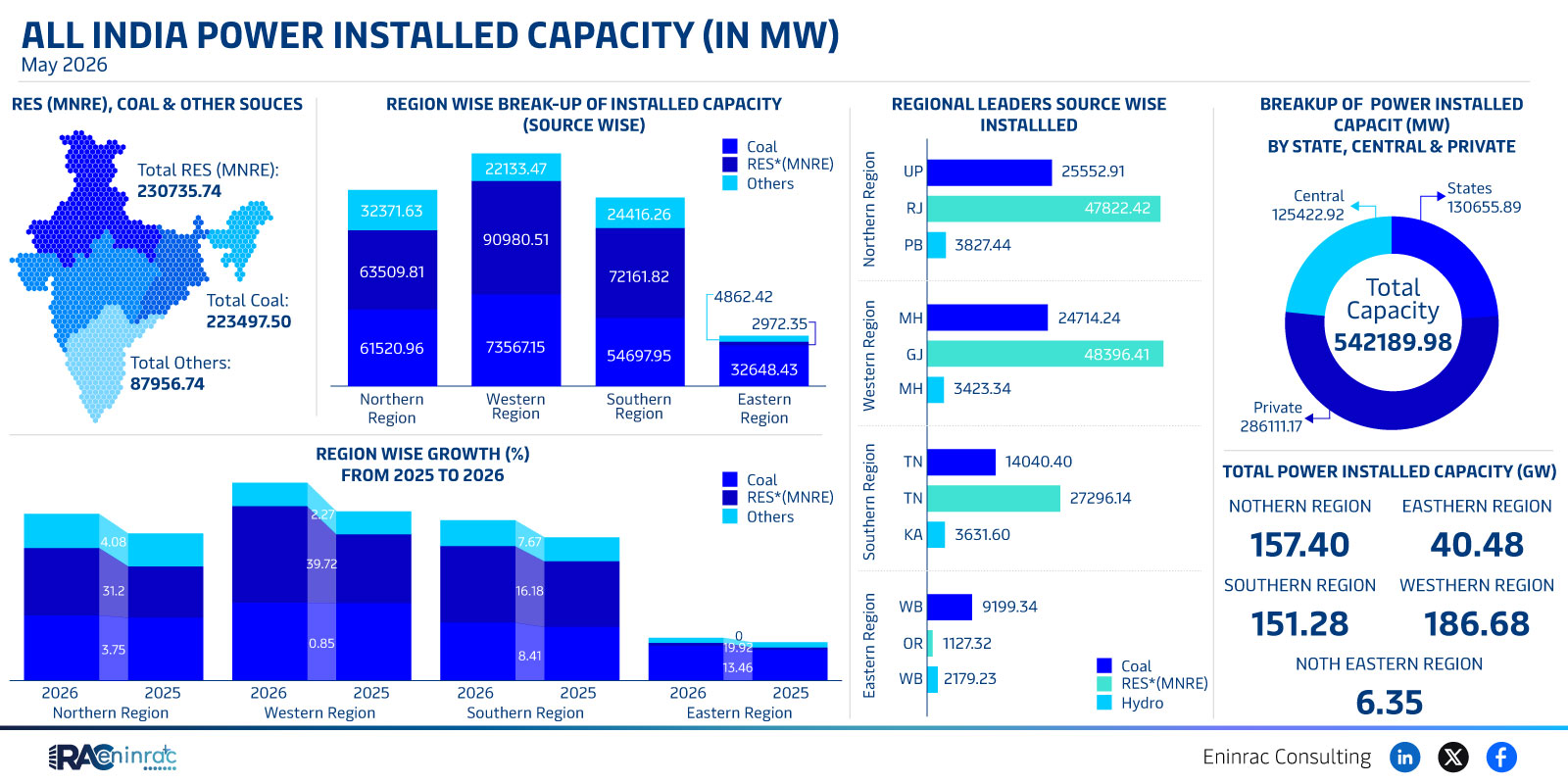
India's power sector reached a pivotal moment in May 2026, with total installed capacity crossing 540,000 MW. The data highlights contributions from renewable sources, coal, and other fuels across the country’s major regions. Understanding this capacity mix is essential for investors, policymakers, and industry stakeholders who track the nation’s energy transition.
What Does the Data Reveal About This Topic?
The figures show that renewable energy (RES) installed capacity reported by MNRE stands at 230,735.74 MW, while coal accounts for 223,497.50 MW. Other sources add roughly 72,162 MW. This balance indicates that renewables now represent a slightly larger share of the overall mix, signaling accelerating growth in clean power.
Regional Capacity Highlights for May 2026
When the capacity is broken down by region, the Northern region leads with 3,631.60 GW of total installed power, followed by the Eastern region at 2,179.23 GW of coal and 2179.23 GW of RES. The Southern region contributes 9,199.34 GW, while the Western region adds 1,517.40 GW of capacity. These numbers illustrate that the Southern and Northern zones dominate overall generation, whereas the Eastern region shows a strong coal presence alongside growing renewable installations.
Impact on Sectors and Industries
The shift toward higher renewable capacity influences multiple sectors. Utilities are investing in grid modernization to accommodate variable generation. Manufacturing firms benefit from cleaner energy tariffs, while financial institutions see new opportunities in green bonds and renewable project financing. Policymakers can leverage the data to fine‑tune subsidies, transmission planning, and emissions targets.
Key Takeaways
- Renewable installed capacity exceeds 230 GW, surpassing coal for the first time in reported figures.
- The Southern region holds the highest total capacity, driven by both coal and renewable plants.
- Eastern India remains coal‑heavy but is expanding its renewable portfolio.
- Private sector participation is significant, contributing over 28,000 MW to the national grid.
- Growth from 2025 to 2026 is most pronounced in the Northern and Western regions.
- Overall capacity growth supports India's commitment to achieve 450 GW of renewable power by 2030.
FAQs
What is the total installed power capacity in India as of May 2026?
India’s total installed capacity is approximately 542,190 MW, combining renewable, coal, and other sources.
Which region has the highest renewable capacity?
The Southern region leads in renewable installations, contributing a substantial share of the 230,735 MW total.
How does coal capacity compare to renewable capacity?
Coal capacity stands at about 223,498 MW, slightly below renewable capacity, indicating a shift toward cleaner energy.
What role does the private sector play in capacity growth?
Private entities add roughly 28,611 MW, highlighting strong private investment in both renewable and conventional projects.
What are the implications for investors?
Investors can expect expanding opportunities in renewable projects, grid upgrades, and green financing as the sector continues to grow.