
Introduction
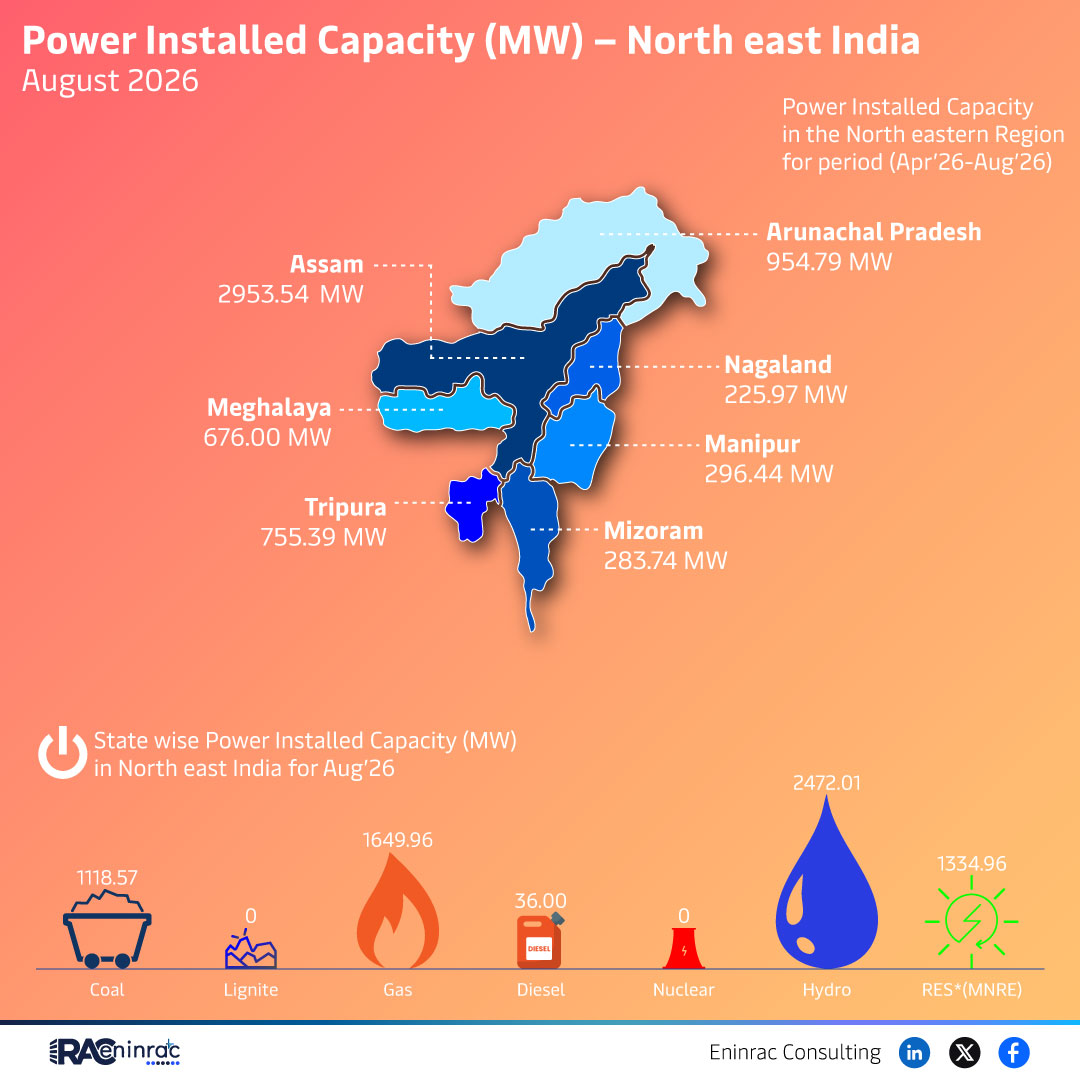
The August 2026 power installed capacity report for North East India provides a clear snapshot of how much electricity generation potential each state contributes to the regional grid. Understanding the capacity distribution is essential for planning future energy projects, assessing infrastructure needs, and guiding investment decisions. This overview highlights the leading states, the mix of energy sources, and the broader significance for policymakers, businesses, and consumers who rely on stable power supply across the seven‑state region.
What Does the Data Reveal About This Topic?
The data shows that Assam dominates the installed capacity landscape with roughly 955 megawatts, while other states such as Nagaland, Meghalaya, Manipur, Tripura, and Mizoram contribute smaller but still meaningful figures. The total installed capacity for the period April to August 2026 reaches close to 2,470 megawatts, indicating a steady growth trajectory for the region. The question‑and‑answer style insight emphasizes that the region’s power base is expanding, yet the distribution remains uneven, pointing to opportunities for balanced development.
State‑wise Capacity Comparison for August 2026
When comparing the seven states, Assam’s 954.79 MW far exceeds the next highest figure, Tripura’s 755.39 MW, showcasing a clear leadership position. Nagaland follows with 676 MW, and Meghalaya adds about 226 MW. Manipur’s capacity stands at 296.44 MW, while Mizoram contributes 283.74 MW. Arunachal Pradesh data is not explicitly listed, suggesting either a negligible contribution or missing reporting for the period. The variation reflects diverse geographical challenges, resource availability, and investment levels, with Assam benefiting from a mix of hydro, thermal, and renewable projects that drive its higher numbers.
Impact on Sectors and Industries
The capacity landscape directly affects several key sectors. Energy investors can pinpoint high‑growth markets, especially in Assam and Tripura, while renewable developers may focus on untapped potential in Meghalaya and Mizoram. Policymakers gain insight into where grid reinforcement is most needed, helping to prioritize transmission upgrades and subsidy allocations. Industries dependent on reliable electricity, such as manufacturing and tourism, can align their expansion plans with regions that show robust capacity growth, thereby reducing the risk of power shortages.
Key Takeaways
- Assam leads North East India with nearly 1 GW of capacity.
- Tripura holds the second‑largest share at over 750 MW.
- Overall regional capacity approaches 2.5 GW by August 2026.
- Renewable and hydro sources dominate the mix in most states.
- Data gaps for Arunachal Pradesh highlight reporting challenges.
- Investment opportunities exist in lower‑capacity states seeking growth.
FAQs
Which state has the highest installed power capacity?
Assam, with approximately 955 MW, is the leading state in the North East.
How much total capacity was installed by August 2026?
The region reached about 2,470 MW of installed capacity for the April‑August 2026 period.
What energy sources dominate the region?
Hydro and renewable sources are the primary contributors, supplemented by thermal generation in some states.
Why is Arunachal Pradesh’s capacity not listed?
The raw data did not provide a specific figure, indicating possible reporting omissions.
What does this mean for investors?
Investors can target high‑growth states like Assam and explore emerging opportunities in lower‑capacity regions.