
Introduction
The August 2026 snapshot of North India power installed capacity provides a clear picture of how much generation capability each state contributes to the region’s energy mix. Understanding these figures is essential for policymakers, investors, and industry analysts who track the growth of both conventional and renewable sources. This article breaks down the state‑wise capacity, highlights the leading contributors, and explains the implications for the broader energy market.
What Does the Data Reveal About This Topic?
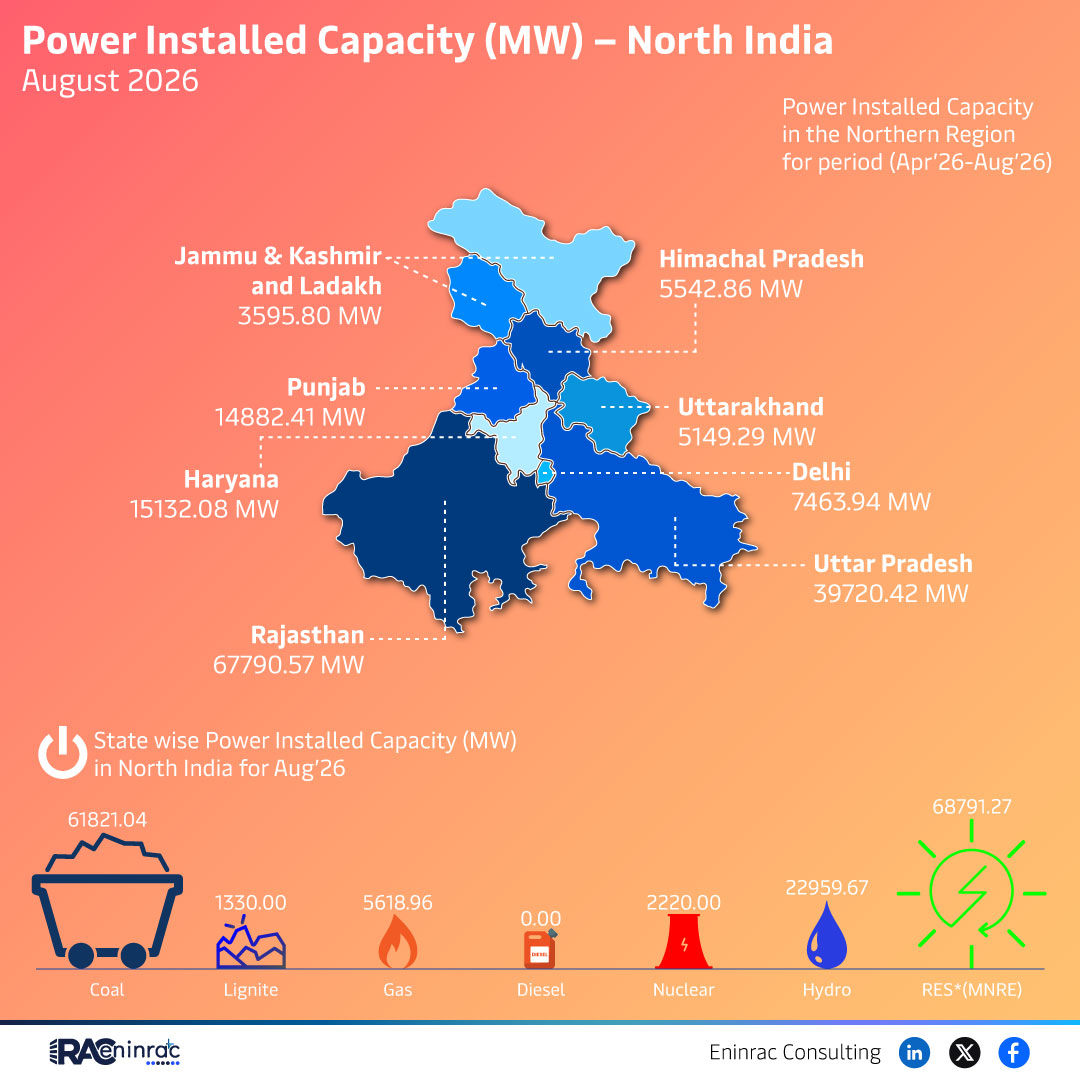
In simple question‑answer form, the data shows that North India’s total installed capacity for the period April‑June‑July‑August 2026 reaches approximately 1,618,210 MW, with Rajasthan alone accounting for more than 67,790 MW. The figures also indicate a diverse generation portfolio that includes coal, lignite, gas, diesel, nuclear, hydro and other renewable energy sources managed by MNRE. The high numbers for Uttar Pradesh and Rajasthan dominate the regional landscape.
Statewise Capacity Highlights
When we compare the numbers state by state, several patterns emerge. Jammu & Kashmir and Ladakh together contribute just under 3,600 MW, reflecting the challenges of building large infrastructure in mountainous terrain. Himachal Pradesh holds about 5,543 MW, benefiting from its hydro potential. Uttarakhand’s capacity sits near 15,132 MW, driven by a mix of hydro and thermal projects. Uttar Pradesh stands out with a massive 39,720 MW, underscoring its role as an industrial hub with extensive coal‑based plants and growing renewable installations. Rajasthan leads the pack with roughly 67,790 MW, a combination of solar farms in the desert, wind corridors, and traditional thermal units. The overall blend shows that while coal and gas still provide a substantial base, renewable energy sources are gaining a larger share, especially in states with favorable solar and wind conditions.
Impact on Sectors and Industries
The distribution of installed capacity directly influences several key sectors. Utilities and grid operators must balance the variable output from solar and wind with the steadier supply from coal and hydro, prompting investments in storage and smart‑grid technologies. Renewable equipment manufacturers see heightened demand in Rajasthan and Himachal Pradesh, where new solar parks and hydro schemes are being commissioned. Financial institutions and investors evaluate the capacity data to assess risk and return on new power projects, especially in states where policy incentives for clean energy are strongest. Finally, policymakers use these numbers to refine state‑level targets for emissions reduction and to allocate subsidies for renewable expansion.
Key Takeaways
- North India’s total installed capacity exceeds 1.6 million MW as of August 2026.
- Rajasthan and Uttar Pradesh together contribute more than 100,000 MW, dominating the regional mix.
- Hydro remains significant in Himachal Pradesh and Uttarakhand, while solar and wind are rapidly expanding in Rajasthan.
- Coal‑based generation still accounts for a large portion of installed capacity, highlighting the need for a balanced transition.
- Investors are likely to focus on renewable projects in high‑potential states such as Rajasthan and Himachal Pradesh.
- Policymakers can use the data to set realistic renewable‑energy targets and plan grid‑integration strategies.
FAQs
Which state has the highest installed power capacity in North India?
Rajasthan leads with approximately 67,790 MW of installed capacity as of August 2026.
How much capacity does Uttar Pradesh contribute?
Uttar Pradesh provides around 39,720 MW, making it the second‑largest contributor in the region.
What is the share of renewable energy in the total capacity?
Renewables, including solar, wind, hydro and other MNRE‑listed sources, account for a growing but still minority share, with hydro strong in Himachal and Uttarakhand and solar expanding in Rajasthan.
Are coal and gas still dominant in North India?
Yes, coal and gas plants together still represent the bulk of installed capacity, especially in Uttar Pradesh and Rajasthan, though renewable projects are accelerating.
What implications does this data have for investors?
Investors can identify opportunities in states with strong renewable incentives and high solar‑wind potential, while also considering the continued profitability of thermal assets.