
Introduction
The September 2026 power installed capacity report for North East India provides a clear snapshot of electricity generation potential across the region. Understanding how much capacity each state contributes is essential for investors, policymakers, and energy planners. This data highlights the balance between renewable and conventional sources, reveals regional strengths, and outlines the implications for future development and sustainable growth.
What Does the Data Reveal About This Topic?
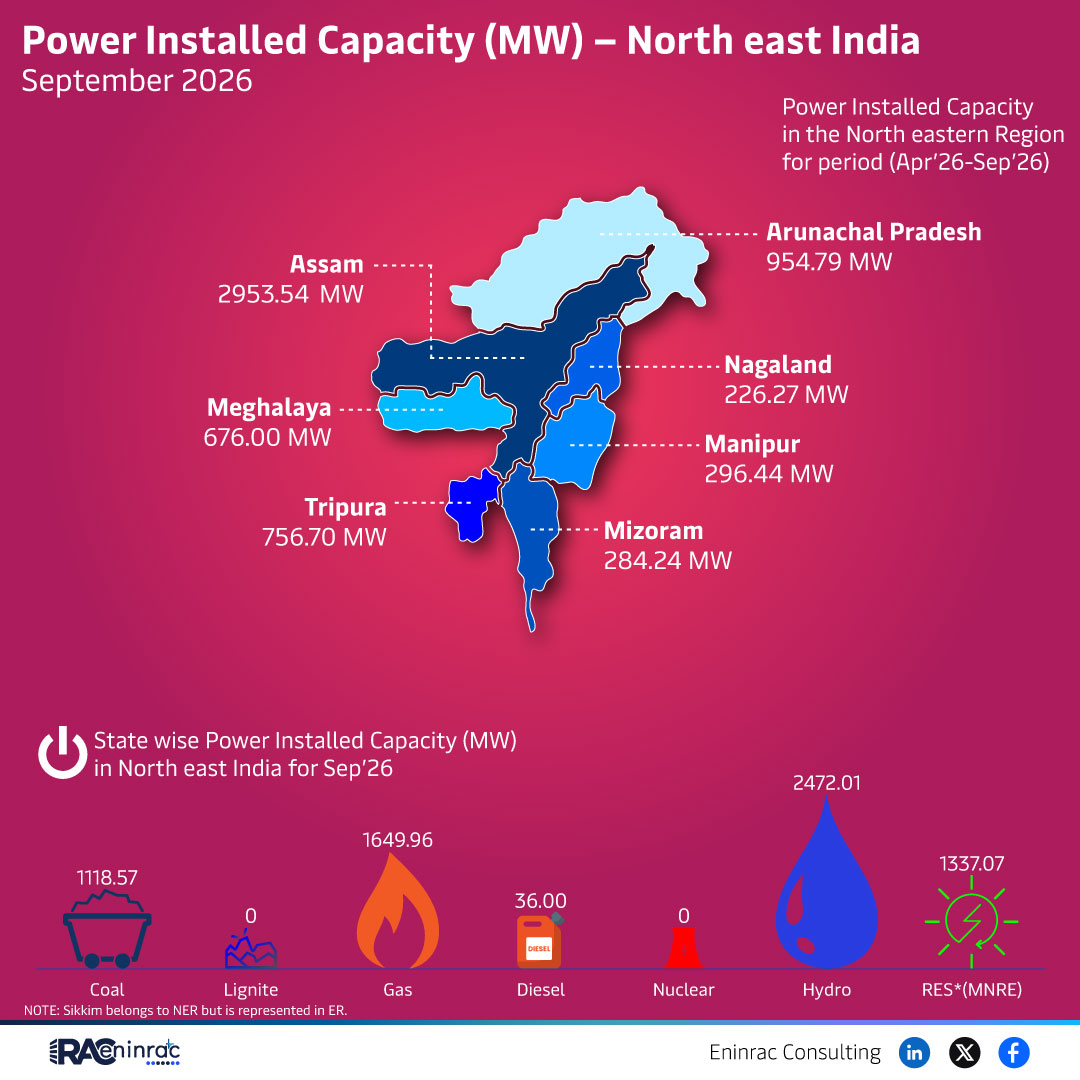
The data shows that Assam dominates with 2,953.54 MW, followed by Arunachal Pradesh at 954.79 MW. Nagaland, Meghalaya, Tripura and Mizoram contribute 226.27 MW, 296.44 MW, 756.70 MW and 284.24 MW respectively. Together these figures illustrate the uneven distribution of Power Installed Capacity North East India, with a clear lead in the eastern plains and a modest presence in the hill states.
State‑wise Installed Capacity Highlights for September 2026
Assam’s near‑3 GW capacity reflects its extensive hydro and thermal infrastructure, making it the regional power hub. Arunachal Pradesh’s capacity, largely hydro‑focused, underscores its growing role in renewable generation. Nagaland’s modest 226 MW points to limited grid connectivity, while Meghalaya’s 296 MW indicates emerging hydro projects. Tripura’s 756 MW, driven by both thermal and renewable assets, shows a diversified mix, and Mizoram’s 284 MW highlights ongoing development of small‑scale hydro plants. The overall picture suggests a gradual shift toward renewable resources, yet conventional sources remain significant.
Impact on Sectors and Industries
Higher installed capacity in Assam supports heavy industry, mining, and agro‑processing, while also attracting private investment in renewable projects. Arunachal’s growing hydro capacity enhances regional energy security and offers export potential to neighboring states. Limited capacity in Nagaland and Mizoram constrains industrial growth, prompting policy focus on grid expansion and renewable incentives. Overall, the capacity mix influences tariff structures, financing decisions, and the strategic planning of both public utilities and private developers across the North Eastern Region.
Key Takeaways
- Assam leads with almost 3 GW, shaping the region’s energy landscape.
- Arunachal Pradesh’s hydro capacity highlights strong renewable potential.
- Tripura shows a balanced portfolio of thermal and renewable generation.
- Nagaland and Mizoram lag, indicating a need for infrastructure investment.
- Renewable sources are expanding, but conventional energy still plays a major role.
- Capacity distribution directly affects regional economic development and policy priorities.
FAQs
Which state has the highest power installed capacity in September 2026?
Assam, with 2,953.54 MW, holds the top position in the region.
What type of energy sources dominate in Arunachal Pradesh?
Hydroelectric projects dominate, contributing the bulk of its 954.79 MW capacity.
How does Tripura’s capacity compare to other hill states?
Tripura’s 756.70 MW is significantly higher than Nagaland and Mizoram, reflecting a more diversified energy mix.
Why is renewable energy important for North East India?
Renewables reduce dependence on fossil fuels, support climate goals, and leverage the region’s abundant water resources.
What are the investment implications of these capacity figures?
Higher capacity states attract more private financing, while lower‑capacity regions present opportunities for grid upgrades and renewable project development.