
Introduction
The September 2026 snapshot of power installed capacity in East India provides a comprehensive view of the region’s energy landscape. Understanding the scale and composition of installed capacity is essential for investors, policymakers, and industry analysts who track growth, plan infrastructure, and assess sustainability goals. This report breaks down total megawatts by state, examines the fuel mix across coal, lignite, gas, diesel, nuclear, hydro and renewable sources, and highlights key trends that shape the future of power generation in the Eastern region.
What Does the Data Reveal About This Topic?
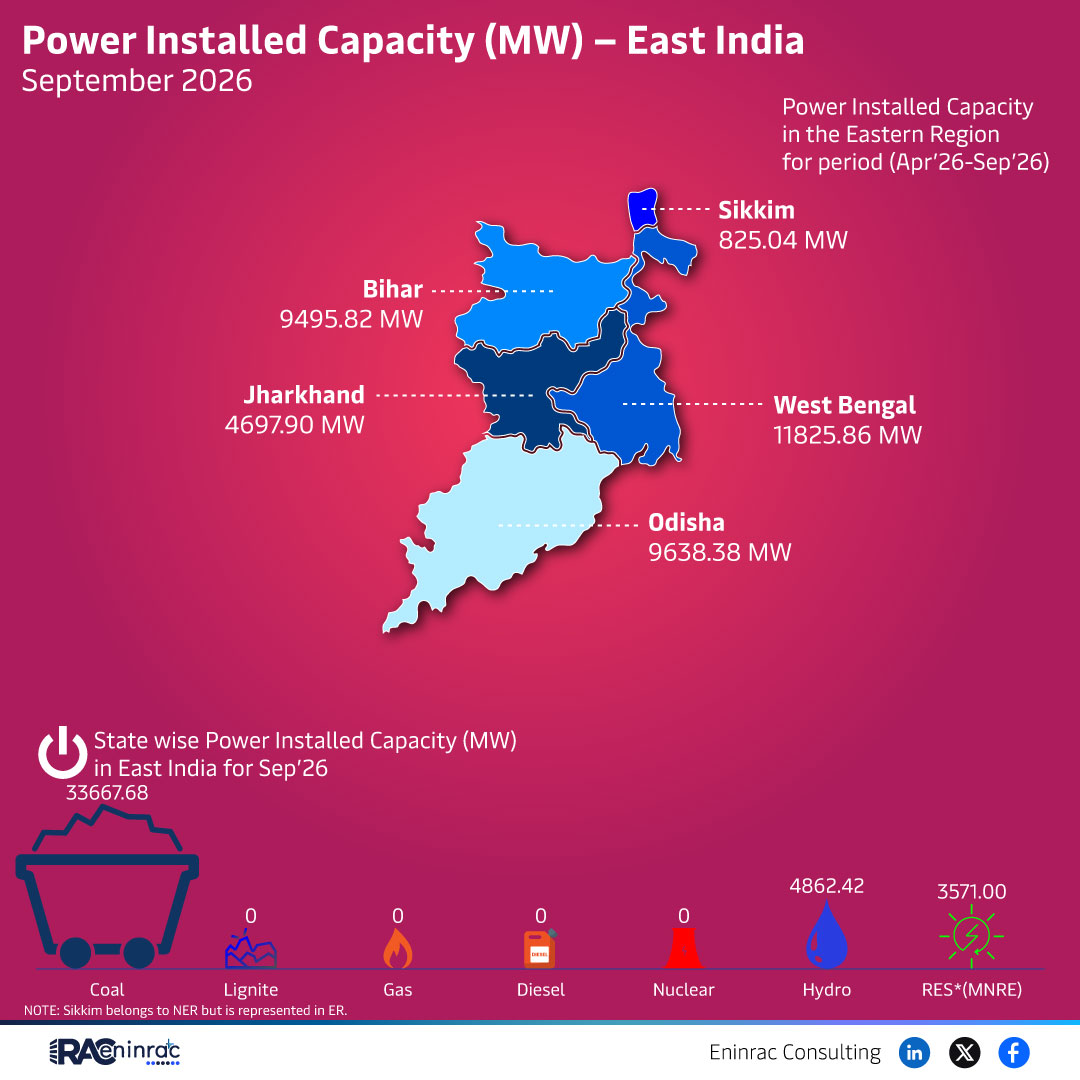
What does the September 2026 data tell us about power installed capacity in East India? The figures show a combined capacity of roughly 33,667.68 MW across the region, with West Bengal contributing the largest share at 9,495.82 MW, followed by Jharkhand and other eastern states. The mix indicates a dominant reliance on coal and lignite, while renewable energy sources such as hydro and other RES technologies are gaining measurable ground. These insights point to both ongoing dependence on conventional fuels and a gradual shift toward cleaner generation.
State‑wise Comparison of Installed Capacity
When comparing states, West Bengal leads with nearly 9,500 MW, reflecting its extensive industrial base and legacy power plants. Jharkhand follows with a capacity of around 4,697.90 MW, driven largely by coal‑based facilities. Sikkim, although part of the North Eastern Region administratively, is represented here with a modest 825.04 MW, illustrating the diverse scale of generation across the Eastern corridor. The data also distinguishes between fuel categories, showing that coal, lignite and gas remain the primary contributors, while hydro and other renewable sources together account for a growing portion of total capacity.
Impact on Sectors and Industries
The distribution of installed capacity influences multiple sectors. Energy‑intensive industries benefit from the reliability of coal and gas plants, while emerging renewable projects attract green finance and support government emissions targets. Investors can assess risk by gauging the balance between conventional and renewable assets, whereas policymakers can design incentives to accelerate the transition to sustainable sources. Consumers ultimately experience the effects through electricity pricing, grid stability, and the availability of cleaner energy options.
Key Takeaways
- East India’s total installed capacity reached approximately 33,668 MW in September 2026.
- West Bengal holds the highest state‑level capacity, surpassing 9,400 MW.
- Coal and lignite dominate the fuel mix, but hydro and renewable sources are expanding.
- Sikkim’s 825 MW illustrates smaller yet strategic contributions from NE‑linked states.
- The energy profile supports both traditional industrial demand and growing green investment.
- Policymakers can leverage the data to balance energy security with sustainability goals.
FAQs
What is the total power installed capacity in East India for September 2026?
The region recorded about 33,667.68 MW of installed capacity during the April‑September 2026 period.
Which state has the largest installed capacity in the Eastern region?
West Bengal leads with roughly 9,495.82 MW, making it the most significant power generator in East India.
How does the fuel mix break down across the region?
Coal and lignite remain the primary sources, complemented by gas, diesel, nuclear, hydro and an increasing share of renewable energy sources.
Why is Sikkim included in the Eastern region data?
Sikkim belongs to the North Eastern Region administratively but is represented here to provide a complete view of power capacity across neighboring eastern states.
What trends are emerging for renewable energy in East India?
Renewable sources, especially hydro, are gradually increasing their share, indicating a shift toward cleaner generation alongside the traditional coal base.