
Introduction
The September 2026 power installed capacity report for North India provides a detailed snapshot of the region’s energy landscape. Understanding the total megawatt (MW) figures and the distribution across states is crucial for policymakers, investors, and analysts who track energy security, grid reliability, and future expansion needs. This article breaks down the raw numbers, highlights the leading states, compares the mix of conventional and renewable sources, and explains how these figures influence market dynamics and strategic decisions.
What Does the Data Reveal About This Topic?
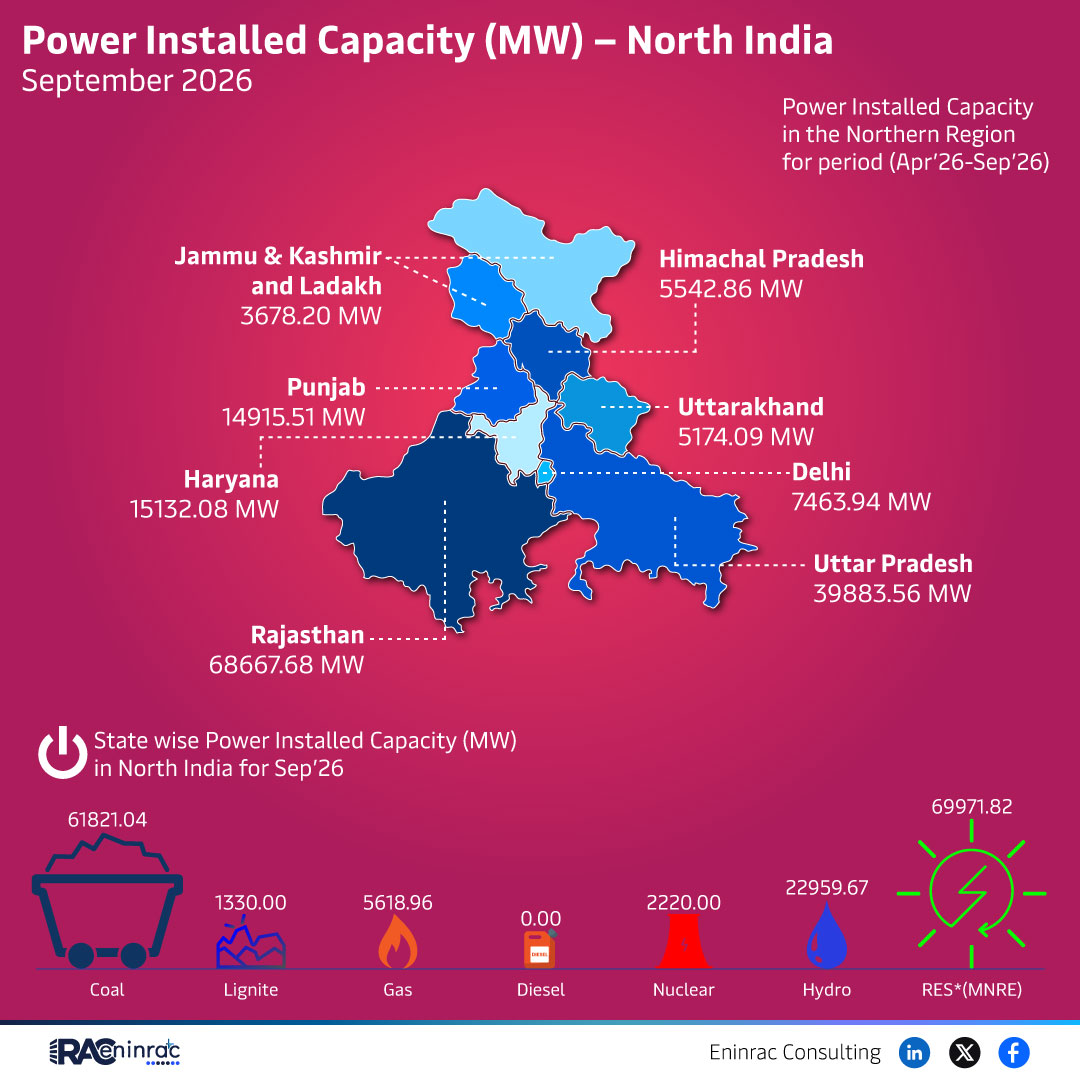
The data shows a total installed capacity of 699,722 MW for the northern region during the April‑September 2026 period, with Rajasthan contributing the largest share at 68,667.68 MW. The figures illustrate a diversified energy mix that includes coal, lignite, gas, diesel, nuclear, hydro and renewable sources, reflecting both legacy generation and growing clean‑energy investments.
State‑wise Capacity Comparison in North India
Rajasthan tops the list with more than 68 GW, followed by Uttar Pradesh at 39,883.56 MW and Haryana at 15,132.08 MW. Smaller yet significant contributors include Jammu & Kashmir and Ladakh (3,678.20 MW), Himachal Pradesh (5,542.86 MW), Uttarakhand (5,174.09 MW) and the combined figure for the remaining states reaching 61,821.04 MW. The distribution underscores a clear north‑south gradient where western and central states dominate capacity, while the Himalayan states maintain modest but strategic hydro and renewable footprints.
Impact on Sectors and Industries
These capacity numbers influence several sectors. Power generators can align new plant planning with the existing mix, emphasizing renewable growth in Himachal Pradesh and Uttarakhand. Investors assess risk and return based on state‑level capacity potential, especially in high‑growth markets like Rajasthan. Policymakers use the data to design balanced subsidies, grid upgrades, and emissions targets, while utilities plan transmission expansions to integrate dispersed renewable projects. Consumers ultimately benefit from improved reliability and a gradual shift toward cleaner energy sources.
Key Takeaways
- North India’s total installed capacity reached 699,722 MW in September 2026.
- Rajasthan leads with 68,667.68 MW, making it the dominant power hub.
- Uttar Pradesh and Haryana secure the second and third positions respectively.
- Renewable sources, especially hydro in Himachal Pradesh and Uttarakhand, are expanding.
- Coal and gas remain significant, indicating a mixed energy transition.
- State‑level capacity data guides investment, policy, and grid planning decisions.
FAQs
Which state has the highest power installed capacity in North India?
Rajasthan holds the highest capacity at 68,667.68 MW, surpassing all other northern states.
How much total capacity does North India have as of September 2026?
The region’s total installed capacity is 699,722 MW for the April‑September 2026 period.
What is the role of renewable energy in the northern region’s mix?
Renewables, including hydro, contribute a growing share, particularly in Himachal Pradesh and Uttarakhand, supporting the transition to cleaner power.
Why is the capacity data important for investors?
Investors use the data to identify high‑potential markets, assess risk, and allocate capital toward expanding or modernising generation assets.
How does the capacity distribution affect policy decisions?
Policymakers rely on state‑wise figures to target subsidies, plan grid upgrades, and set emissions targets aligned with regional generation profiles.