
Introduction
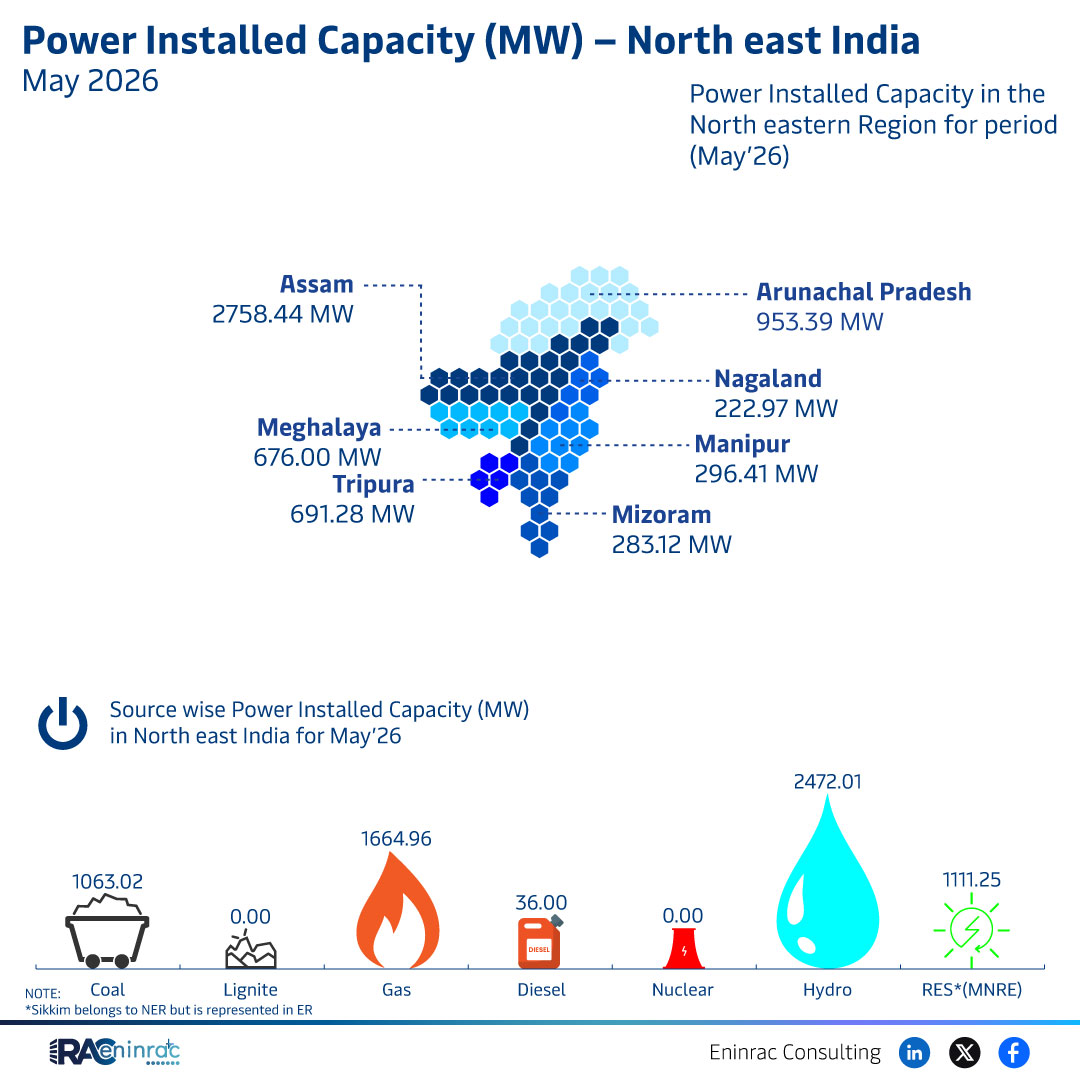
The May 2026 power installed capacity snapshot for North East India provides a clear view of how each state contributes to the region’s energy mix. Understanding these figures is essential for policymakers, investors, and industry analysts who track growth trends, renewable integration, and infrastructure needs across the eight states.
What Does the Data Reveal About This Topic?
Which states lead in installed capacity and what does the distribution tell us about regional energy priorities? The data shows Assam dominates with 2,758.44 MW, followed by Meghalaya at 676 MW and Tripura at 691.28 MW. Smaller states such as Nagaland (222.97 MW) and Mizoram (283.12 MW) lag behind, highlighting uneven development and potential opportunities for targeted investments.
State‑by‑State Capacity Comparison
When comparing capacities, Assam’s figure is more than ten times that of Nagaland, underscoring its role as the power hub of the region. Arunachal Pradesh’s 953.39 MW places it ahead of several smaller states, reflecting recent hydro and renewable projects. Sikkim, although part of the North Eastern Region, is reported under the Eastern Region, indicating data‑collection nuances that analysts must consider.
Impact on Sectors and Industries
Higher installed capacity drives industrial growth, improves grid reliability, and attracts renewable‑energy investors. States with larger capacities, like Assam and Arunachal Pradesh, are better positioned to support manufacturing, mining, and tourism activities. Conversely, lower‑capacity states may face constraints in attracting large‑scale projects, prompting a need for policy incentives and infrastructure upgrades.
Key Takeaways
- Assam leads the region with over 2,700 MW, accounting for the majority of total capacity.
- Arunachal Pradesh and Meghalaya show strong growth, indicating successful hydro and renewable initiatives.
- Smaller states such as Nagaland and Mizoram have limited capacity, highlighting investment gaps.
- Data classification places Sikkim outside the North East dataset, suggesting reporting inconsistencies.
- The mix of coal, hydro, and renewable sources shapes each state’s energy strategy.
- Policymakers can use these insights to prioritize grid expansion and renewable incentives.
FAQs
Which state has the highest installed power capacity in North East India?
Assam, with 2,758.44 MW, holds the highest capacity.
How does Arunachal Pradesh’s capacity compare to Meghalaya?
Arunachal Pradesh has 953.39 MW, nearly 40% higher than Meghalaya’s 676 MW.
Why is Sikkim not listed with the other North Eastern states?
Sikkim is reported under the Eastern Region in the source, indicating a classification difference.
What opportunities exist for investors in low‑capacity states?
States like Nagaland and Mizoram offer growth potential for renewable projects, grid upgrades, and government incentives.
How can policymakers use this data?
By identifying capacity gaps, they can allocate resources for infrastructure, promote renewable integration, and balance regional development.