
Introduction
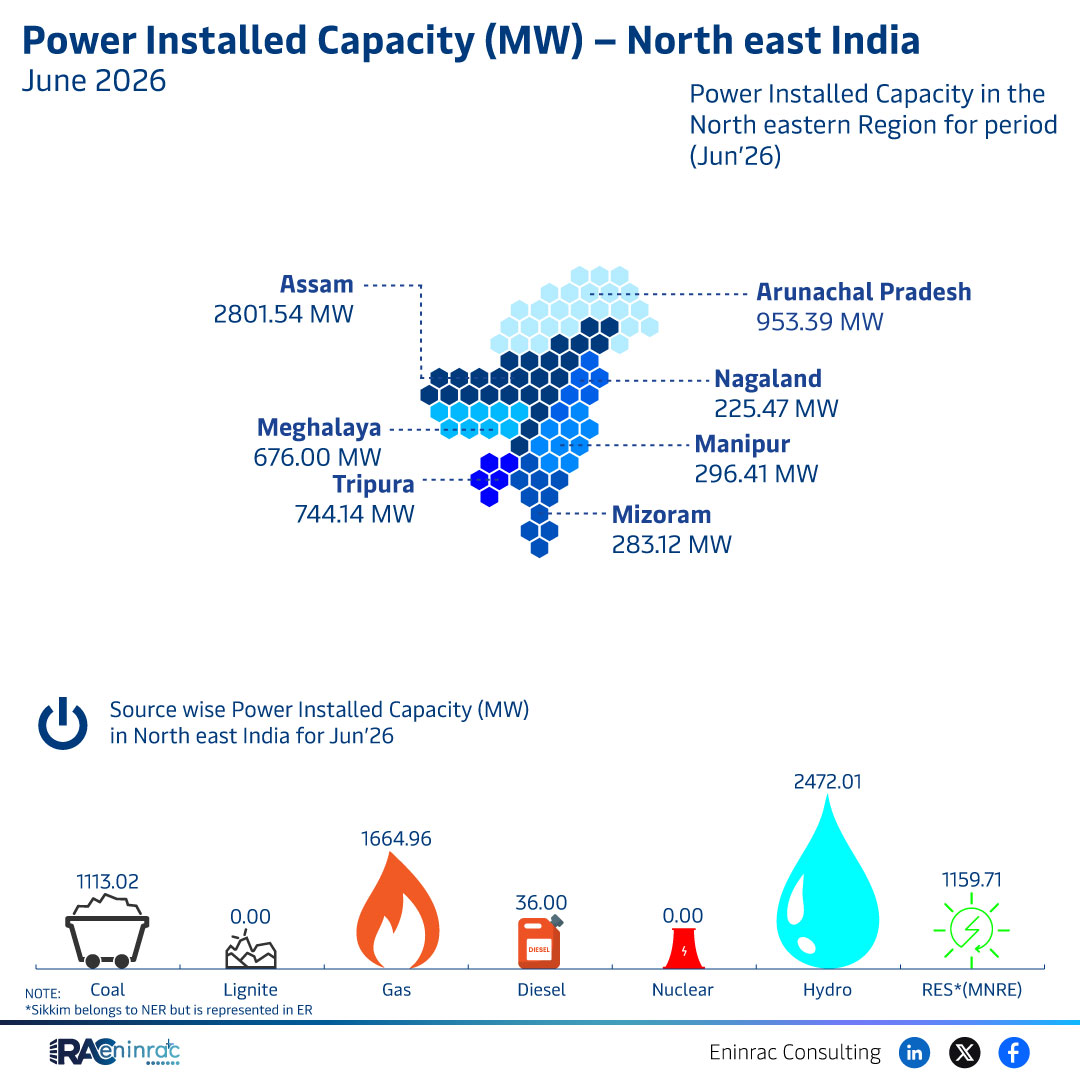
The June 2026 snapshot of North East India power installed capacity provides a clear picture of how electricity generation is distributed across the eight northeastern states. Understanding this data is crucial for policymakers, investors, and energy analysts who track regional development, renewable integration, and infrastructure planning. In this article we break down the total megawatt figures for each state, compare their contributions, and explore the implications for the broader energy sector. Readers will learn which states lead the capacity race, how conventional and renewable sources share the mix, and what trends may shape future power projects in the region.
What Does the Data Reveal About This Topic?
What insights does the June 2026 power installed capacity data give us about the energy landscape of North East India? The numbers show Assam holding the largest installed capacity at 2,801.54 MW, followed by Mizoram with 744.14 MW and Meghalaya at 676 MW. Smaller states such as Nagaland (225.47 MW) and Tripura (296.41 MW) lag behind, while Arunachal Pradesh records 953.39 MW. The distribution highlights a clear concentration of generation assets in larger economies, but also signals emerging potential in less‑served areas where renewable projects could augment the existing mix.
State‑wise Power Capacity Comparison in North East India
A detailed look at each state’s installed capacity underscores distinct development patterns. Assam's sizable capacity reflects its extensive coal‑based and hydro facilities, positioning it as the regional power hub. Mizoram, despite its modest population, achieves a high per‑capita capacity largely through hydro projects, while Meghalaya balances hydro and renewable sources. Arunachal Pradesh’s capacity is driven by both hydro and growing renewable initiatives, whereas Nagaland and Tripura rely heavily on small‑scale hydro and diesel generators. The data suggests that while conventional sources dominate, renewable energy—especially hydro—plays a pivotal role across the northeast.
Impact on Sectors and Industries
The distribution of power installed capacity influences multiple sectors. Energy‑intensive industries such as cement, steel, and agro‑processing gravitate toward states with higher capacity, notably Assam and Mizoram, ensuring reliable supply and lower transmission losses. The renewable share attracts green investment, fostering local manufacturing of solar panels and wind turbines. For financial markets, the capacity gap presents opportunities for private equity and infrastructure funds to fund new projects, particularly in under‑served states. Policymakers can leverage this data to prioritize grid upgrades, incentivize renewable integration, and design region‑specific energy policies that support sustainable growth.
Key Takeaways
- Assam leads with 2,801.54 MW, dominating regional capacity.
- Mizoram and Meghalaya are strong hydro contributors.
- Arunachal Pradesh shows promising renewable expansion.
- Smaller states lag, highlighting investment opportunities.
- Renewable energy accounts for a growing share of the mix.
- Capacity distribution drives industrial location and policy focus.
FAQs
Which state has the highest power installed capacity in June 2026?
Assam, with 2,801.54 MW.
What renewable source is most common in the northeast?
Hydroelectric power dominates the renewable portfolio.
How does capacity affect industrial investment?
Higher capacity attracts energy‑intensive industries seeking reliable supply.
Are there opportunities for new renewable projects?
Yes, especially in lower‑capacity states like Nagaland and Tripura.
What role do policymakers play with this data?
They can target grid upgrades and incentives to balance regional supply.