
Introduction
The June 2026 snapshot of Power Installed Capacity East India offers a clear view of how the region’s electricity landscape is shaping up. With rapid economic growth and ambitious energy targets, understanding where capacity resides helps policymakers, investors, and industry leaders make informed decisions. This report breaks down installed capacity by state, highlights the dominant energy sources, and explains why these numbers matter for the broader power sector in India.
What Does the Data Reveal About This Topic?
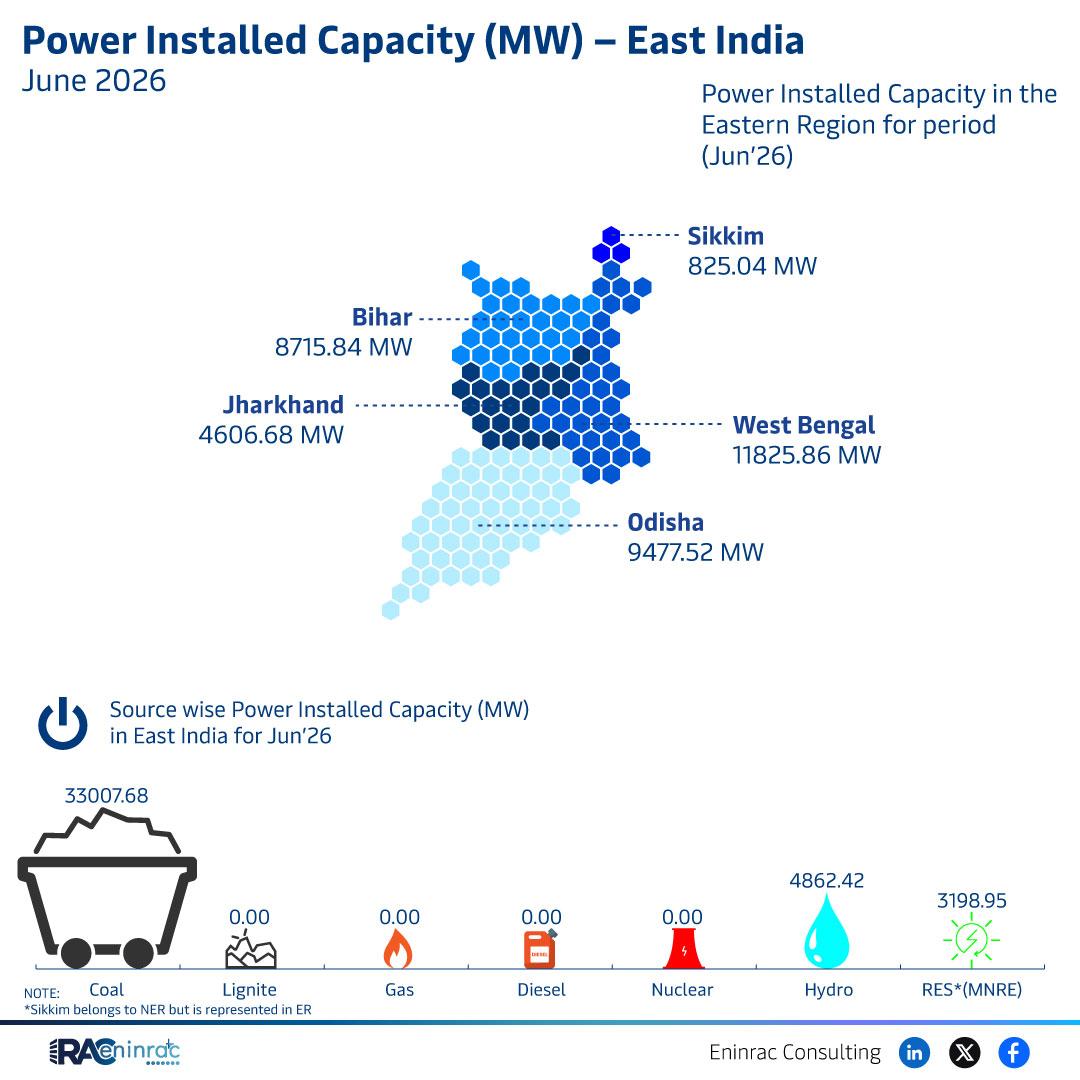
The data shows that East India’s total installed capacity reached 33,007.68 MW in June 2026, concentrating heavily in a few key states. West Bengal leads with 11,825.86 MW, followed by Odisha at 9,477.52 MW, Bihar with 8,715.84 MW, and Sikkim contributing 825.04 MW. The distribution underscores regional disparities, where some states dominate generation while others lag, influencing electricity availability, pricing, and future infrastructure planning.
State‑wise Installed Capacity Comparison
West Bengal’s capacity of 11,825.86 MW positions it as the powerhouse of the eastern corridor, driven by a mix of thermal, hydro, and renewable assets. Odisha follows closely, leveraging its abundant coal reserves and growing renewable portfolio to reach 9,477.52 MW. Bihar’s 8,715.84 MW reflects significant coal‑based generation complemented by emerging solar projects. Sikkim, though much smaller at 825.04 MW, primarily relies on hydro and small‑scale renewable installations, highlighting its unique energy mix within the region.
Impact on Sectors and Industries
Power Installed Capacity East India directly influences several critical sectors. Manufacturing and heavy industry depend on reliable, high‑capacity supply, especially in West Bengal and Odisha where industrial clusters are dense. Agriculture benefits from improved irrigation and processing capabilities in Bihar. Renewable energy developers see Sikkim’s hydro potential as a model for sustainable growth, while investors track coal‑centric capacities for short‑term returns. Policymakers must balance these dynamics, encouraging clean energy transitions while ensuring grid stability across the region.
Key Takeaways
- East India’s total installed capacity in June 2026 was 33,007.68 MW.
- West Bengal leads with the highest capacity at 11,825.86 MW.
- Odisha, Bihar, and Sikkim follow, each with distinct energy source mixes.
- Coal remains a dominant source, but renewable contributions are rising, especially in Sikkim.
- Regional capacity gaps affect industrial competitiveness and investment decisions.
- Policymakers need targeted strategies to harmonize growth, sustainability, and energy security.
FAQs
Which state has the highest power installed capacity in East India?
West Bengal tops the list with 11,825.86 MW as of June 2026.
What is the total installed capacity for East India?
The region’s total installed capacity reached 33,007.68 MW in June 2026.
How does Sikkim’s capacity compare to other states?
Sikkim’s 825.04 MW is modest, reflecting its focus on hydro and small‑scale renewables.
What are the main energy sources driving capacity in Odisha?
Odisha’s capacity is primarily driven by coal‑based thermal plants, supplemented by growing renewable projects.
Why is understanding regional capacity important for investors?
Capacity data highlights market opportunities, risk areas, and the need for infrastructure investment across different states.