
Introduction
North East India power installed capacity in July 2026 shows a diverse mix across its eight states. The region combines conventional sources such as coal, gas and diesel with a growing share of hydro, solar and wind. Understanding these figures helps investors, policymakers and energy planners gauge regional growth, identify infrastructure gaps and align future projects with demand. This article breaks down the capacity numbers, highlights leading states, and discusses the implications for the broader Indian energy market.
What Does the Data Reveal About This Topic?
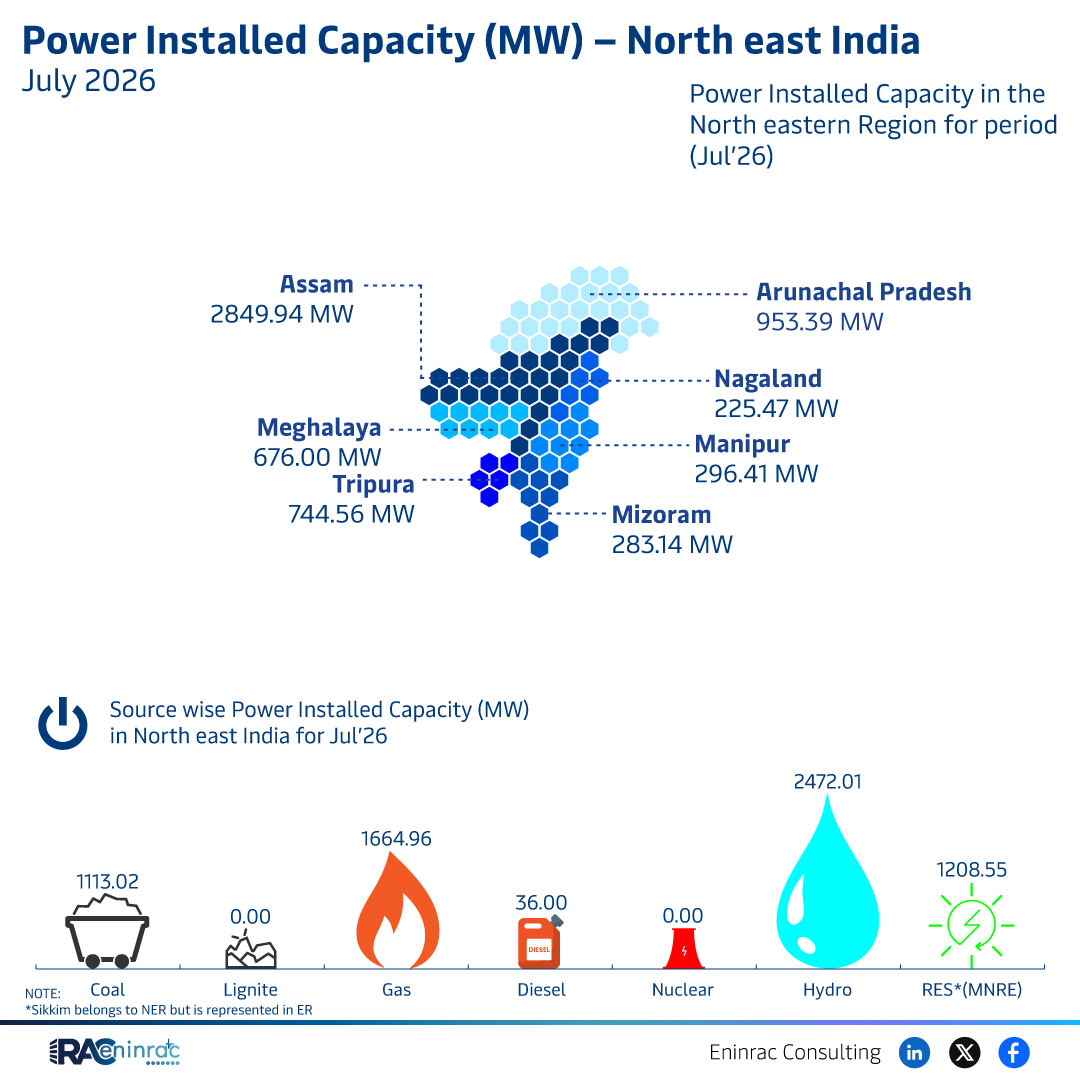
The key question is: What does the data reveal about installed power capacity in the North East? The July 2026 snapshot shows Assam leading with 2,849.94 MW, followed by Arunachal Pradesh at 953.39 MW and Meghalaya at 676 MW. Smaller states such as Nagaland, Manipur, Tripura, Mizoram and Sikkim together contribute less than 1,200 MW, indicating a steep concentration of capacity in a few larger states. The mix also points to hydro‑dominant generation supported by modest thermal and renewable inputs.
State‑wise Installed Capacity in July 2026
State‑wise Installed Capacity in July 2026 reveals clear disparities. Assam dominates with nearly 2.85 GW, reflecting its extensive coal‑based plants and expanding hydro schemes. Arunachal Pradesh’s 953 MW is driven mainly by hydro projects in the Brahmaputra basin. Meghalaya’s 676 MW stems from a combination of small hydro and emerging solar farms. Nagaland adds 225 MW, while Manipur records 283 MW, both relying heavily on diesel‑run generators supplemented by micro‑hydro. Tripura’s 296 MW and Mizoram’s 283 MW showcase the region’s effort to harness river potential, whereas Sikkim—though not listed in the table—contributes a modest amount from wind and solar pilots. Overall, the data underscores that over 80 % of capacity is concentrated in the three largest states, leaving the remaining five with limited generation assets.
Impact on Sectors and Industries
The concentration of capacity in Assam and its neighbors shapes regional investment priorities. Coal‑dependent utilities in Assam influence national emission targets, while hydro‑rich Arunachal and Meghalaya attract private renewable developers seeking long‑term power purchase agreements. Limited capacity in Nagaland, Manipur and Sikkim creates opportunities for modular solar and battery storage solutions, supporting rural electrification and off‑grid enterprises. Policymakers can use the data to allocate transmission upgrades, prioritize grid stability measures, and design subsidy schemes that balance conventional reliability with renewable growth across the North East.
Key Takeaways
- Assam provides nearly 2.85 GW, the largest share in the region.
- Hydro dominates in Arunachal Pradesh and Meghalaya, driving renewable growth.
- Smaller states collectively account for less than 1.2 GW of capacity.
- Over 80 % of total installed capacity is held by three states.
- Limited thermal capacity highlights reliance on diesel and small gas plants.
- Data supports targeted investments in transmission and renewable projects.
FAQs
Which state has the highest installed power capacity in July 2026?
Assam leads with approximately 2,849.94 MW, far above any other state in the North East.
What are the main energy sources contributing to the capacity?
The mix is largely hydro‑based in Arunachal Pradesh and Meghalaya, with coal, diesel, gas and emerging solar and wind adding smaller shares.
How does the capacity distribution affect regional energy security?
Heavy reliance on a few states makes the region vulnerable to localized outages, urging grid interconnections and diversified renewable projects.
What opportunities exist for investors in lower‑capacity states?
Modular solar, wind and battery storage projects can quickly add capacity, improve reliability and qualify for government incentives in those markets.
How can policymakers use this data to improve the power grid?
By prioritizing transmission upgrades, subsidizing renewable integration, and planning for balanced development across all eight states.