
Introduction
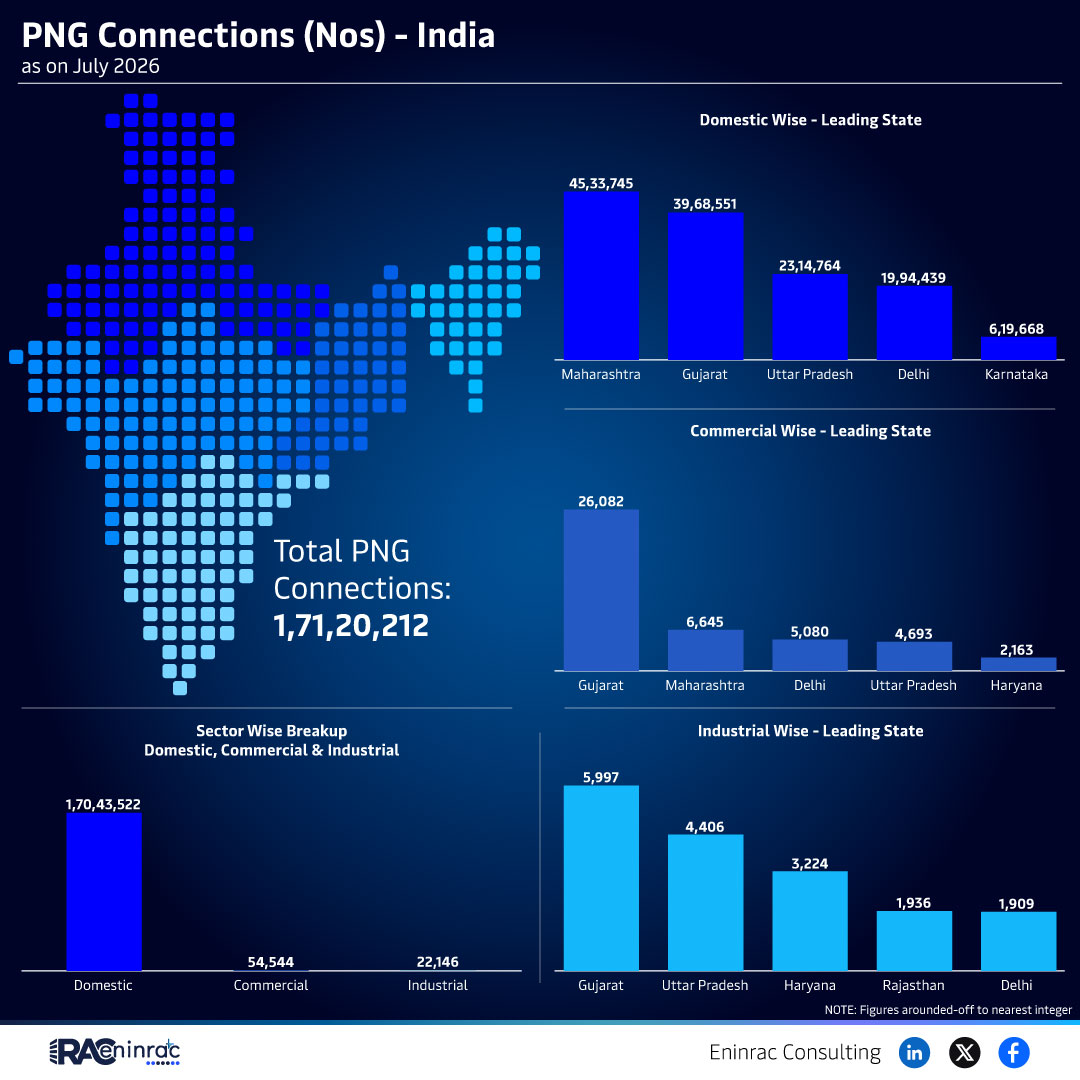
As of July 2026 India recorded a total of 17,120,212 PNG connections, highlighting the rapid expansion of piped natural gas infrastructure across the country. This data set breaks down connections by domestic, commercial and industrial usage and identifies the leading states in each segment. Understanding PNG connections India 2026 is crucial for investors, policymakers and energy companies seeking to gauge market depth, regional demand patterns and future growth opportunities.
What Does the Data Reveal About This Topic?
The figures show that Maharashtra leads domestic connections with 4,533,745 connections, followed closely by Gujarat (3,968,551) and Uttar Pradesh (2,314,764). In the commercial segment Gujarat and Maharashtra again dominate with 26,082 total commercial connections. Industrial connections are concentrated in Gujarat, Uttar Pradesh, Haryana and Rajasthan, accounting for the bulk of the 5,997 industrial connections reported. The data answers the question: which states are driving the PNG rollout and how do domestic, commercial and industrial demands differ?
Regional Leaders in PNG Connections Across India
When comparing states, Maharashtra emerges as the clear leader in domestic connections, reflecting its large urban population and aggressive policy incentives for household gas pipelines. Gujarat follows closely, benefiting from its extensive industrial base and early adoption of commercial pipelines. Delhi, despite its smaller geographic size, records significant domestic connections due to high per‑capita consumption. In the industrial arena, Gujarat again tops the list, underscoring the state’s role as a manufacturing hub. Uttar Pradesh shows strong performance in both domestic and industrial segments, indicating a balanced growth trajectory across multiple sectors.
Impact on Sectors and Industries
The surge in PNG connections reshapes several key sectors. Energy utilities see increased revenue streams and reduced reliance on liquid fuels, while automobile manufacturers anticipate higher demand for CNG‑compatible vehicles. Real‑estate developers incorporate gas pipelines as a selling point for residential projects, enhancing property values. Industrial players benefit from lower operating costs and cleaner fuel, supporting sustainability targets. For investors, the data signals robust pipeline projects and potential returns in states where connections are accelerating. Policymakers can use these insights to fine‑tune subsidies, safety standards and future expansion plans.
Key Takeaways
- Maharashtra leads domestic PNG connections, highlighting strong urban adoption.
- Gujarat dominates both commercial and industrial segments, reflecting its industrial base.
- Delhi’s high domestic connections show per‑capita demand spikes.
- Uttar Pradesh balances domestic and industrial growth, indicating diverse usage.
- Total PNG connections exceed 17 million, underscoring national infrastructure progress.
- Growth trends present investment opportunities in pipeline construction and related services.
FAQs
Which state has the highest number of domestic PNG connections?
Maharashtra, with approximately 4.53 million domestic connections.
How many total commercial PNG connections were reported?
There were 26,082 commercial PNG connections across the surveyed states.
What is the total number of industrial PNG connections?
The data records 5,997 industrial PNG connections.
Why is Gujarat a leader in multiple PNG segments?
Gujarat’s strong manufacturing sector and proactive gas policies drive its leadership in commercial and industrial connections.
How can investors use this PNG data?
Investors can target pipeline projects, gas‑based appliances and CNG vehicle markets in high‑growth states.