
Introduction
The April 2026 power installed capacity data for East India provides a snapshot of how much electricity generation capability each state possesses. Understanding this capacity is crucial for investors, policymakers, and industry analysts who track energy supply, demand trends, and regional development. This article breaks down the figures, highlights key insights, and explains the implications for the energy sector.
What Does the Data Reveal About This Topic?
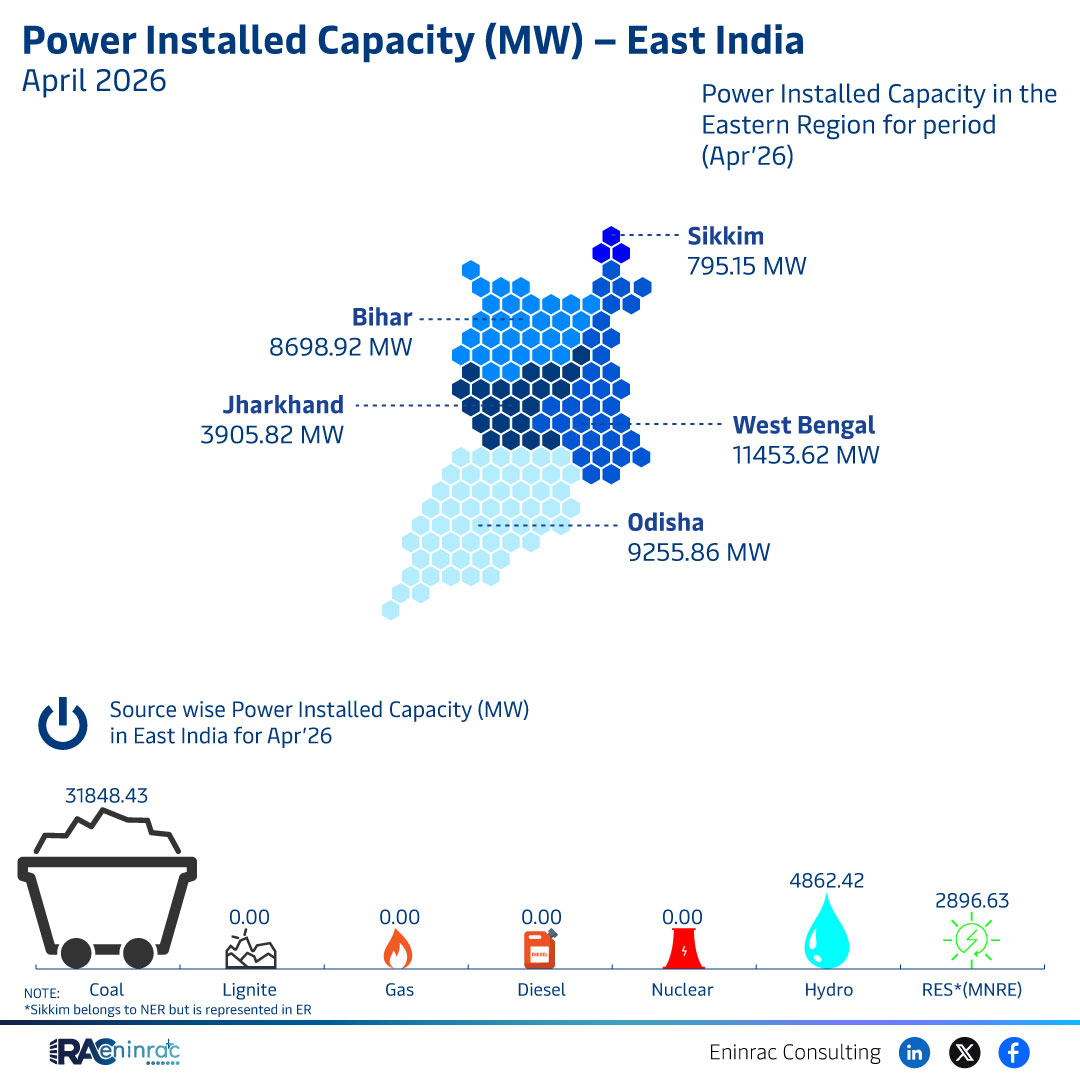
Which states lead East India in installed power capacity and what does the distribution tell us about regional energy priorities? The data shows West Bengal at the top with 11,453.62 MW, followed by Odisha (9,255.86 MW) and Bihar (8,698.92 MW). Smaller contributors include Jharkhand (300.82 MW) and Sikkim (795.15 MW), indicating a concentration of generation assets in the more industrialised states.
Statewise Capacity Comparison in East India
When comparing the numbers, West Bengal’s capacity exceeds the combined total of Jharkhand and Sikkim by more than 10,000 MW, underscoring its role as a power hub. Odisha’s capacity is close to Bihar’s, reflecting strong coal and hydro resources in both regions. Jharkhand’s modest 300.82 MW suggests limited development or reporting gaps, while Sikkim, though part of the North‑East, is listed here with 795.15 MW, highlighting its unique position in the dataset.
Impact on Sectors and Industries
Higher installed capacity supports industrial growth, improves grid reliability, and attracts renewable investments. States with larger capacities, such as West Bengal and Odisha, are better positioned to host large‑scale manufacturing and export‑oriented projects. Conversely, states with lower capacity may face constraints in attracting new industries unless they expand their generation mix, particularly through renewable energy sources.
Key Takeaways
- West Bengal leads East India with 11,453.62 MW of installed capacity.
- Odisha and Bihar each hold over 9,000 MW, indicating strong generation bases.
- Jharkhand’s capacity is under 1,000 MW, highlighting potential for growth.
- Sikkim, though part of NER, appears in the East India dataset with 795.15 MW.
- The total reported capacity for the region sums to 31,848.43 MW.
- Capacity distribution suggests a focus on coal, hydro, and emerging renewable projects.
FAQs
Which East Indian state has the highest power capacity?
West Bengal, with 11,453.62 MW.
How does Odisha’s capacity compare to Bihar’s?
Odisha has 9,255.86 MW, slightly higher than Bihar’s 8,698.92 MW.
Why is Jharkhand’s capacity so low?
Jharkhand’s reported 300.82 MW reflects limited installed projects or possible data gaps.
What does Sikkim’s inclusion indicate?
Although part of the North‑East, Sikkim is listed in the East India data, showing cross‑regional reporting.
What is the total installed capacity for East India?
The combined capacity is 31,848.43 MW.