
Introduction
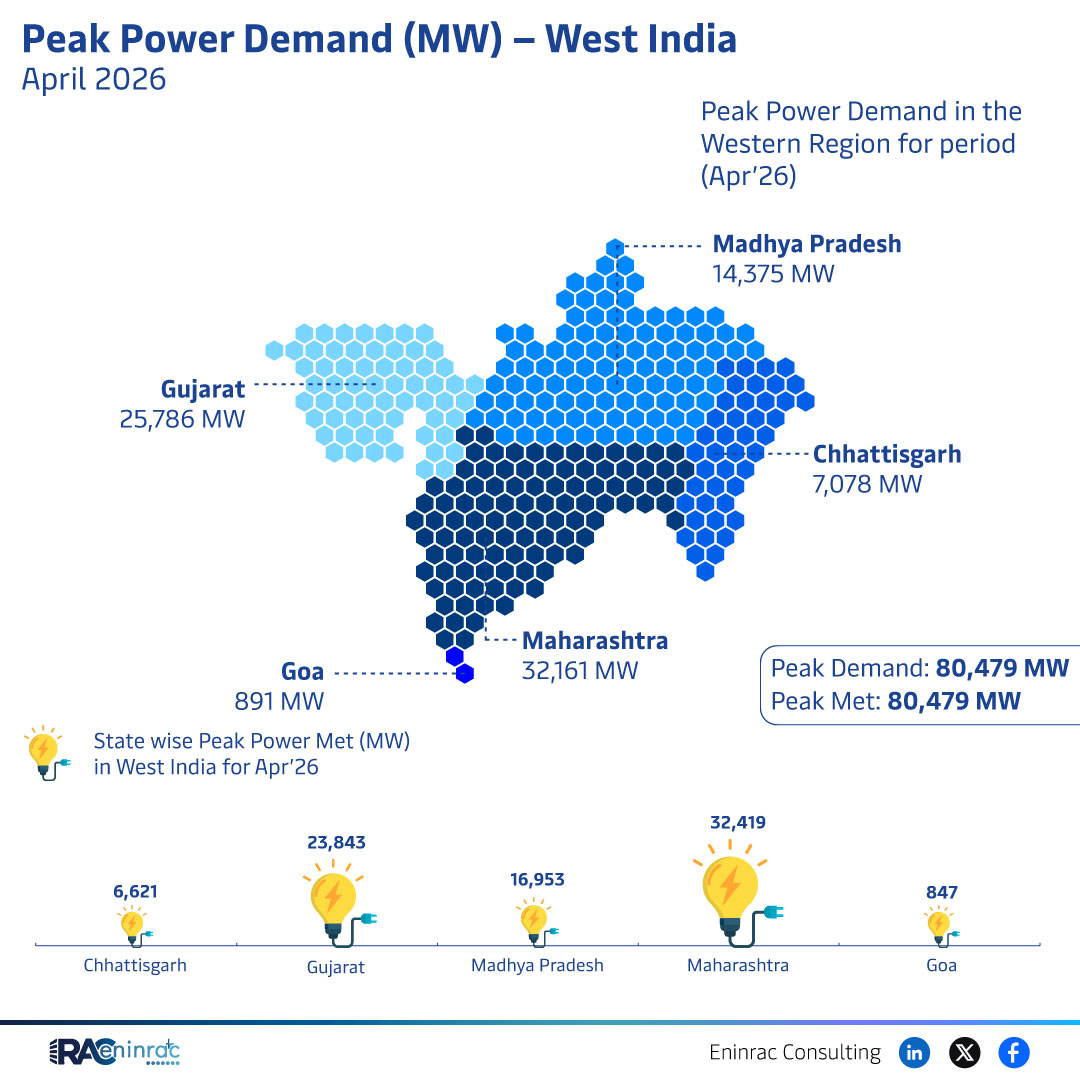
April 2026 saw West India record a total peak power demand of 80,479 MW across its key states. Understanding this demand profile is crucial for utilities, investors, and policymakers who manage grid reliability and plan future capacity. This article breaks down the state‑wise figures, highlights the leading contributors, and explains what the numbers mean for the region’s energy landscape.
What Does the Data Reveal About This Topic?
The raw data shows that Maharashtra leads with 32,161 MW of peak demand, followed by Gujarat at 25,786 MW and Madhya Pradesh at 14,375 MW. Smaller contributors include Chhattisgarh (7,078 MW) and Goa (891 MW). The combined demand of these states reaches the regional peak of 80,479 MW, indicating a heavy reliance on conventional generation sources to meet peak loads.
State‑Level Comparison of Peak Power Demand
When comparing the figures, Maharashtra’s demand is roughly 1.25 times that of Gujarat and more than double the demand of Madhya Pradesh. Chhattisgarh’s contribution is modest, reflecting its lower industrial base, while Goa’s demand remains minimal due to its smaller population and industrial footprint. The disparity underscores the need for targeted capacity upgrades in high‑demand states and potential demand‑side management in lower‑demand areas.
Impact on Sectors and Industries
The high peak demand in Maharashtra and Gujarat drives significant investment in thermal and hydro plants, as well as emerging renewable projects that can provide ancillary services. Industrial consumers, especially in manufacturing hubs, face higher electricity tariffs during peak periods, prompting interest in on‑site generation and energy storage. Policymakers must balance grid stability with emissions targets, encouraging a shift toward cleaner generation while ensuring sufficient capacity.
Key Takeaways
- Maharashtra accounts for the largest share of West India’s peak demand at 32,161 MW.
- Gujarat follows with 25,786 MW, highlighting its growing industrial load.
- Madhya Pradesh contributes 14,375 MW, reflecting a mix of industrial and residential demand.
- Chhattisgarh and Goa together add less than 8,000 MW, indicating lower pressure on the grid.
- The regional total peak demand reaches 80,479 MW, emphasizing the need for robust generation and transmission planning.
- Investors should focus on capacity expansion and renewable integration in high‑demand states.
FAQs
Which state has the highest peak power demand in West India?
Maharashtra leads with a peak demand of 32,161 MW in April 2026.
How does Gujarat’s demand compare to Madhya Pradesh?
Gujarat’s demand (25,786 MW) is about 80% higher than Madhya Pradesh’s 14,375 MW.
What is the total peak demand for West India?
The combined peak demand for the region is 80,479 MW.
Why is peak demand important for investors?
Peak demand indicates where capacity gaps exist, guiding investment in new generation, transmission upgrades, and storage solutions.
What role do renewable energy sources play in meeting this demand?
Renewables can provide ancillary services and reduce reliance on fossil fuels, but large‑scale baseload capacity is still needed to meet peak loads.