
Introduction
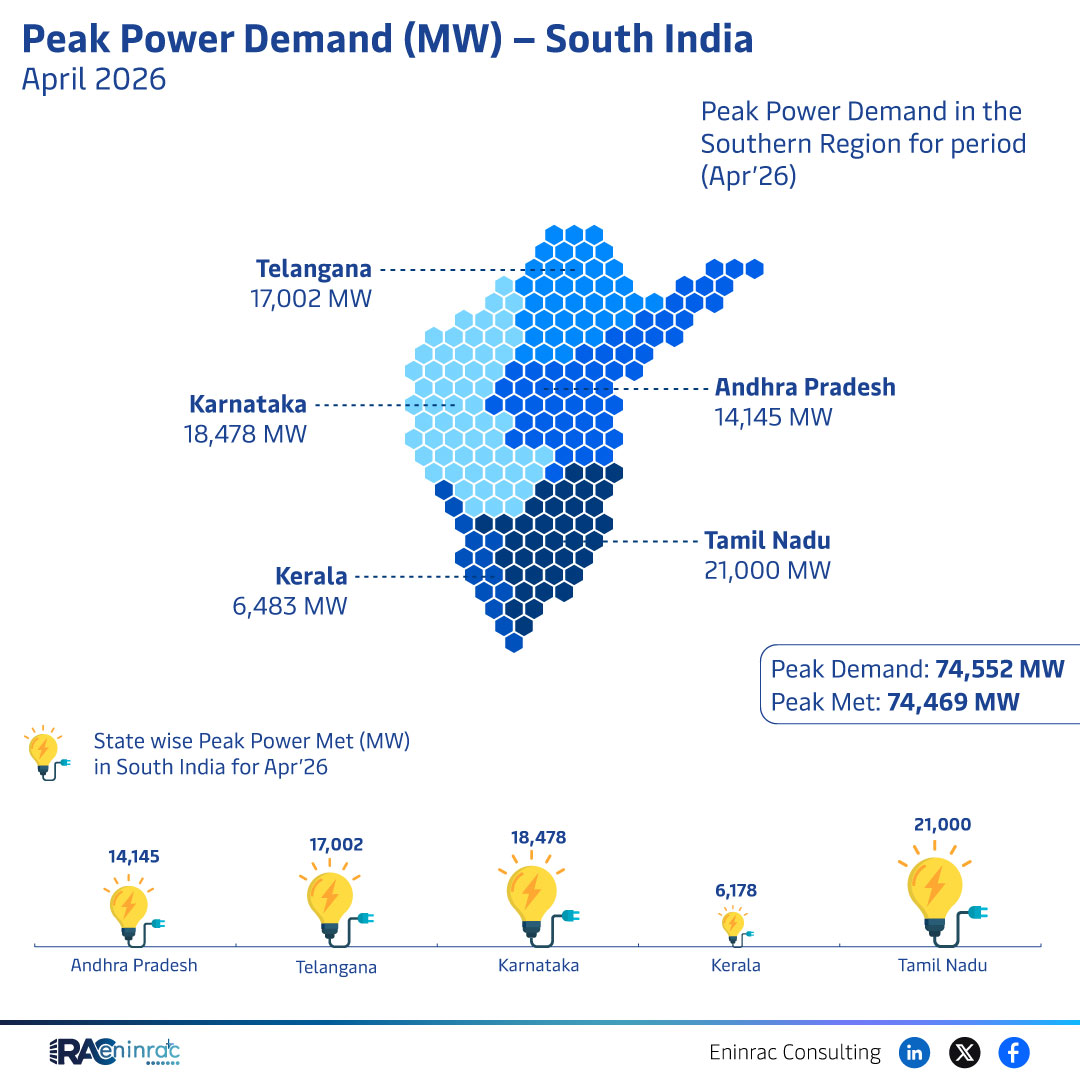
South India's electricity grid faced a record‑high load in April 2026, with the region’s peak power demand reaching 74,552 MW. Understanding these figures is essential for utilities, investors, and policymakers who monitor grid reliability, capacity planning, and regional growth trends. This article breaks down the state‑wise demand, highlights the leading contributors, and explains the broader implications for the energy sector.
What Does the Data Reveal About This Topic?
The raw data shows that Tamil Tamil Nadu topped the list with a peak demand of 21,000 MW, followed closely by Andhra Pradesh at 18,478 MW and Telangana at 17,002 MW. Kerala contributed 6,483 MW, while Karnataka recorded 6,178 MW. The combined demand of 74,552 MW slightly exceeded the met capacity of 74,469 MW, indicating a narrow margin between supply and consumption during the peak hour.
State‑Level Comparison of Peak Power Demand
When comparing the five states, Tamil Tamil Nadu’s demand is roughly 28 % higher than the next highest state, Andhra Pradesh. Telangana’s demand sits just 1,524 MW below Andhra Pradesh, reflecting similar industrial and residential consumption patterns. Kerala and Karnataka together account for less than 13 % of the total peak, underscoring the concentration of load in the more industrialised southern states. This distribution suggests that future capacity additions should prioritize Tamil Tamil Nadu and Andhra Pradesh to maintain grid stability.
Impact on Sectors and Industries
The tight gap between peak demand and met capacity signals potential stress for manufacturing, data‑center operations, and residential consumers during extreme weather or unexpected outages. Investors in conventional power plants may see opportunities for short‑term contracts, while renewable developers could leverage the shortfall to propose additional solar or wind capacity. Policymakers must consider demand‑side management programs, such as time‑of‑use tariffs, to flatten the peak curve and reduce reliance on expensive peaking generators.
Key Takeaways
- Tamil Tamil Nadu recorded the highest peak demand at 21,000 MW.
- Combined peak demand of 74,552 MW marginally exceeded met capacity.
- Kerala and Karnataka together contributed less than 13 % of total peak load.
- The narrow supply‑demand margin highlights the need for additional capacity or demand‑response measures.
- Industrial and residential sectors in Tamil Tamil Nadu and Andhra Pradesh drive the majority of peak consumption.
- Opportunities exist for both conventional and renewable energy investments to address the shortfall.
FAQs
What was the total peak power demand in South India for April 2026?
The region reached a peak demand of 74,552 MW during the month.
Which state had the highest peak demand?
Tamil Tamil Nadu led with 21,000 MW.
Did the supply meet the peak demand?
Supply met 74,469 MW, leaving a small shortfall of 83 MW.
How do Kerala and Karnataka compare to other states?
Both states together supplied less than 13 % of the total peak load, indicating lower consumption levels.
What actions can mitigate future peak shortfalls?
Investing in additional generation, expanding renewable capacity, and implementing demand‑response programs are key strategies.