
Introduction
This article examines the April 2026 peak power demand and met values for North Indian states. Understanding regional electricity demand helps utilities, investors, and policymakers plan capacity, grid upgrades, and renewable integration.
What Does the Data Reveal About This Topic?
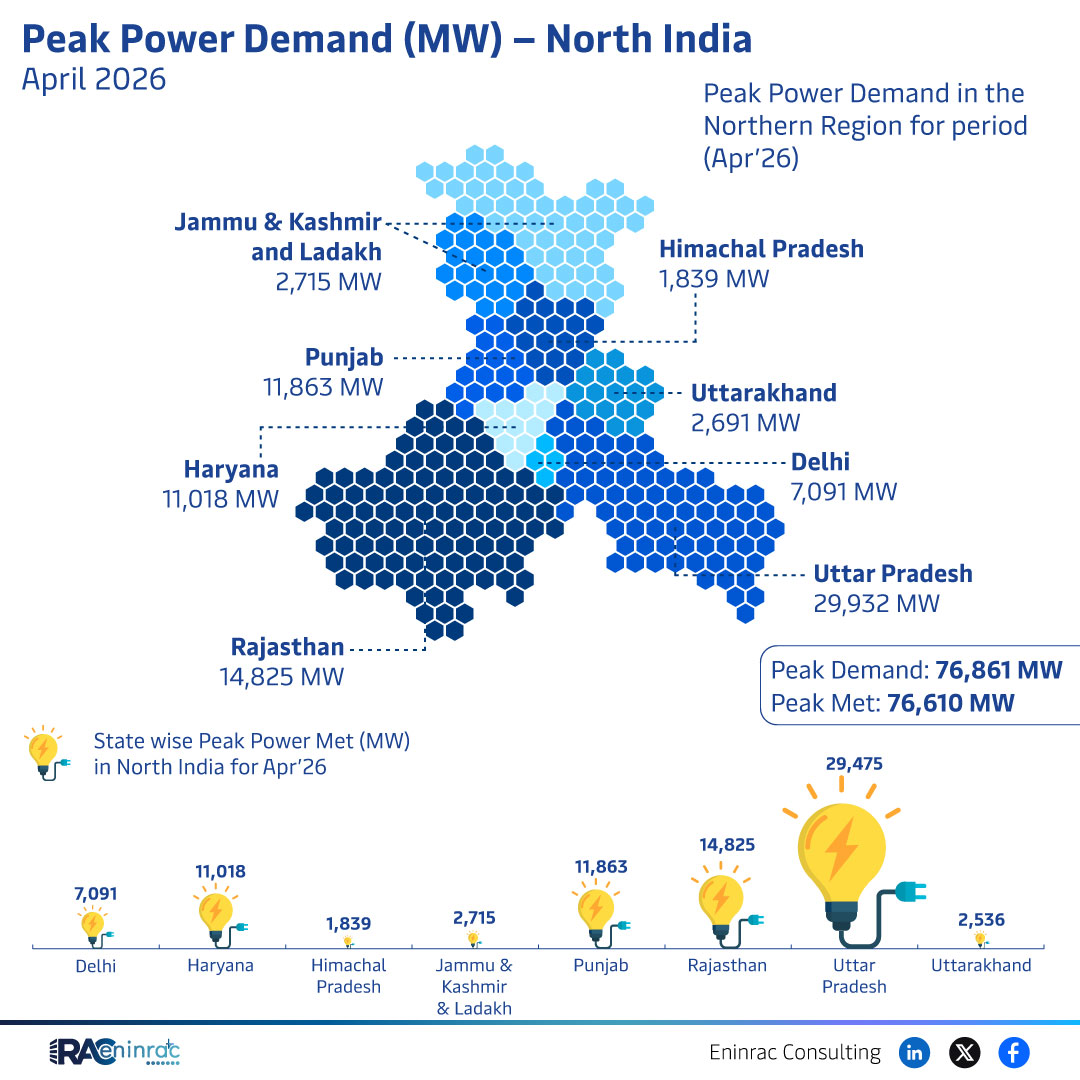
The data shows a total peak demand of 76,861 MW and a met supply of 76,610 MW, indicating a slight shortfall of 251 MW across the northern region. The shortfall highlights the need for additional generation or demand‑side management during peak periods.
State‑Level Comparison of Peak Demand and Met Supply
Rajasthan recorded the highest demand at 14,825 MW, closely followed by Punjab (11,863 MW) and Haryana (11,018 MW). Delhi’s demand stood at 7,091 MW, while Himachal Pradesh and Jammu & Kashmir‑Ladakh reported lower figures of 1,839 MW and 2,715 MW respectively. Most states met their demand, but the aggregate shortfall suggests localized gaps, especially in high‑growth zones.
Impact on Sectors and Industries
Power shortfalls affect manufacturing, agriculture, and services that rely on reliable electricity. Investors in conventional and renewable projects can use this data to identify where new capacity is most needed. Policymakers may prioritize grid reinforcement in Rajasthan and Punjab to avoid future deficits.
Key Takeaways
- Total northern peak demand reached 76,861 MW in April 2026.
- Met supply was 76,610 MW, leaving a 251 MW shortfall.
- Rajasthan had the highest individual state demand at 14,825 MW.
- Punjab and Haryana together accounted for over 22,000 MW of demand.
- Smaller states like Himachal Pradesh and Jammu & Kashmir‑Ladakh contributed less than 5,000 MW combined.
- The data underscores the urgency for additional generation and demand‑side measures in high‑demand states.
FAQs
What was the total peak power demand in North India for April 2026?
The total peak demand was 76,861 MW.
Which state had the highest peak demand?
Rajasthan recorded the highest demand at 14,825 MW.
Did the region meet its total demand?
Met supply was 76,610 MW, slightly below demand, leaving a 251 MW shortfall.
How can investors use this data?
Investors can target capacity expansion projects in states with the largest gaps, such as Rajasthan and Punjab.
What actions can policymakers take?
Policymakers can promote grid upgrades, encourage renewable integration, and implement demand‑response programs to close the shortfall.