
Introduction
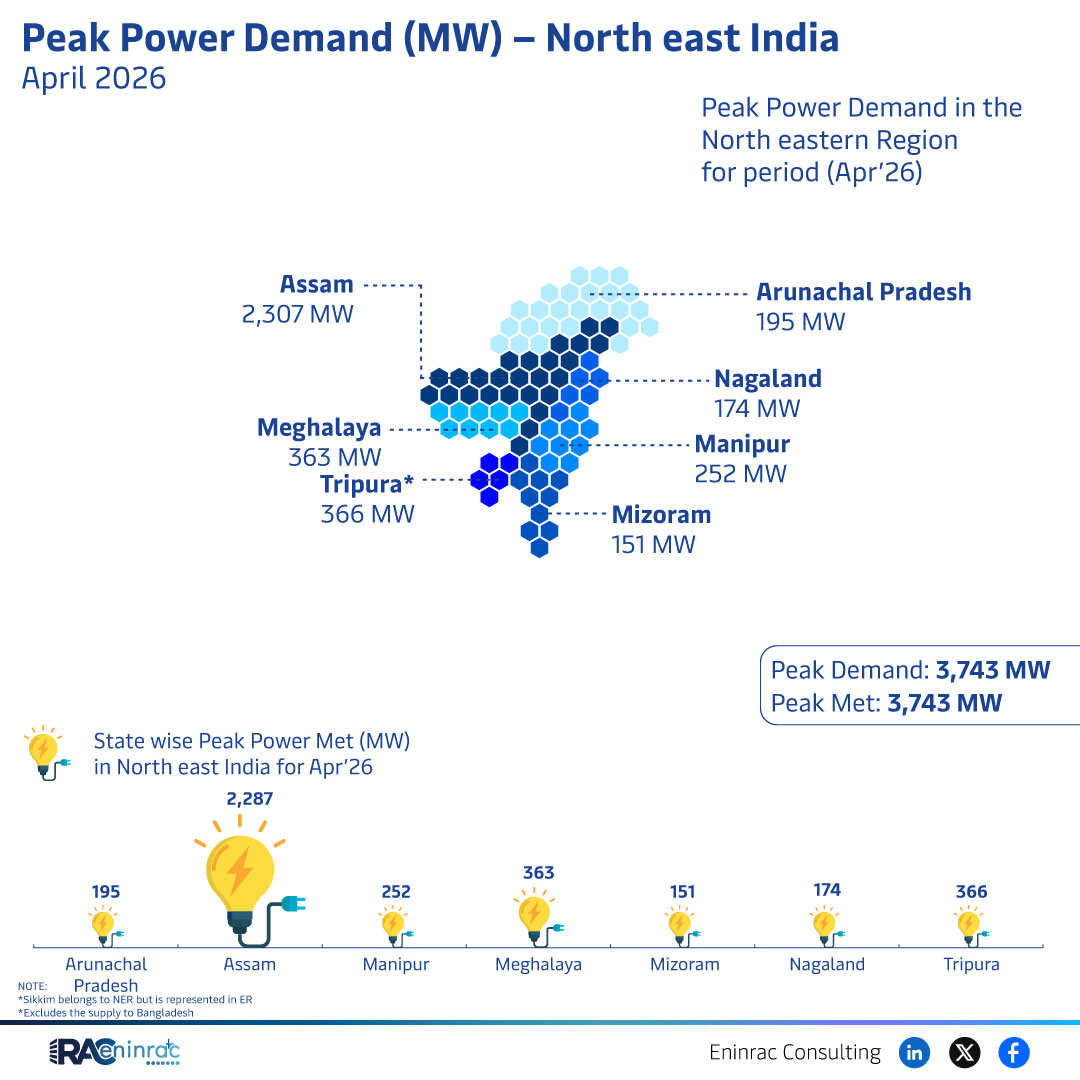
The North Eastern Region (NER) of India recorded its peak power demand for April 2026, offering a clear snapshot of electricity consumption across eight states. Understanding these figures is crucial for utilities, policymakers, investors, and businesses that rely on reliable power supply. This article breaks down the state‑wise demand, highlights the leading contributors, and explores the implications for the energy sector.
What Does the Data Reveal About This Topic?
Which state generated the highest peak demand in April 2026? The data shows that Assam led the region with a peak demand of 2,307 MW, followed by Arunachal Pradesh at 195 MW. The total regional peak demand reached 3,743 MW, indicating a substantial load that must be met by both existing infrastructure and future projects.
State‑Wise Comparison of Peak Power Demand
When comparing the eight states, Assam’s demand dwarfs the others, accounting for over 60% of the regional total. Arunachal Pradesh, Meghalaya, Manipur, Mizoram, Nagaland, and Tripura each contributed between 151 MW and 366 MW. The disparity highlights Assam’s larger industrial base and higher population density, while the smaller states reflect limited industrial activity and lower consumption patterns.
Impact on Sectors and Industries
High peak demand influences several sectors. Power generators must ensure sufficient capacity and grid stability, prompting investments in both conventional and renewable projects. Industrial users in Assam may face higher tariffs during peak periods, encouraging energy‑efficiency measures. Policymakers need accurate demand data to plan transmission upgrades and to integrate renewable sources, such as hydro and solar, that can alleviate stress on the grid.
Key Takeaways
- Assam accounts for more than 60% of the NER peak demand in April 2026.
- The total regional peak demand reached 3,743 MW, requiring robust grid management.
- Smaller states show demand under 400 MW, indicating potential for growth as industrialization expands.
- Accurate demand data supports investment decisions in both conventional and renewable energy projects.
- Policymakers must prioritize transmission upgrades to handle peak loads and integrate clean energy.
- Energy‑efficiency initiatives in high‑demand states can reduce peak stress and lower costs.
FAQs
What was the total peak power demand for the North Eastern Region in April 2026?
The region recorded a total peak demand of 3,743 MW.
Which state had the highest peak demand?
Assam led with a peak demand of 2,307 MW.
How does peak demand affect electricity pricing?
Higher peak demand can trigger increased tariffs during peak hours as utilities manage supply constraints.
What role does renewable energy play in meeting peak demand?
Renewables such as hydro and solar can provide supplemental capacity, reducing reliance on fossil‑fuel plants during peak periods.
Why is state‑wise demand data important for investors?
It helps identify high‑growth markets, informs capacity planning, and guides allocation of capital to projects that address regional power gaps.