
Introduction
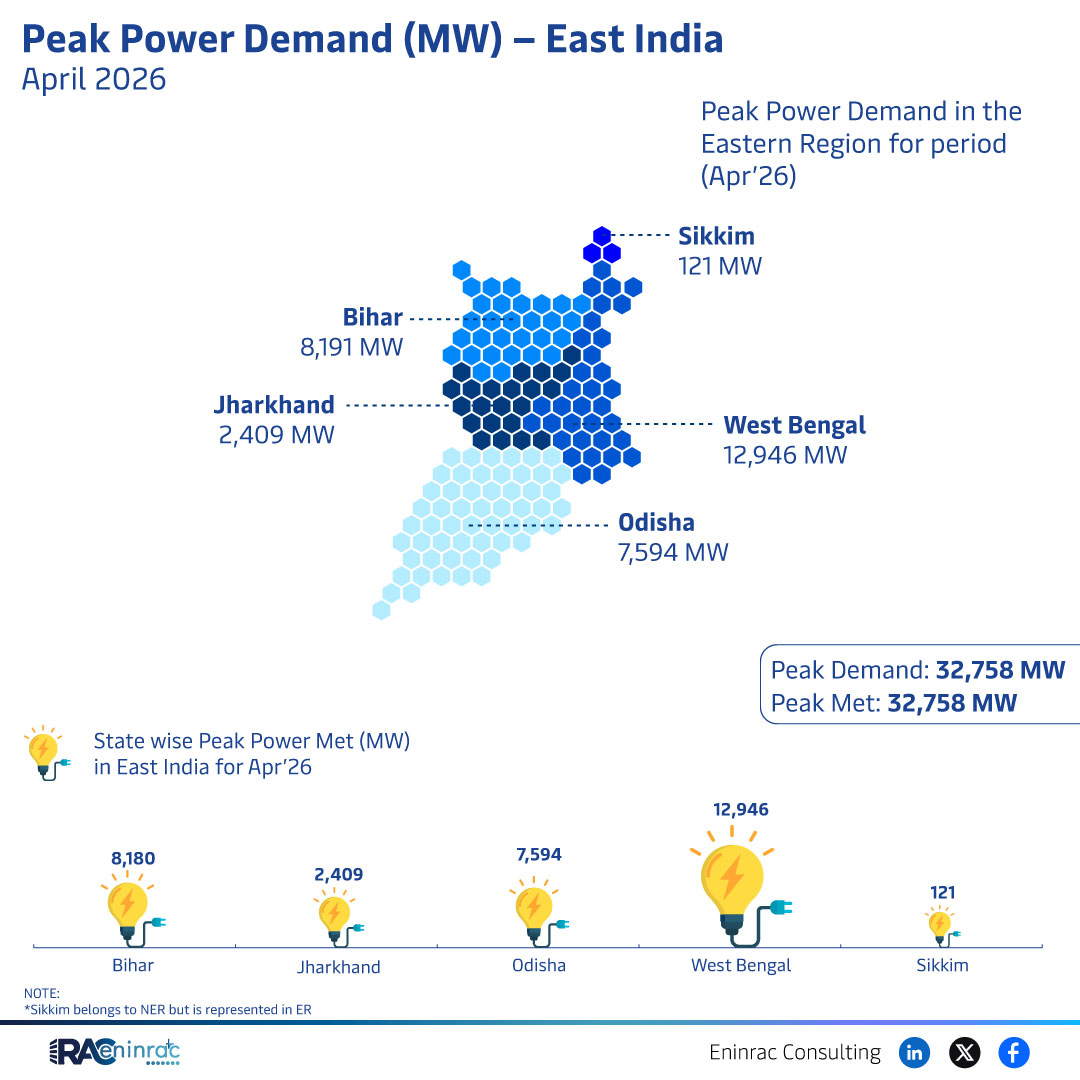
This article examines the peak power demand recorded in the Eastern Region of India for April 2026. Understanding regional electricity consumption is crucial for grid operators, policymakers, investors, and businesses that rely on stable power supply. Readers will learn the total demand, state‑wise contributions, and the implications for energy planning.
What Does the Data Reveal About This Topic?
The data shows a total peak demand of 32,758 MW across East India in April 2026. West Bengal leads with 12,946 MW, followed by Bihar at 8,191 MW, Odisha at 7,594 MW, Jharkhand at 2,409 MW, and Sikkim at 121 MW. The question is: why does West Bengal dominate the demand profile? The answer lies in its larger industrial base, higher population density, and extensive commercial activity compared with neighboring states.
State‑wise Comparison of Peak Power Demand
When comparing the figures, West Bengal’s demand is roughly 1.6 times that of Bihar and more than double the demand of Odisha. Jharkhand’s demand is modest, reflecting its lower industrial load, while Sikkim’s contribution is minimal, consistent with its smaller economy and population. The disparity highlights where capacity upgrades and demand‑side management are most needed.
Impact on Sectors and Industries
High peak demand in West Bengal and Bihar pressures the conventional energy sector to ensure sufficient generation and transmission capacity. Renewable energy developers see opportunities to add solar and wind capacity to alleviate peak loads. Investors monitor these trends to allocate capital toward grid‑strengthening projects. Policymakers must balance supply security with emissions targets, encouraging hybrid solutions that combine conventional and renewable sources.
Key Takeaways
- East India recorded a total peak demand of 32,758 MW in April 2026.
- West Bengal contributed the largest share at 12,946 MW.
- Bihar and Odisha together account for over half of the region’s demand.
- Jharkhand’s demand is modest at 2,409 MW, while Sikkim’s is only 121 MW.
- The data underscores the need for targeted capacity expansion in high‑demand states.
- Renewable integration and demand‑side management are critical to sustain growth.
FAQs
What was the total peak power demand in East India for April 2026?
The total peak demand was 32,758 MW.
Which state had the highest peak demand?
West Bengal recorded the highest peak demand at 12,946 MW.
How does Bihar’s demand compare to Odisha’s?
Bihar’s demand (8,191 MW) is slightly higher than Odisha’s (7,594 MW).
Why is Sikkim’s demand so low?
Sikkim’s small population and limited industrial activity result in a low peak demand of 121 MW.
What are the implications for renewable energy investors?
The concentration of demand in a few states creates opportunities for renewable projects to supply peak loads and reduce reliance on conventional generation.