
Introduction
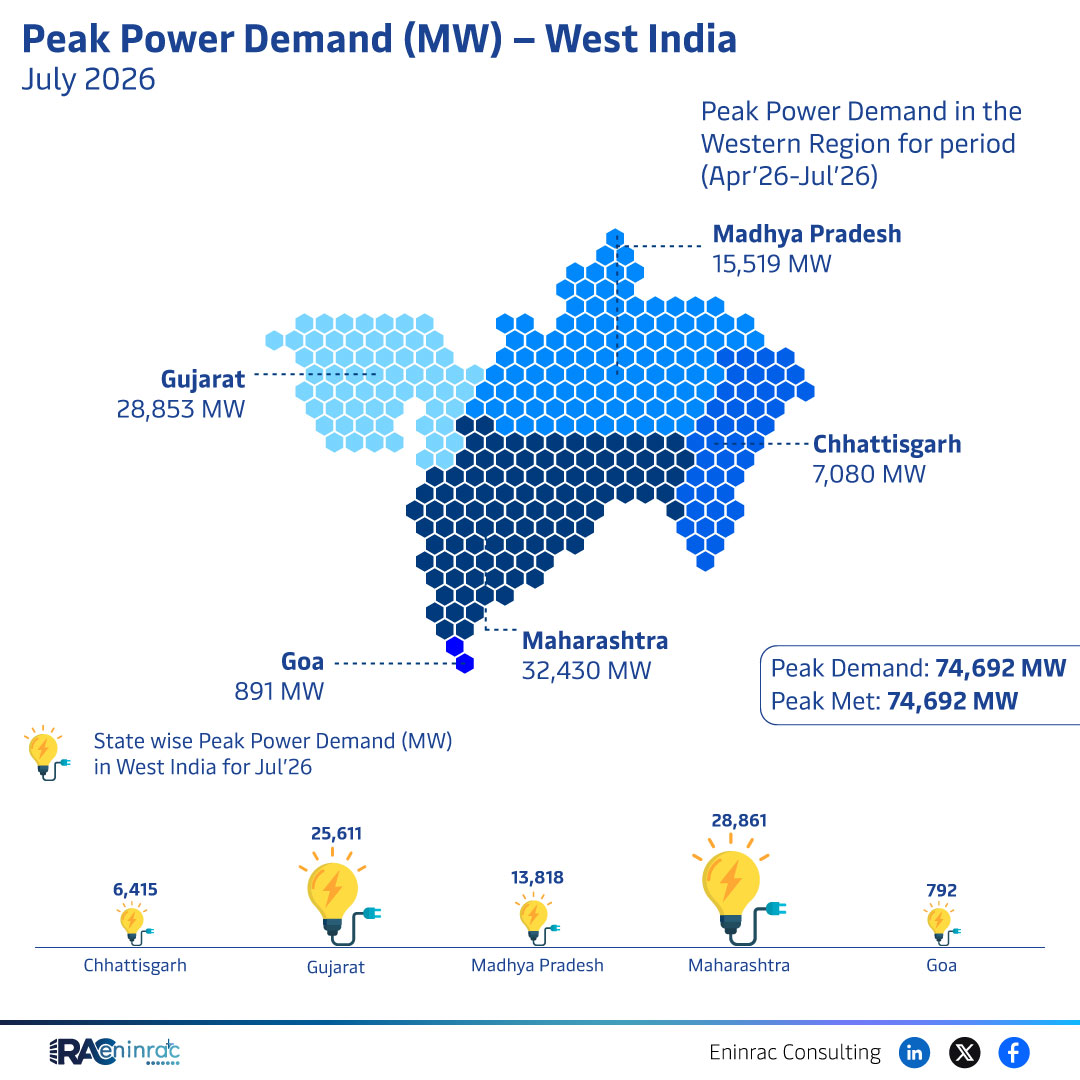
The July 2026 data on West India peak power demand reveals a total load of 74,692 MW across the western region. Understanding this peak is crucial for grid operators, investors, and policymakers because it highlights where capacity is most stressed and where future infrastructure investments should be focused. Readers will learn about the state‑wise distribution of demand, the implications for conventional and renewable generation, and how these figures shape market dynamics and energy planning in the region.
What Does the Data Reveal About This Topic?
What does the July 2026 peak power demand tell us about the western Indian electricity market? The data shows that the region experienced a combined peak of 74,692 MW, with Maharashtra contributing the largest share at 32,430 MW, followed by Gujarat at 28,853 MW and Madhya Pradesh at 15,519 MW. This concentration indicates that the two leading states drive most of the load, while other states play a secondary role in the overall peak scenario.
State‑wise Comparison of Peak Power Demand
A closer look at the state‑wise numbers illustrates the scale of disparity among the western states. Maharashtra’s 32,430 MW peak places it well above the regional average, reflecting its dense industrial base, extensive urban centers, and high consumption of electricity for manufacturing and services. Gujarat follows with 28,853 MW, benefitting from strong industrial corridors and a rapidly expanding commercial sector. Madhya Pradesh records 15,519 MW, showing significant demand but still markedly lower than the top two states. Together, these three states account for roughly 76% of the total western peak, underscoring their pivotal role in grid stability and capacity planning.
Impact on Sectors and Industries
The high peak demand in West India influences several critical sectors. Power generators must ensure sufficient capacity, prompting new thermal plant projects and accelerated renewable integration to meet peak loads. Transmission operators face heightened pressure to upgrade inter‑state lines, especially between Maharashtra, Gujarat, and neighboring regions. Investors view the data as a signal for potential returns in both conventional and green energy projects, while policymakers must balance reliability with sustainability goals. Consumers, particularly large industrial users, may experience demand‑side management incentives to flatten the load curve during peak periods.
Key Takeaways
- Maharashtra leads the western region with 32,430 MW of peak demand.
- Gujarat follows closely at 28,853 MW, together contributing over half of the regional peak.
- Madhya Pradesh adds 15,519 MW, highlighting its growing electricity consumption.
- The combined western peak of 74,692 MW stresses existing transmission infrastructure.
- Significant investment opportunities exist for both conventional and renewable capacity.
- Policymakers need targeted strategies to manage peak loads while advancing clean energy goals.
FAQs
Which western state had the highest peak power demand in July 2026?
Maharashtra recorded the highest peak at 32,430 MW.
How does Gujarat’s peak demand compare to Madhya Pradesh’s?
Gujarat’s peak of 28,853 MW is nearly double Madhya Pradesh’s 15,519 MW.
What is the total peak power demand for West India in July 2026?
The total regional peak reached 74,692 MW.
Why is peak power demand data important for investors?
It highlights where capacity gaps exist, guiding investment in generation and transmission assets.
What sectors are most affected by high peak demand?
Power generation, transmission, industrial consumers, and renewable project developers are all impacted.