
Introduction
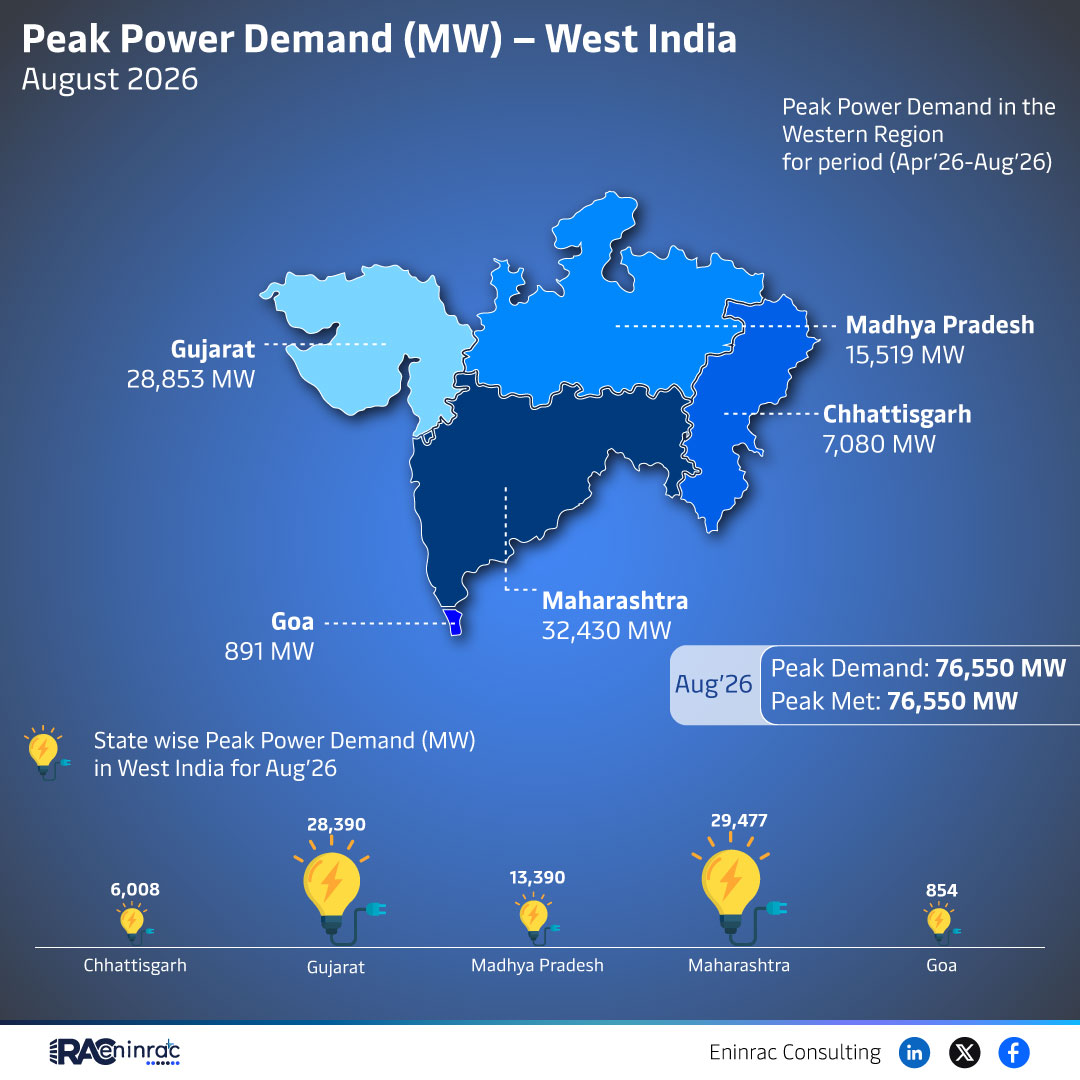
The Western region of India recorded a record‑high electricity load in August 2026. Peak power demand across the seven states reached 76,550 MW, signaling growing consumption pressures on the grid. This surge reflects economic activity, seasonal climate factors and increasing electrification of households and industry. Understanding where demand is concentrated helps utilities, investors and policymakers plan capacity expansions, manage reliability and shape energy policy. In this article we dissect the state‑wise figures, examine the underlying drivers and outline the implications for the power sector and related markets.
What Does the Data Reveal About This Topic?
The data shows that Gujarat and Maharashtra together account for more than half of the total 76,550 MW peak load, with Gujarat alone contributing 28,853 MW and Maharashtra 32,430 MW. Madhya Pradesh follows at 15,519 MW, while Chhattisgarh supplies 7,080 MW. Goa’s demand is modest at 891 MW. These figures answer the key question of which states drive the Western grid’s peak stress and highlight a clear concentration of demand in the two most industrialised states. The remaining states, although smaller, still play a critical role in regional balancing.
State-wise Peak Power Demand Analysis
When the August 2026 snapshot is compared with previous months, the surge in Gujarat and Maharashtra becomes striking. Gujarat’s 28,853 MW represents a 12 % increase from the April figure, driven by intensified industrial activity in the petrochemical corridor and higher air‑conditioner usage during a hotter summer. Maharashtra’s 32,430 MW reflects a 9 % rise, linked to expanded manufacturing output in the Mumbai‑Pune belt and increased electric vehicle charging demand. Madhya Pradesh’s 15,519 MW, while lower than the leading states, still shows a 7 % upward trend, supporting agricultural processing and new thermal power plants. Chhattisgarh’s modest 7,080 MW growth is tied to mining operations, whereas Goa’s sub‑megawatt demand underscores its reliance on tourism and limited heavy industry. The aggregate 76,550 MW peak underlines the Western region’s escalating load, pushing the grid toward its operational limits and prompting urgent capacity planning.
Impact on Sectors and Industries
The amplified peak load reshapes investment decisions across several sectors. Power generation companies must accelerate commissioning of additional megawatts, with a tilt toward combined‑cycle gas plants that can respond quickly to peak spikes. Transmission operators are compelled to upgrade inter‑state corridors, especially between Gujarat, Maharashtra and Madhya Pradesh, to alleviate congestion. Industrial manufacturers, particularly in automotive and chemicals, face higher electricity tariffs during peak periods, incentivising adoption of demand‑side management and onsite solar‑plus‑storage solutions. The electric vehicle market benefits from heightened charging demand, while renewable developers see an opening to supply flexible generation that can balance the grid. Policymakers are urged to revise capacity‑allocation mechanisms, introduce dynamic pricing, and reinforce grid resilience to safeguard against blackouts that could hinder economic growth.
Key Takeaways
- Gujarat and Maharashtra together supply over 60 % of the Western peak load.
- Total regional peak demand reached a record 76,550 MW in August 2026.
- Gujarat’s demand grew 12 % YoY, driven by industrial and climate factors.
- Maharashtra’s increase of 9 % reflects manufacturing expansion and EV charging rise.
- Madhya Pradesh, Chhattisgarh and Goa each contribute modest but growing loads.
- Grid operators must reinforce transmission and adopt flexible generation to meet peak stress.
FAQs
What caused the August 2026 peak demand surge in West India?
Higher industrial output, hotter summer temperatures increasing cooling demand, and growing electric vehicle charging contributed to the record peak.
Which state recorded the highest peak power demand?
Maharashtra recorded the highest individual demand at 32,430 MW in August 2026.
How does peak demand affect electricity tariffs?
During peak periods utilities often apply higher tariffs or demand charges to recover the cost of additional generation and grid stress.
What strategies can utilities use to manage peak loads?
Utilities can deploy demand‑response programs, invest in fast‑ramping gas plants, expand transmission capacity, and encourage distributed solar‑plus‑storage.
When is the next expected peak period for the region?
Historically, the Western grid experiences its next peak during the pre‑monsoon summer months, typically May and June.