
Introduction
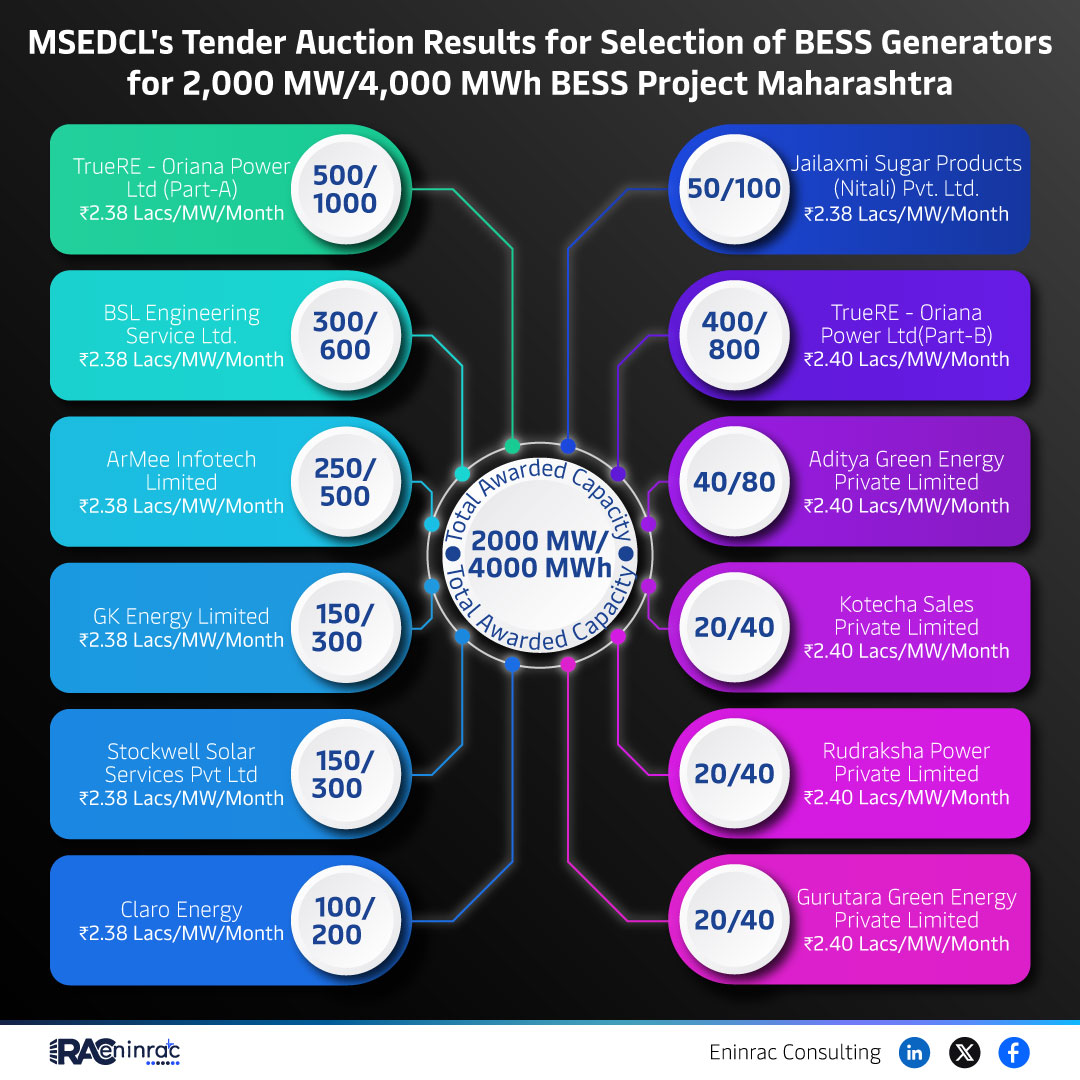
On July 2024, the Maharashtra State Electricity Distribution Company Limited (MSEDCL) released the results of its competitive tender for a 2,000 MW/4,000 MWh battery energy storage system (BESS) project. The auction attracted a mix of established power developers, renewable specialists and emerging technology firms, each offering rates quoted in lakhs per megawatt per month (Lacs/MW/Month). Understanding the awarded prices, participating companies, and the overall structure of the tender provides critical insight into the evolving economics of large‑scale storage in India’s fastest‑growing power market. This article breaks down the key figures, compares the cost proposals, and examines the broader implications for investors, policymakers and the renewable energy sector. Readers will also learn how these rates compare with previous state‑level BESS auctions and what they suggest about future price trajectories. The data also sheds light on regional preferences and the competitive landscape among storage providers.
What Does the Data Reveal About This Topic?
Does the tender data reveal a clear pricing hierarchy among bidders? The answer is yes. The announced rates cluster tightly between 2.38 and 2.40 Lacs per MW per month, indicating a highly competitive market where marginal cost differences become decisive. Companies such as TrueRE‑Oriana Power, BSL Engineering and GK Energy submitted proposals at the lower end of the range, while others like Stockwell Solar Services and Claro Energy posted marginally higher figures. The narrow spread suggests that participants have similar cost structures for battery procurement, operation and maintenance, and that the auction design successfully compressed bids to reflect realistic market economics. It also highlights the willingness of Indian firms to commit capital to long‑duration storage, a critical component for integrating higher shares of solar and wind into the grid.
Rate Comparison Among BESS Generators in Maharashtra
Examining the individual bids reveals subtle variations that may influence future contract negotiations. TrueRE‑Oriana Power and BSL Engineering both quoted 2.38 Lacs/MW/Month, positioning them as the most cost‑effective options. GK Energy matched this rate, while Stockwell Solar Services and Claro Energy each submitted 2.40 Lacs/MW/Month, marginally higher but still within the competitive envelope. Smaller participants such as ArMee Infotech and Jailaxmi Sugar Products listed rates at 2.38 Lacs/MW/Month, suggesting that scale‑economies are not the sole driver of pricing. The data therefore underscores that technological efficiency, financing terms and operational expertise are equally critical in shaping bid competitiveness. When adjusted for project size, the per‑megawatt cost remains consistent, indicating that bidders priced primarily on technology and service margins rather than volume discounts. This pattern aligns with global trends where battery chemistry costs and inverter integration dominate the overall economics of BESS projects.
Impact on Sectors and Industries
The awarded BESS capacity is expected to enhance grid stability, reduce curtailment of intermittent renewable generation and provide ancillary services such as frequency regulation. For solar farm operators in Maharashtra, the availability of affordable storage can increase capacity factors and improve project bankability, attracting additional private equity and green bond financing. Utilities will benefit from reduced peak‑load procurement costs, while equipment manufacturers see a surge in demand for lithium‑ion cells, power conversion systems and advanced monitoring platforms. Policymakers can leverage these results to refine incentive frameworks, supporting India's ambition to achieve 450 GW of renewable capacity by 2030. Moreover, the competitive pricing demonstrates that large‑scale battery projects can achieve cost parity with traditional peaking plants, encouraging further integration of storage into long‑term energy planning.
Key Takeaways
- BESS tender priced between 2.38 and 2.40 Lacs per MW per month.
- TrueRE‑Oriana Power and BSL Engineering offered the lowest rates.
- Competitive spread indicates a mature market for battery storage in Maharashtra.
- Storage will improve solar and wind capacity utilization.
- Investors see increased bankability for renewable projects with affordable storage.
- Policy frameworks may evolve to support larger BESS deployments.
FAQs
What is the total capacity of the Maharashtra BESS project?
The project totals 2,000 MW of power and 4,000 MWh of energy storage.
Which companies submitted the lowest bids?
TrueRE‑Oriana Power, BSL Engineering and GK Energy each quoted 2.38 Lacs/MW/Month.
How does the tender price compare to previous auctions?
The 2.38‑2.40 Lacs range is slightly lower than earlier state auctions, showing a downward cost trend.
What benefits does large‑scale storage bring to the grid?
It provides frequency regulation, peak shaving, and reduces renewable curtailment, enhancing reliability.
Will this tender impact renewable investment in India?
Yes, lower storage costs improve project economics, attracting more private and green financing.