
Introduction
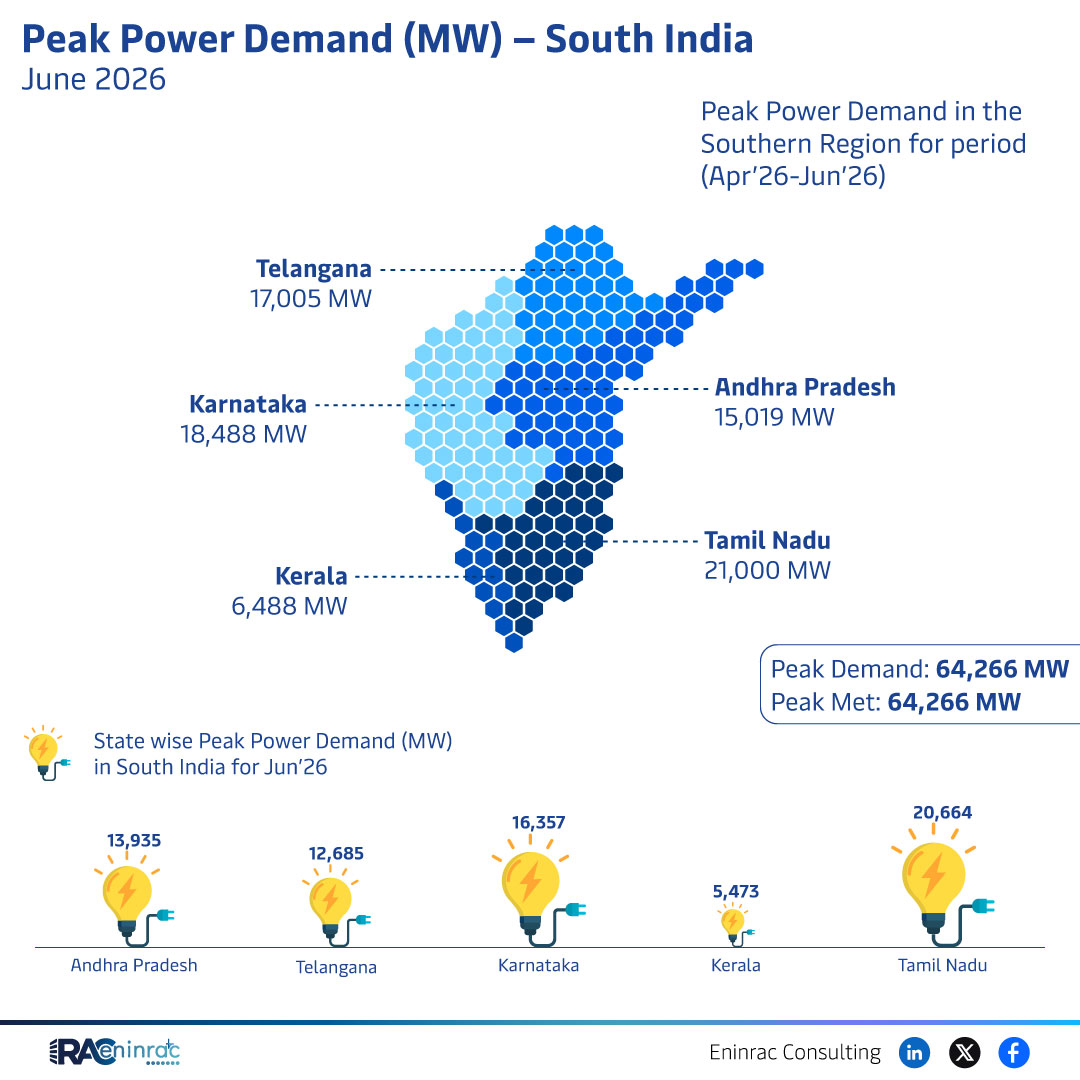
The Southern Region of India recorded a record peak power demand of 64,266 MW for the period April 2026 to June 2026. This figure reflects the combined load of Telangana, Andhra Pradesh, Karnataka, Kerala and Tamil Nadu during the hottest months of the year. Understanding these numbers is essential for utilities, investors, policymakers and anyone interested in the dynamics of India’s conventional electricity market. In this article we break down the state‑wise data, highlight trends and explain why these figures matter for future energy planning.
What Does the Data Reveal About This Topic?
What does a total of 64,266 MW tell us about the Southern Grid? The data shows that the region approached its maximum generation capacity in June 2026, driven largely by extreme temperature spikes and increased industrial activity. The figures also reveal that Tamil Nadu contributed the largest single‑state load at 21,000 MW, while Kerala’s demand remained the lowest at 6,488 MW. This contrast points to differing levels of industrialisation, population density and climate‑driven consumption across the states.
State‑wise Comparison of Peak Power Demand
Telangana posted a peak demand of 17,005 MW, closely followed by Andhra Pradesh at 18,488 MW. Karnataka’s load was recorded at 15,019 MW, positioning it as the third largest consumer in the south. Tamil Nadu, with 21,000 MW, emerged as the clear leader, reflecting its extensive manufacturing base and high residential electricity use during summer. Kerala’s 6,488 MW underscores its smaller industrial footprint and comparatively milder demand patterns. The aggregate of these state figures aligns precisely with the reported regional peak of 64,266 MW, confirming data consistency.
Impact on Sectors and Industries
The surge in peak demand directly influences several sectors. Power generators must secure additional capacity, often turning to thermal plants to meet short‑term peaks, which raises operational costs and emissions. Transmission operators need to reinforce grid stability to avoid overloads, prompting investment in advanced monitoring and contingency planning. For investors, the data signals opportunities in both conventional generation assets and emerging demand‑response technologies. Policymakers can use these insights to shape tariff structures, promote energy efficiency programs and accelerate the integration of renewable resources to cushion future peaks.
Key Takeaways
- South India’s total peak demand reached 64,266 MW in June 2026.
- Tamil Nadu led the region with 21,000 MW, the highest single‑state load.
- Kerala recorded the lowest demand at 6,488 MW, highlighting regional consumption gaps.
- Telangana, Andhra Pradesh and Karnataka together contributed over 50 % of the regional peak.
- Extreme summer temperatures and industrial activity drove the record load.
- The data underscores the need for increased generation flexibility and grid reinforcement.
FAQs
Why did Tamil Nadu have the highest peak demand?
Its large industrial base, dense population and high summer cooling loads push consumption beyond other southern states.
How does peak demand affect electricity prices?
Higher peak loads often lead to increased market prices because utilities call on costlier peaking plants and buy additional power on the spot market.
What role can renewable energy play in reducing peak demand?
Renewables can offset peak loads when paired with storage, but their intermittent nature still requires firm capacity to guarantee reliability.
Are there plans to expand generation capacity in the South?
State electricity boards have announced new thermal, solar and wind projects aimed at meeting future peak requirements.
How can consumers reduce their contribution to peak demand?
Adopting energy‑efficient appliances, shifting non‑essential loads to off‑peak hours and participating in demand‑response programs can lower peak consumption.