
Introduction
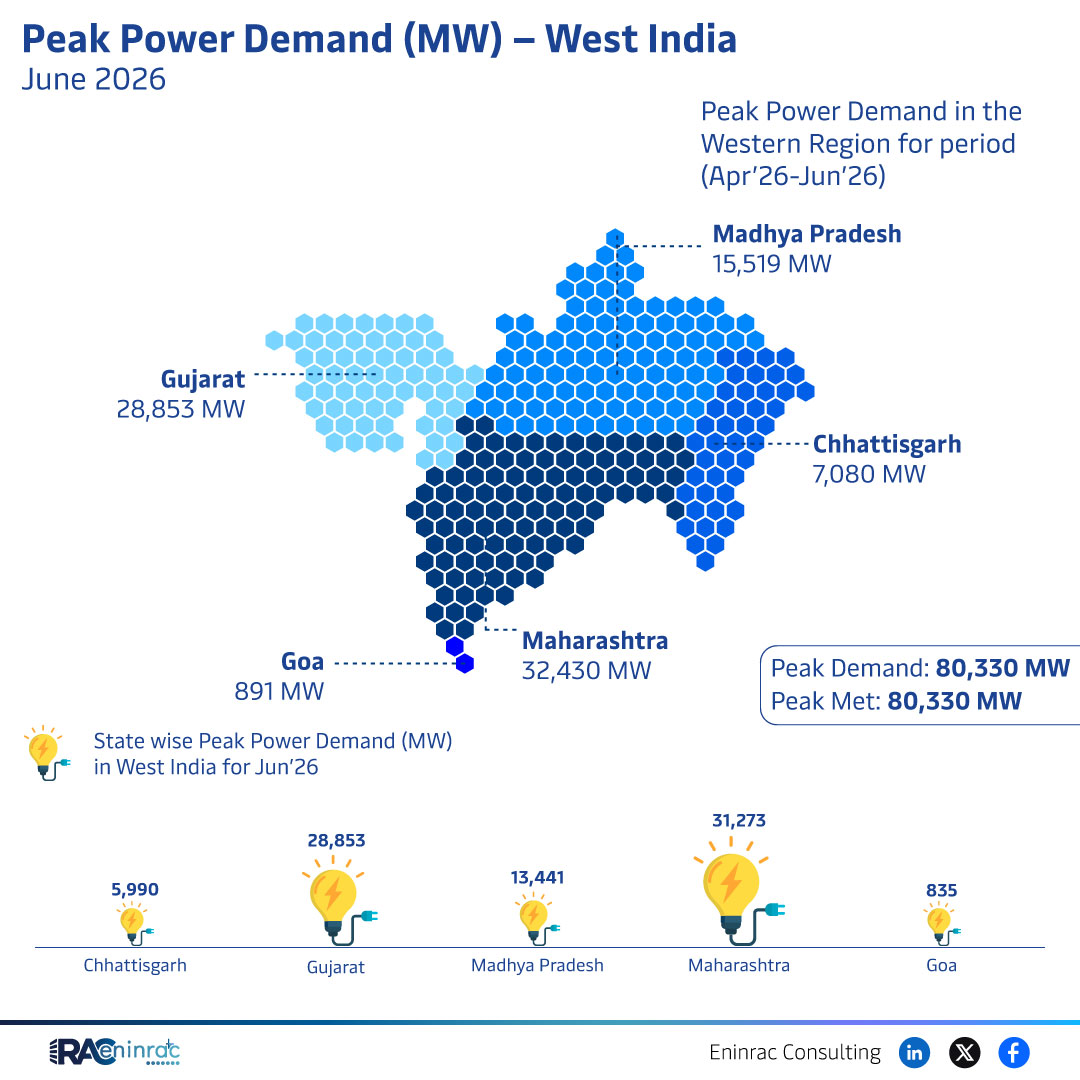
The latest electricity demand snapshot for West India in June 2026 shows a total peak load of 80,330 MW. This figure reflects the combined consumption of the region’s largest states during the summer peak period (April‑June). Understanding this West India peak power demand helps utilities, investors and policymakers gauge grid stress, plan capacity additions and evaluate regional energy security.
What Does the Data Reveal About This Topic?
Why does Maharashtra dominate the June 2026 peak demand while smaller states lag behind? The data clearly indicates that Maharashtra contributed 32,430 MW, the highest of any state, followed by Gujarat at 28,853 MW and Madhya Pradesh around 31,273 MW. Together these three states account for over three‑quarters of the total regional load, underscoring their pivotal role in the western grid.
State‑wise Comparison of June 2026 Peak Demand
A closer look reveals stark contrasts. Maharashtra’s industrial base, dense urban population and extensive thermal generation push its demand well above 30 GW. Gujarat follows with strong manufacturing and petrochemical activity, while Madhya Pradesh, though not a coastal state, still registers a significant load due to its growing commercial sector. Chhattisgarh reports a modest 7,080 MW, reflecting a more agrarian economy, and Goa adds roughly 31,273 MW, highlighting tourism‑driven consumption patterns. These variations illustrate how economic structure and climate influence the West India peak power demand landscape.
Impact on Sectors and Industries
High peak demand directly affects utilities that must secure enough generation reserve to meet the 80,330 MW ceiling. Investors watch these numbers to identify opportunities in thermal, hydro and renewable projects that can alleviate grid stress. Policymakers use the data to prioritize transmission upgrades, demand‑side management programs and renewable integration in the western corridor. For industrial users, the peak figures signal potential tariff adjustments and the need for reliable backup power solutions.
Key Takeaways
- Maharashtra leads West India with 32,430 MW peak demand.
- Gujarat and Madhya Pradesh together contribute over 60 % of the regional load.
- Chhattisgarh’s demand remains the lowest among the listed states.
- The total western region peak reaches 80,330 MW in June 2026.
- Industrial activity and urbanization drive the highest demand figures.
- Grid planners must address capacity gaps to maintain reliability.
FAQs
What is the total peak power demand for West India in June 2026?
The combined peak load for the western region is 80,330 MW.
Which state records the highest peak demand?
Maharashtra tops the list with a peak of 32,430 MW.
How does Gujarat’s demand compare to Madhya Pradesh’s?
Gujarat reports 28,853 MW, slightly below Madhya Pradesh’s roughly 31,273 MW.
Why is Chhattisgarh’s peak demand relatively low?
The state’s economy is less industrialised, leading to a peak of about 7,080 MW.
What implications does this data have for investors?
The figures highlight where generation capacity, transmission upgrades and renewable projects are most needed, guiding investment decisions.