
Introduction
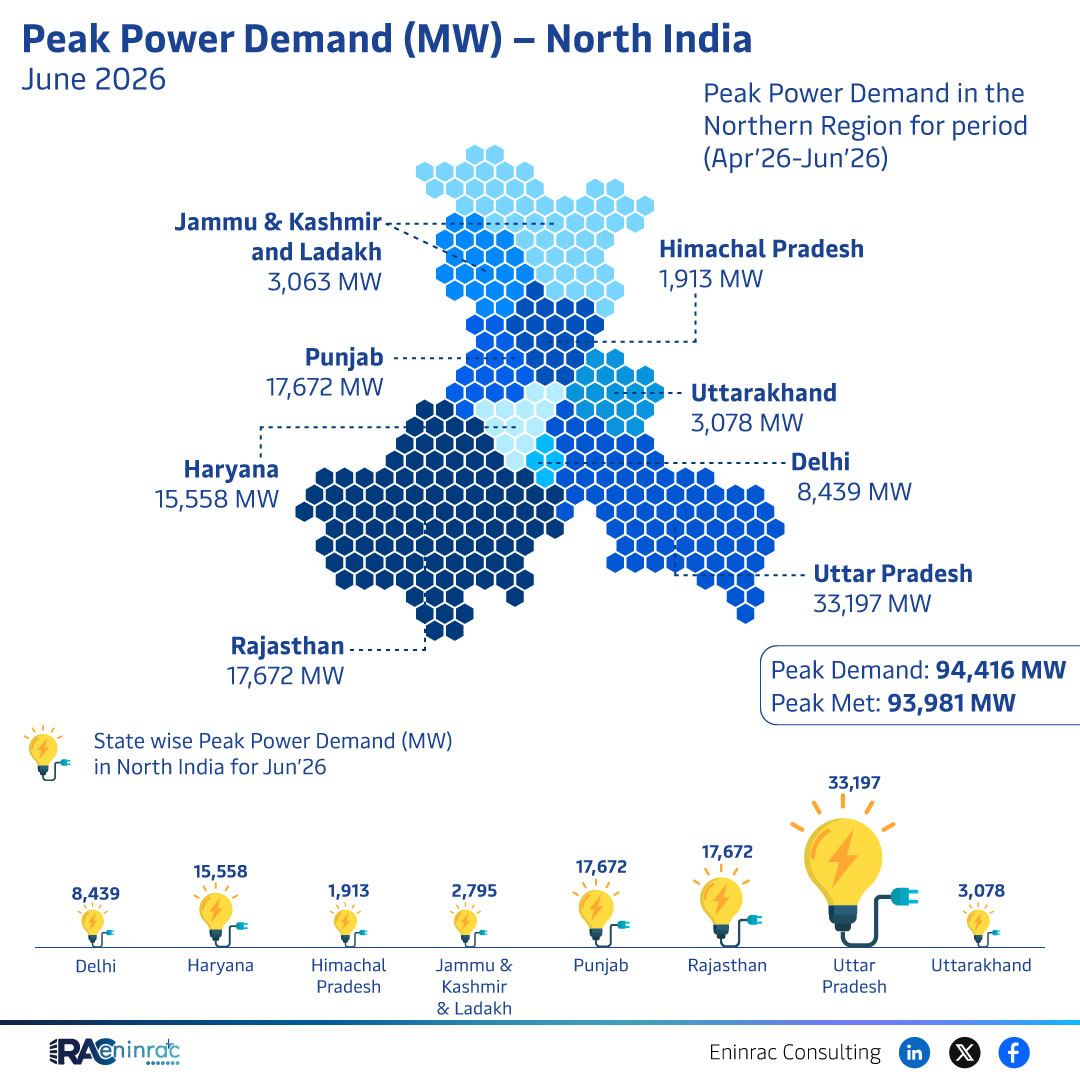
The June 2026 electricity snapshot for North India presents a detailed picture of peak power demand across fourteen jurisdictions. With a combined peak of 94,416 MW, the region recorded its highest load in the first half of 2026, reflecting seasonal temperature spikes, industrial activity, and rising urban consumption. Understanding these figures helps grid operators, investors, and policymakers gauge capacity gaps, plan new generation projects, and prioritize demand‑side management measures. This article breaks down state‑wise demand, highlights the leading contributors, and discusses how the data informs future energy strategy in the northern corridor.
What Does the Data Reveal About This Topic?
What is the core insight from the June 2026 peak demand numbers? The data shows that Uttar Pradesh dominates the northern grid with 33,197 MW, accounting for more than one‑third of the total demand. Haryana follows with 15,558 MW, while Delhi, Punjab, and Rajasthan each contribute between 8,000 and 9,000 MW. Smaller states such as Himachal Pradesh, Jammu & Kashmir‑Ladakh, and Uttarakhand register demand below 4,000 MW. The overall trend indicates a concentration of load in highly populated and industrialized states, underscoring the need for targeted capacity upgrades in these hotspots.
State‑wise Comparison of June 2026 Peak Demand
A close look at the numbers reveals stark contrasts. Uttar Pradesh’s 33,197 MW outpaces the next highest, Haryana’s 15,558 MW, by more than double, highlighting the sheer scale of consumption in the state’s urban centres and agricultural belt. Rajasthan and Punjab each hover around 17,672 MW, reflecting robust industrial output and growing commercial loads. Delhi’s 8,439 MW, though lower in absolute terms, represents significant per‑capita usage given its dense population. In the mountainous zones, Himachal Pradesh (3,078 MW) and Jammu & Kashmir‑Ladakh (1,913 MW) show modest demand, largely driven by tourism and limited industrial bases. Uttarakhand’s 3,078 MW mirrors similar patterns. These disparities point to divergent infrastructure needs, with high‑demand states requiring immediate transmission reinforcement, while low‑demand regions may focus on renewable integration.
Impact on Sectors and Industries
The peak demand figures influence several key sectors. Power generators must align new capacity—both conventional and renewable—with the identified hotspots to avoid grid strain during peak hours. Investors see Uttar Pradesh and Haryana as prime locations for gas‑based or hybrid plants, while renewable developers may target Rajasthan’s vast solar potential to offset conventional load. Policymakers can use the data to design demand‑response programs, encouraging industrial consumers in high‑load states to shift usage to off‑peak periods. Utilities will also need to upgrade transmission corridors connecting these states to maintain reliability, and consumers may experience price adjustments reflecting the higher marginal cost of meeting peak demand.
Key Takeaways
- Uttar Pradesh leads North India with a 33,197 MW peak, over one‑third of total demand.
- Haryana, Rajasthan, and Punjab each register demand above 15,000 MW, marking them as secondary load centers.
- Delhi’s 8,439 MW peak underscores high per‑capita consumption in the national capital.
- Mountainous states like Himachal Pradesh, Jammu & Kashmir‑Ladakh, and Uttarakhand stay below 4,000 MW, indicating lower industrial activity.
- The overall 94,416 MW peak stresses the need for accelerated capacity expansion and grid reinforcement.
- Targeted renewable and demand‑side initiatives can alleviate pressure on conventional generation in high‑demand states.
FAQs
Why did Uttar Pradesh’s peak demand exceed 33,000 MW?
Extensive agricultural irrigation, large urban populations, and a growing industrial base drive the high electricity consumption in Uttar Pradesh during peak summer months.
How does Delhi’s peak demand compare to neighboring states?
Delhi’s 8,439 MW peak is lower than Haryana’s 15,558 MW but higher than most northern states on a per‑capita basis, reflecting dense commercial activity.
What role can renewable energy play in meeting North India’s peak load?
Renewables, especially solar in Rajasthan and wind in Haryana, can provide supplemental capacity, reduce reliance on fossil‑fuel plants, and improve grid resilience during peaks.
Are there immediate risks of blackouts with the current peak demand?
While the grid remains stable, the close margin between demand and available capacity in high‑load states raises the risk of localized outages without timely infrastructure upgrades.
What policy measures can help balance the peak demand?
Implementing demand‑response incentives, encouraging industrial load shifting, and fast‑tracking renewable projects in high‑demand regions are effective strategies.