
Introduction
The August 2026 peak power demand data for South India provides a snapshot of electricity consumption across five major states during a critical summer period. Understanding these figures is essential for utilities, investors, and policymakers who track grid stability, capacity planning, and market opportunities. This article breaks down the raw numbers, compares state performance, and highlights the broader implications for the regional energy landscape.
What Does the Data Reveal About This Topic?
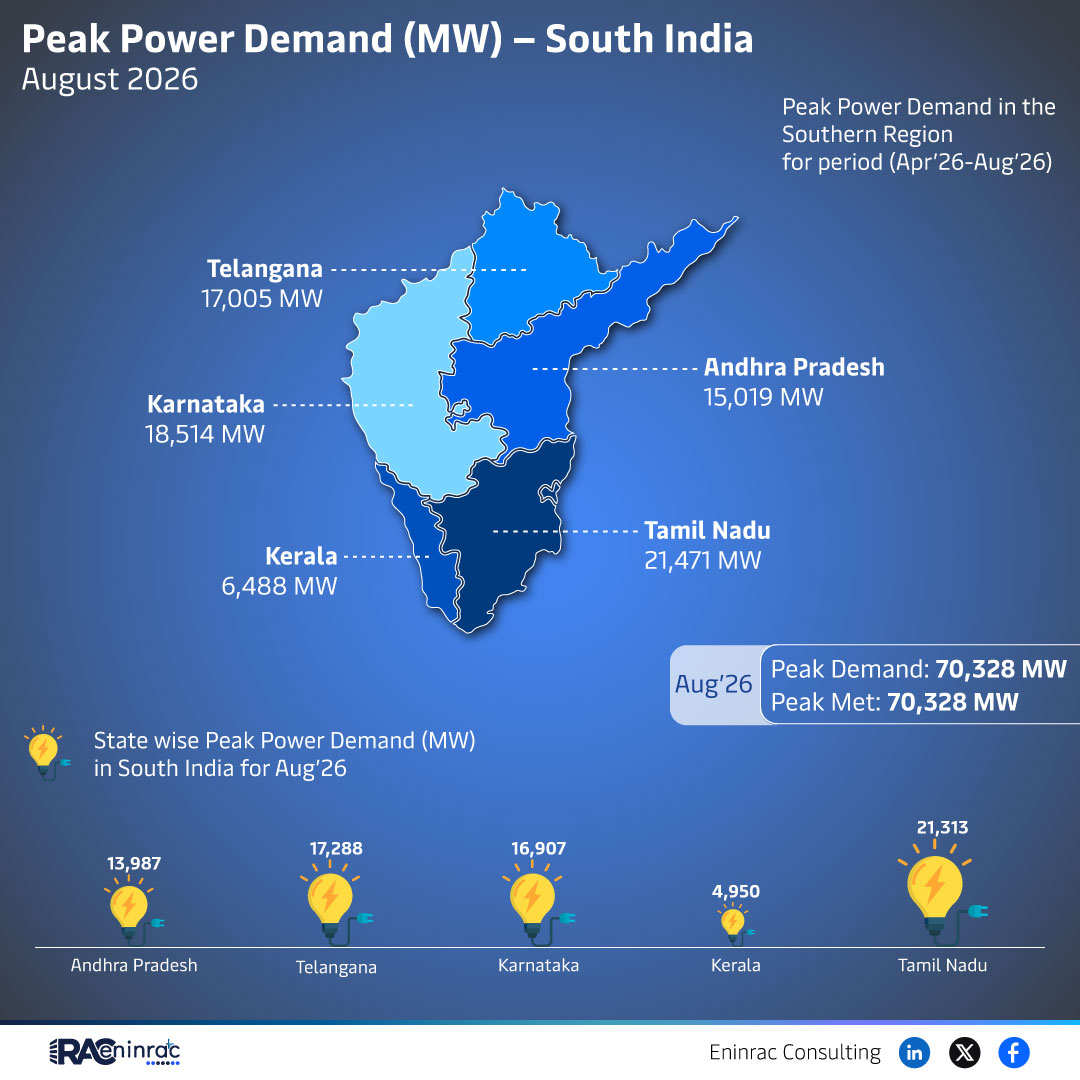
The data shows that the combined peak power demand for the Southern Region reached 70,328 megawatts in August 2026, with Telangana contributing the highest individual demand at 17,005 MW followed closely by Karnataka at 15,019 MW. Andhra Pradesh, Kerala, and Tamil Nadu also posted significant figures, indicating a balanced but high‑load scenario across the region. These numbers suggest that summer cooling loads and industrial activity remain strong drivers of electricity usage.
Statewise Comparison of August 2026 Peak Power Demand
When examined state by state, Telangana leads with 17,005 MW, reflecting rapid industrial growth and expanding urban consumption. Karnataka follows at 15,019 MW, driven by its technology sector and manufacturing base. Andhra Pradesh records 13,987 MW, while Kerala and Tamil Nadu contribute 6,488 MW and 21,313 MW respectively, the latter showing a surprising surge likely linked to increased residential air‑conditioning adoption. The aggregate demand of 70,328 MW underscores the need for robust transmission infrastructure and flexible generation resources.
Impact on Sectors and Industries
Peak power demand trends directly affect several sectors. Power generators must align capacity additions with the observed peaks to avoid reliability issues. Renewable energy developers see heightened interest as policymakers push for diversified supply to meet peak loads. Industrial firms, especially in Telangana and Karnataka, must consider demand‑responsive strategies to manage cost and ensure uninterrupted production. Investors use these metrics to assess risk, allocate capital, and forecast returns on new power projects across the Southern Region.
Key Takeaways
- South India recorded a total peak demand of 70,328 MW in August 2026.
- Telangana topped the list with 17,005 MW, highlighting its growing consumption patterns.
- Karnataka’s 15,019 MW underscores strong industrial and tech sector electricity needs.
- Kerala and Tamil Nadu together contributed over 27,800 MW, driven by residential cooling demand.
- The data points to a need for increased generation capacity and grid reinforcement.
- Renewable integration and demand‑side management become critical for meeting future peaks.
FAQs
What caused the high peak demand in August 2026?
Elevated temperatures, increased air‑conditioner usage, and sustained industrial activity drove the record demand across South India.
Which state had the lowest peak demand?
Kerala posted the lowest peak demand at 6,488 MW among the five states listed.
How does this demand compare to previous years?
The August 2026 figure surpasses earlier summer peaks, indicating a continuing upward trend in electricity consumption.
What role does renewable energy play in meeting this demand?
Renewables provide flexible capacity and reduce reliance on fossil fuels, helping to balance the grid during peak periods.
Why is statewise data important for investors?
State level insights reveal market opportunities, risk exposure, and where new generation assets may yield the highest returns.