
Introduction
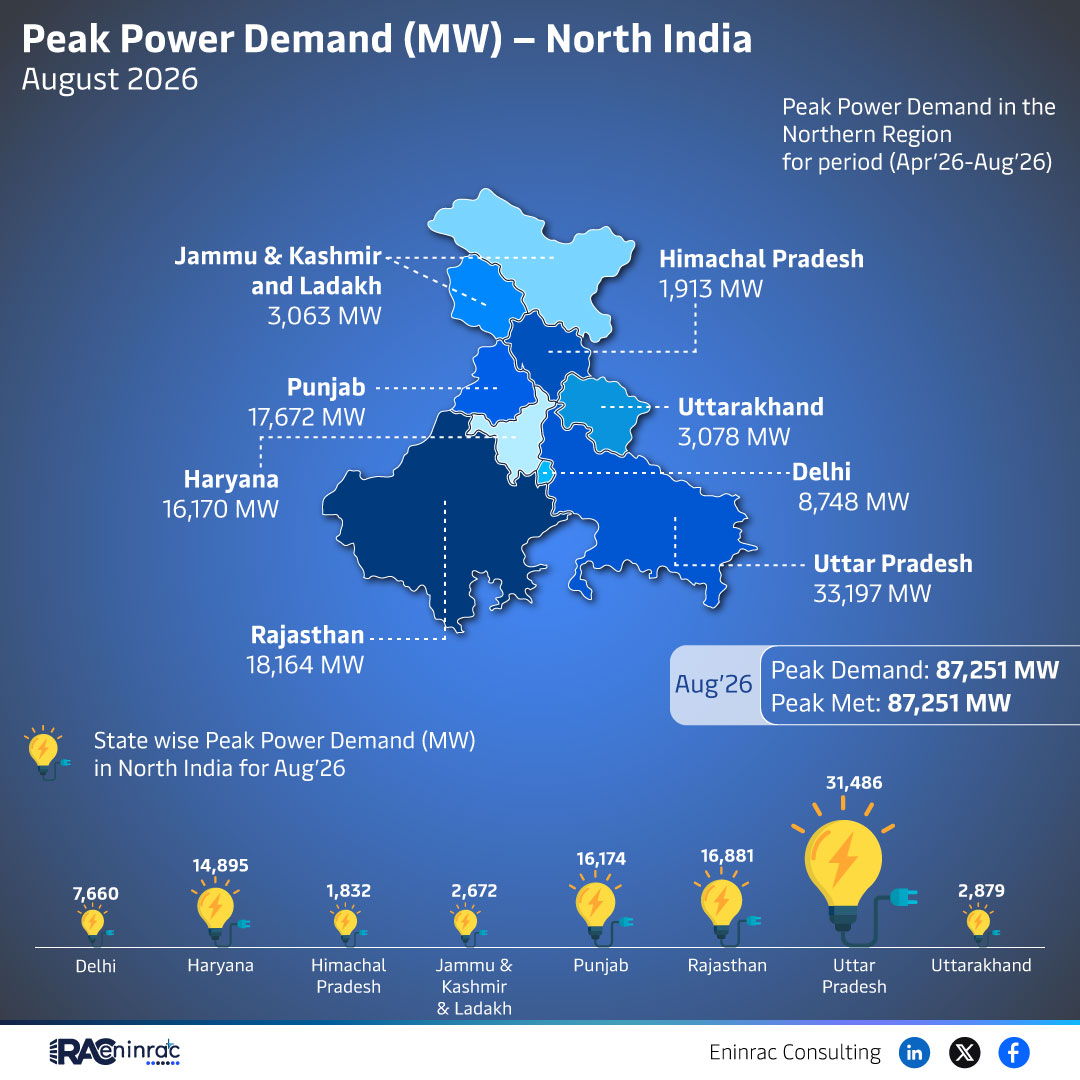
North India’s electricity grid faced a historic surge in August 2026, with total peak power demand reaching 87,251 MW. This level of demand reflects a combination of seasonal temperature spikes, industrial activity, and rapid urbanisation across the region. Understanding the distribution of peak load among individual states helps investors, policymakers, and utilities plan for capacity upgrades, demand‑side management, and future energy security. In this article we explore the state‑wise figures, identify the leading demand centres, and discuss the broader implications for the North Indian power sector.
What Does the Data Reveal About This Topic?
The raw data shows that Uttar Pradesh generated the highest single‑state peak demand at 33,197 MW, followed by Haryana with 16,170 MW and Rajasthan at 18,164 MW. Smaller but still significant contributors include Jammu & Kashmir and Ladakh (3,063 MW), Uttarakhand (3,078 MW), and Himachal Pradesh (1,913 MW). The combined demand of these states accounts for the total 87,251 MW recorded in August 2026, indicating that a handful of large states dominate the region’s electricity consumption during peak periods.
State‑wise Comparison of Peak Power Demand
When the figures are compared side by side, the disparity between the most and least demanding states becomes evident. Uttar Pradesh alone supplied almost 38% of the total North Indian peak, underscoring its role as an industrial and agricultural powerhouse. Haryana’s demand, representing roughly 18% of the total, highlights the state’s dense manufacturing base and high per‑capita consumption. Rajasthan’s 18,164 MW reflects its growing industrial zones and expanding urban centres. In contrast, the Himalayan states of Himachal Pradesh and Uttarakhand together contribute less than 5% of the total, which aligns with their lower population densities and limited industrial activity. Jammu & Kashmir and Ladakh, despite challenging terrain, still register a notable 3,063 MW, indicating increasing electrification efforts in remote areas.
Impact on Sectors and Industries
The elevated peak demand influences several critical sectors. Power generation companies must ensure adequate thermal and hydro capacity to meet sudden spikes, prompting potential investments in new plant capacity or fast‑ramping gas turbines. For renewable energy developers, the data signals opportunities to integrate storage solutions that can alleviate stress on the grid during peak hours. Industrial users, especially in Uttar Pradesh and Haryana, may face higher tariffs or demand charges unless they adopt energy‑efficiency measures. Policymakers will need to consider regional transmission upgrades to balance load across states, while investors can use the state‑wise breakdown to target markets with the highest growth potential.
Key Takeaways
- Uttar Pradesh recorded the highest peak demand at 33,197 MW, accounting for almost 38% of North India’s total.
- Haryana’s 16,170 MW makes it the second‑largest contributor, highlighting its industrial intensity.
- Rajasthan’s demand of 18,164 MW underscores rapid urban growth in the state.
- Combined, the six listed states represent over 95% of the region’s August 2026 peak load.
- Smaller states such as Himachal Pradesh and Uttarakhand together contribute less than 5% of total demand.
- The total peak of 87,251 MW sets a new benchmark for grid planning and capacity expansion in North India.
FAQs
What caused the surge in peak power demand in August 2026?
The surge was driven by unusually high temperatures, increased industrial activity, and rising electricity use in urban areas across North India.
Which state has the highest per‑capita electricity consumption?
Haryana generally shows the highest per‑capita consumption due to its dense manufacturing sector and affluent residential base.
How does this peak demand affect renewable energy integration?
Higher peaks create a need for flexible storage and fast‑ramping resources, encouraging developers to pair renewables with battery or pumped‑hydro storage.
What infrastructure upgrades are recommended for the region?
Investors should focus on expanding high‑voltage transmission corridors, upgrading sub‑stations, and adding grid‑scale storage to manage peak loads.
Can consumers reduce their contribution to peak demand?
Yes, by shifting non‑essential loads to off‑peak hours, using energy‑efficient appliances, and participating in demand‑response programs.