
Introduction
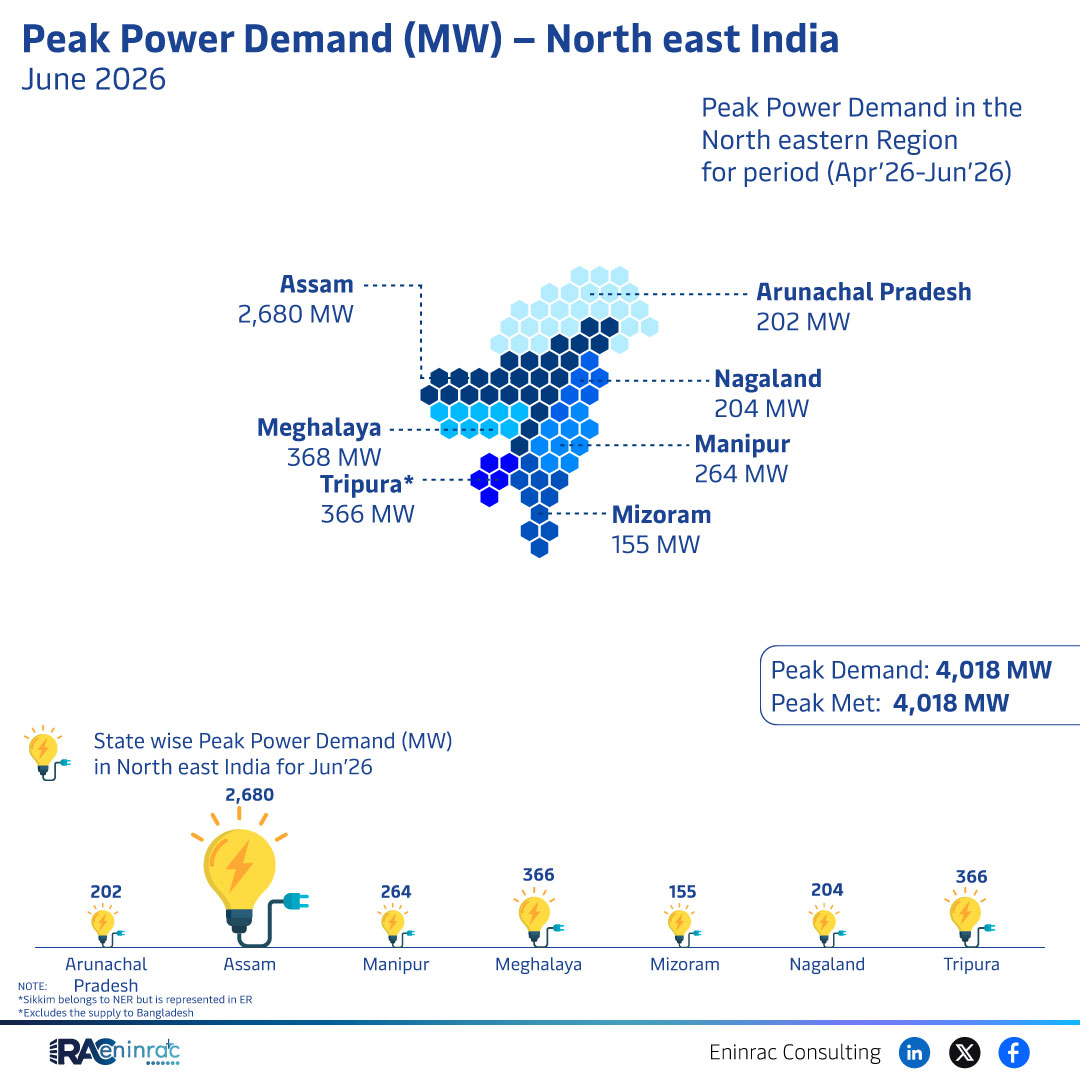
The latest electricity statistics for June 2026 reveal the peak power demand across the North East region of India. Understanding this demand is critical for utilities, investors, and policymakers who manage grid stability, plan new generation projects, and assess regional energy security. The data highlights a total peak demand of 4,018 MW, with significant variation among the eight states that form the North Eastern Region (NER). This article breaks down the state‑wise figures, explains what the numbers indicate about consumption patterns, and explores the broader implications for the power sector and related industries.
What Does the Data Reveal About This Topic?
The raw figures show that Assam dominates the June 2026 peak load with 2,680 MW, accounting for more than half of the region’s total. Arunachal Pradesh follows with 202 MW, while Meghalaya, Manipur, Mizoram, Nagaland, and Tripura contribute smaller shares ranging from 155 MW to 366 MW. The overall peak demand of 4,018 MW underscores the growing electricity need in the northeast, driven by industrial activity, urbanisation, and seasonal weather conditions. The question is how this demand profile will influence future capacity planning and investment decisions across the region.
State‑wise Comparison of June 2026 Peak Demand
When comparing the eight states, Assam’s demand stands out as an outlier, nearly ten times higher than the next highest state, Meghalaya, which recorded 366 MW. Arunachal Pradesh’s 202 MW reflects its expanding hydro potential, while Manipur and Mizoram each hover around 155 MW to 166 MW, indicating modest but steady consumption growth. Nagaland’s 204 MW and Tripura’s 204 MW are comparable, pointing to similar economic activity levels. These disparities suggest that infrastructure upgrades and new generation projects will be most urgently needed in Assam, whereas the smaller states may focus on improving grid reliability and integrating renewable sources.
Impact on Sectors and Industries
Peak Power Demand North East India influences a range of sectors beyond the electricity market. For the manufacturing and mining industries, reliable power at peak times is essential to avoid production losses. Investors in renewable energy see the high demand as an opportunity to develop hydro, solar, and wind projects, especially in states with untapped resources like Arunachal Pradesh and Meghalaya. Policymakers must balance load‑growth forecasts with environmental targets, ensuring that new capacity aligns with national clean‑energy commitments. Consumers benefit from better voltage stability and reduced outage risk when utilities adequately address the peak demand peaks highlighted in the data.
Key Takeaways
- Assam accounts for roughly 67% of the region’s total peak demand at 2,680 MW.
- The combined peak load of the remaining seven states is 1,338 MW, indicating a wide demand gap.
- Meghalaya records the second‑largest demand at 366 MW, showing notable growth potential.
- Smaller states such as Manipur, Mizoram, Nagaland, and Tripura each stay below 210 MW, highlighting opportunities for targeted investment.
- The total regional peak of 4,018 MW reflects increasing electricity consumption driven by industrialisation and seasonal factors.
- Future power planning must prioritise capacity expansion in Assam while supporting renewable integration across all states.
FAQs
Which state had the highest peak power demand in June 2026?
Assam recorded the highest peak demand with 2,680 MW.
What is the total peak demand for the North East region?
The combined peak demand for all eight states reached 4,018 MW.
How does Meghalaya’s demand compare to Assam’s?
Meghalaya’s peak demand was 366 MW, far lower than Assam’s 2,680 MW.
Why is peak demand data important for investors?
It helps identify where new generation capacity or grid upgrades are needed, guiding investment decisions.
What sectors are most affected by peak power demand?
Manufacturing, mining, renewable energy development, and utilities are directly impacted by peak loads.