
Introduction
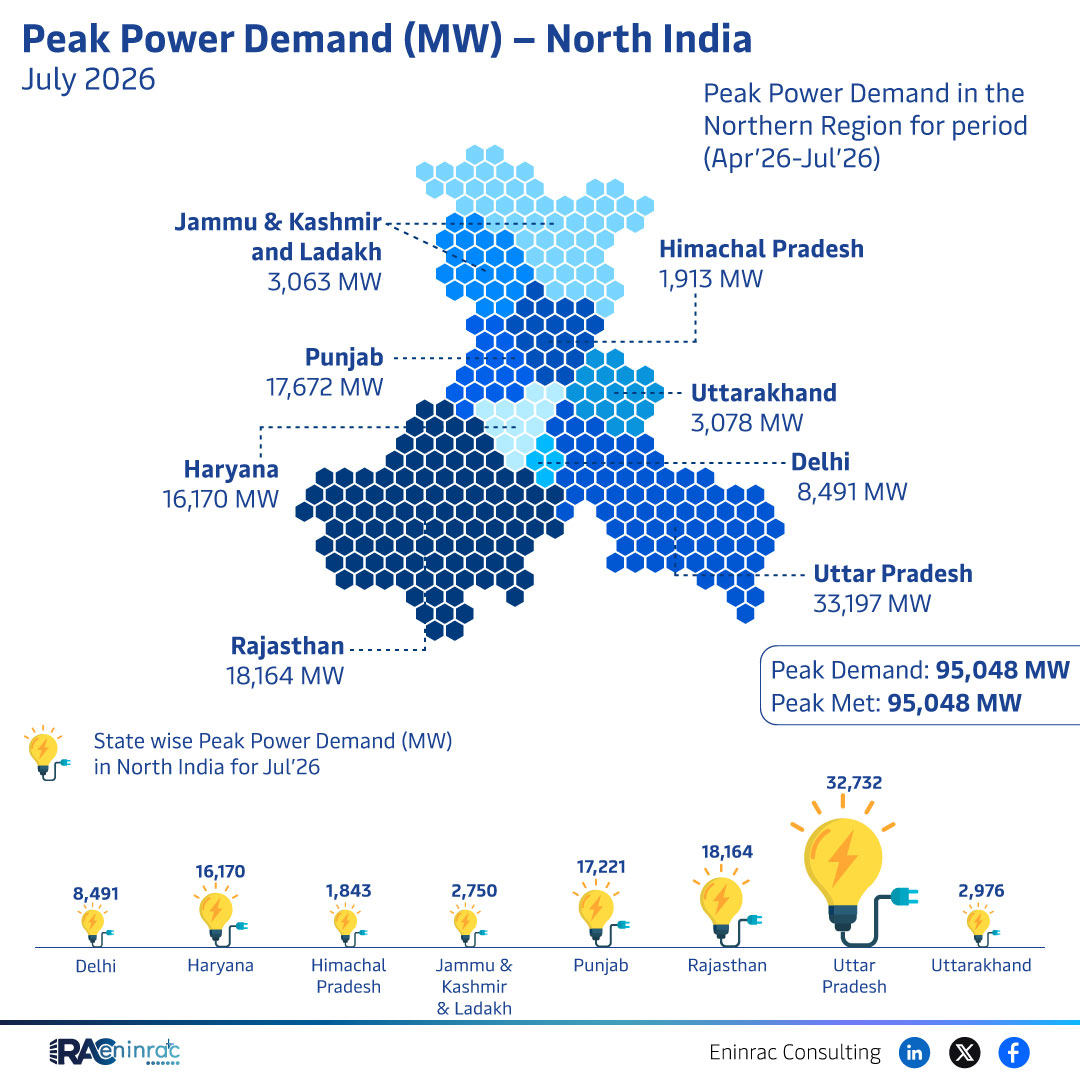
North India’s electricity system faced a historic surge in July 2026, reaching a collective peak power demand of 95,048 MW. This figure represents the highest single‑month requirement recorded for the region, driven by a combination of extreme summer temperatures, industrial activity, and increased residential consumption. Understanding the state‑wise distribution of this demand helps utilities, investors, and policymakers plan for capacity upgrades, demand‑side management, and reliable supply.
What Does the Data Reveal About This Topic?
The raw data shows that Uttar Pradesh contributed the largest share with a peak of 33,197 MW, closely followed by Delhi at 32,732 MW. Together, these two jurisdictions account for more than two‑thirds of the total regional peak. Smaller states such as Himachal Pradesh (1,843 MW) and Jammu & Kashmir & Ladakh (2,750 MW) had comparatively modest peaks, highlighting a clear north‑south disparity in consumption patterns during the hottest month.
State‑wise Power Demand Comparison
When the numbers are arranged side by side, the hierarchy becomes evident: Uttar Pradesh (33,197 MW) leads, followed by Delhi (32,732 MW), Rajasthan (18,164 MW), Punjab (17,221 MW), Haryana (16,170 MW), and Uttarakhand (8,491 MW). The western and central states show a strong industrial load, while the hill states register lower peaks due to cooler climates and smaller populations. This comparative view underscores where new generation assets or grid reinforcement are most urgently needed.
Impact on Sectors and Industries
High peak demand directly influences multiple sectors. Power generation companies must secure additional thermal or renewable capacity to avoid load‑shedding. Transmission operators face heightened stress on inter‑state corridors, especially between the high‑demand zones of Delhi and Uttar Pradesh. Investors see opportunities in battery storage, demand‑response platforms, and renewable projects that can alleviate peak pressure. Policymakers are compelled to revisit tariff structures, encourage energy‑efficient appliances, and accelerate the rollout of smart‑grid technologies.
Key Takeaways
- North India’s total July 2026 peak demand reached a record 95,048 MW.
- Uttar Pradesh and Delhi together supplied over two‑thirds of the regional peak.
- Rajasthan, Punjab, and Haryana each exceeded 16,000 MW, indicating strong industrial consumption.
- Hill states such as Himachal Pradesh and Jammu & Kashmir & Ladakh recorded peaks below 3,000 MW.
- The disparity suggests targeted capacity expansion is needed in the high‑demand belt.
- Investors can benefit from storage, demand‑response, and renewable projects aimed at peak shaving.
FAQs
Why did Uttar Pradesh record the highest peak demand?
Its large population, extensive agricultural irrigation, and a concentration of manufacturing units drive electricity use, especially during hot summer months.
How does Delhi’s peak demand compare to other Indian metros?
Delhi’s 32,732 MW peak places it among the top five Indian cities, rivaling Mumbai and Bengaluru, reflecting both commercial activity and high per‑capita consumption.
What measures can reduce peak demand in North India?
Implementing time‑of‑day tariffs, expanding rooftop solar, deploying battery storage, and promoting energy‑efficient HVAC systems are effective strategies.
Are renewable energy sources contributing to peak supply?
Renewables currently play a supplemental role; however, increased solar‑plus‑storage installations are expected to mitigate peak loads in future summer seasons.
What risks do investors face with the current peak demand trend?
Potential risks include regulatory changes, fuel price volatility for thermal plants, and grid congestion, but opportunities in clean‑tech and flexibility services remain strong.