
Introduction
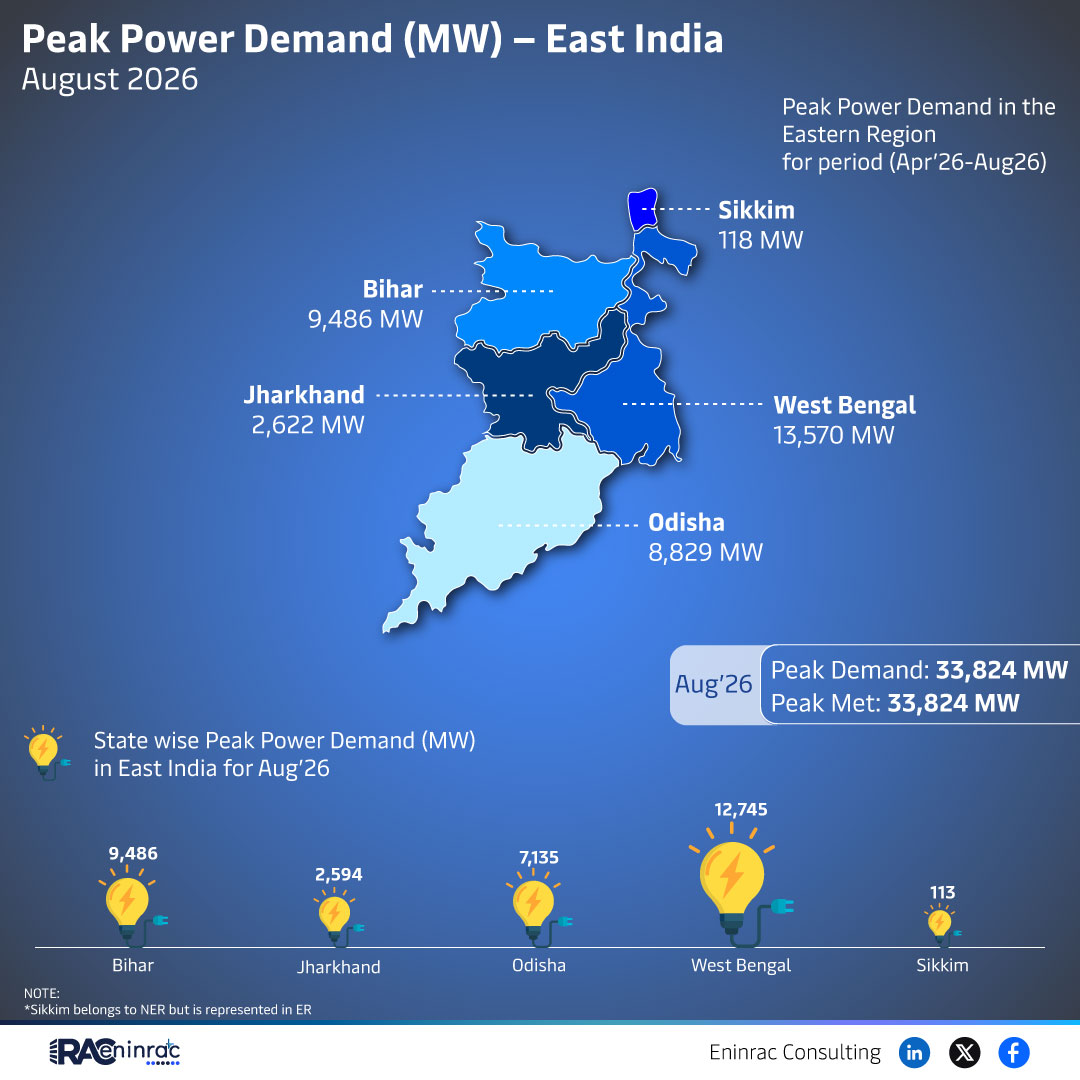
Understanding the peak power demand in East India for August 2026 is essential for energy planners, utilities, investors, and policymakers. The data shows a total demand of 33,824 megawatts across the region, highlighting the electricity consumption patterns of key states such as Bihar, Jharkhand, Odisha, West Bengal and Sikkim. This overview explains how the figures were derived, what they reveal about regional load trends, and why they matter for future grid expansion and reliability. Readers will learn which states contribute the most to the peak load, how the demand compares with previous months, and what implications arise for supply planning and investment decisions.
What Does the Data Reveal About This Topic?
What does the August 2026 East India peak power demand data tell us about the region’s electricity needs? The answer is that the combined peak of 33,824 MW indicates a strong upward trajectory in load, driven primarily by industrial growth in Bihar and high residential consumption in West Bengal. Jharkhand and Odisha also posted significant peaks, while Sikkim, though a smaller state, registers a notable demand for its size. The numbers suggest that the regional grid will need additional generation and transmission capacity to maintain stability during summer peak periods.
Statewise Peak Power Demand Comparison
When the statewise figures are examined side by side, Bihar emerges as the clear leader with a peak of 9,486 MW, followed closely by West Bengal at 13,570 MW. Odisha’s demand reaches 8,829 MW, while Jharkhand records 2,622 MW and Sikkim contributes 118 MW. The total of 33,824 MW reflects the combined effect of these individual peaks. The disparity between the highest and lowest states underscores the diverse energy profiles within East India, where densely populated and industrialized states drive the bulk of the load, and smaller or less industrialized regions add comparatively modest demand.
Impact on Sectors and Industries
The elevated peak demand influences several sectors. Power generation companies must secure additional capacity, often turning to combined‑cycle gas plants or renewable projects to meet the short‑term surge. Transmission operators face the challenge of reinforcing lines to avoid bottlenecks, especially between Bihar and West Bengal. Investors see opportunities in financing new infrastructure, while policymakers need to design demand‑side management programs to curb peak usage. For consumers, the heightened load can translate into higher tariffs during peak periods unless mitigated by efficient pricing mechanisms and smart‑grid solutions.
Key Takeaways
- Total East India peak demand reached 33,824 MW in August 2026.
- Bihar contributed the highest state peak at 9,486 MW.
- West Bengal recorded 13,570 MW, the largest single‑state figure.
- Odisha, Jharkhand and Sikkim together added 11,569 MW to the regional load.
- The data signals a growing need for additional generation and transmission capacity.
- Stakeholders across generation, transmission, investment and policy must plan for sustained peak growth.
FAQs
Why is August a critical month for power demand in East India?
Summer temperatures increase cooling load, industrial activity peaks, and agricultural irrigation adds to consumption.
How does Bihar’s peak compare to the overall regional demand?
Bihar’s 9,486 MW accounts for roughly 28 % of the total 33,824 MW, making it the single largest contributor.
What role does Sikkim play in the East India demand profile?
Although small, Sikkim’s 118 MW demonstrates that even lower‑demand states affect grid balancing and must be included in planning.
What measures can utilities take to manage such high peak loads?
Utilities can implement demand‑response programs, promote energy‑efficient appliances, and invest in flexible generation assets.
Are renewable energy sources reflected in the August 2026 peak demand?
The data represents total demand; integrating more renewable capacity will be essential to meet future peaks sustainably.