
Introduction
The recent release of state‑wise figures for electric vehicle charging points (EVPCS) installed by three operating‑maintenance companies (OMCs) under the FAME‑II scheme provides a clear snapshot of how the West Indian region is advancing its clean‑energy transport agenda. Understanding where charging infrastructure is concentrated helps policymakers, investors, and industry participants gauge progress, identify gaps, and plan future deployments. This article walks through the numbers, interprets the trends, and explains the broader impact on the energy and mobility sectors.
What Does the Data Reveal About This Topic?
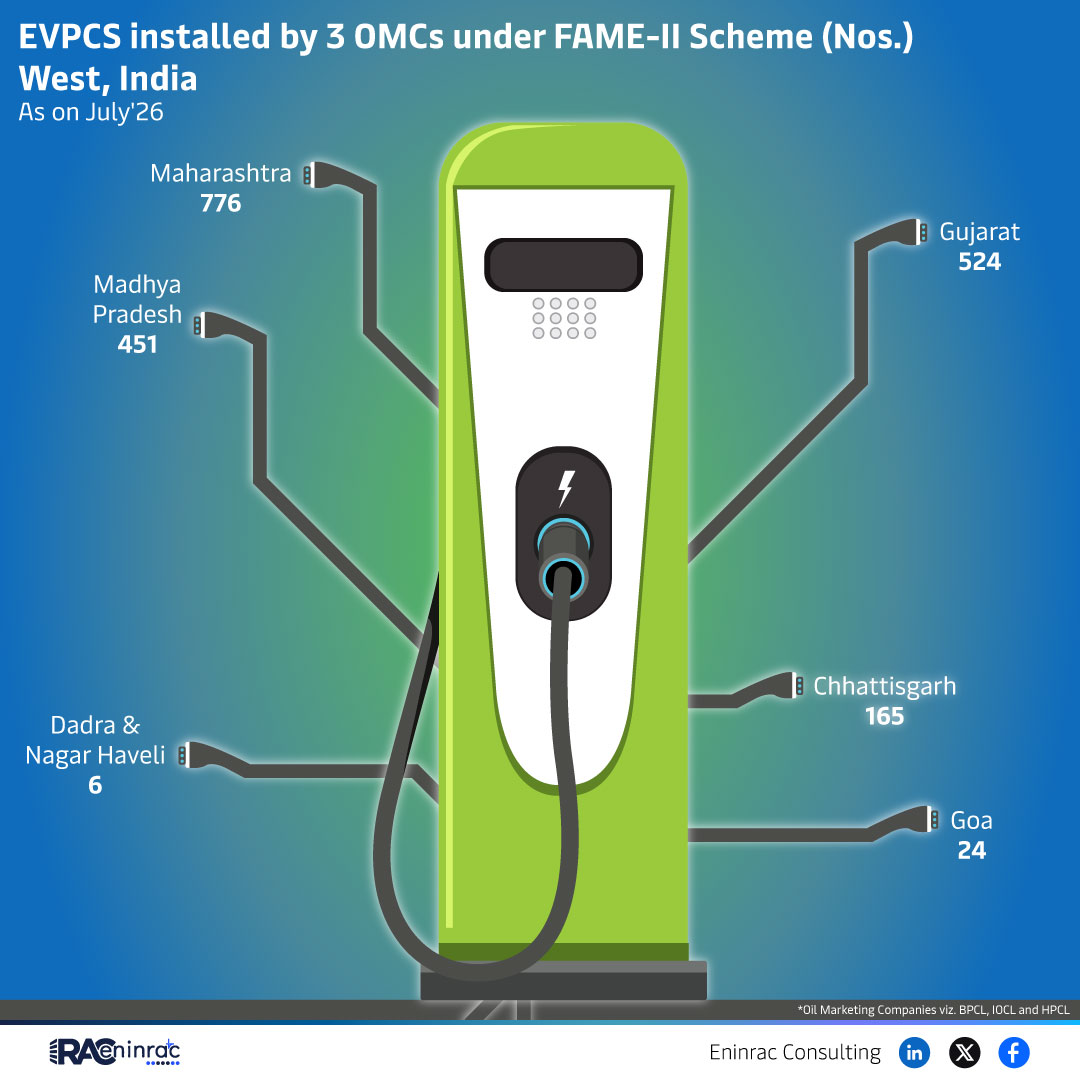
The data shows that Maharashtra leads with 776 EVPCS, followed by Gujarat with 524, Madhya Pradesh with 451, and Dadra & Nagar Haveli with 165 installations. Chhattisgarh’s figure was not disclosed in the source, indicating either a reporting lag or a lower deployment level. The question that arises is: why does Maharashtra dominate the installation count, and what does this mean for regional electrification efforts? The answer lies in a combination of higher vehicle adoption rates, proactive state policies, and greater private‑sector participation.
Regional Distribution of EVPCS Installations in West India
When the numbers are placed side by side, a stark gradient emerges. Maharashtra’s 776 points represent roughly 42% of the total reported installations across the five regions, suggesting that the state’s market incentives and dense urban corridors are fueling rapid charger roll‑out. Gujarat follows with about 28% of the total, reflecting its strong manufacturing base and early adoption of electric fleets. Madhya Pradesh, with 451 stations, accounts for 24% and highlights the growing interest in EVs beyond coastal hubs. Dadra & Nagar Haveli, despite its small size, contributes 9% of the count, underscoring the effectiveness of targeted subsidies in smaller union territories. The missing Chhattisgarh data prevents a complete picture, but the existing figures already illustrate a clear north‑south‑west corridor of charging infrastructure development.
Impact on Sectors and Industries
The surge in EVPCS directly influences several key sectors. For the automotive industry, expanded charging networks reduce range anxiety, encouraging both fleet operators and private consumers to switch to electric models. Renewable energy firms see new opportunities to integrate solar‑powered chargers, aligning with India’s broader clean‑energy targets. Financial institutions and investors are attracted to the predictable cash flows from OMC‑managed stations, especially under the guaranteed revenue models embedded in FAME‑II. Meanwhile, policymakers can leverage the state‑wise data to fine‑tune incentive structures, ensuring that lagging regions receive additional support to achieve equitable infrastructure coverage across West India.
Key Takeaways
- Maharashtra leads with 776 EVPCS, driving almost half of the reported installations.
- Gujarat and Madhya Pradesh together account for over 50% of the total, showing strong regional momentum.
- Dadra & Nagar Haveli’s contribution highlights the impact of focused subsidies in smaller territories.
- Absent data for Chhattisgarh suggests a need for improved reporting mechanisms.
- State‑wise insights help align future investments with areas of highest demand.
- Expanded charger networks are catalyzing broader adoption of electric vehicles across automotive, renewable, and finance sectors.
FAQs
What is the FAME‑II scheme?
FAME‑II (Faster Adoption and Manufacturing of Hybrid & Electric Vehicles) is a government program that provides financial incentives for EV purchases and supports the rollout of charging infrastructure across India.
Why does Maharashtra have the highest number of EVPCS?
The state benefits from higher electric vehicle demand, aggressive policy incentives, and a larger number of private and public charging operators.
How are the numbers of EVPCS verified?
Operating‑maintenance companies submit quarterly reports to the Ministry of Power, which consolidates the data and publishes it under the FAME‑II monitoring framework.
Can the missing data for Chhattisgarh affect policy decisions?
Yes, incomplete data can lead to misallocation of funds; accurate reporting is essential for targeted interventions.
What role do investors play in the expansion of EV charging stations?
Investors provide capital for infrastructure projects, often attracted by guaranteed revenue streams and the long‑term growth potential of the EV market.