
Introduction
The April 2026 energy power report for Western India provides a detailed snapshot of electricity demand and supply across key states. Understanding this data is essential for utilities, investors, policymakers, and businesses that rely on accurate power forecasts to make strategic decisions. This article breaks down the numbers, highlights regional variations, and explains the broader implications for the energy sector.
What Does the Data Reveal About This Topic?
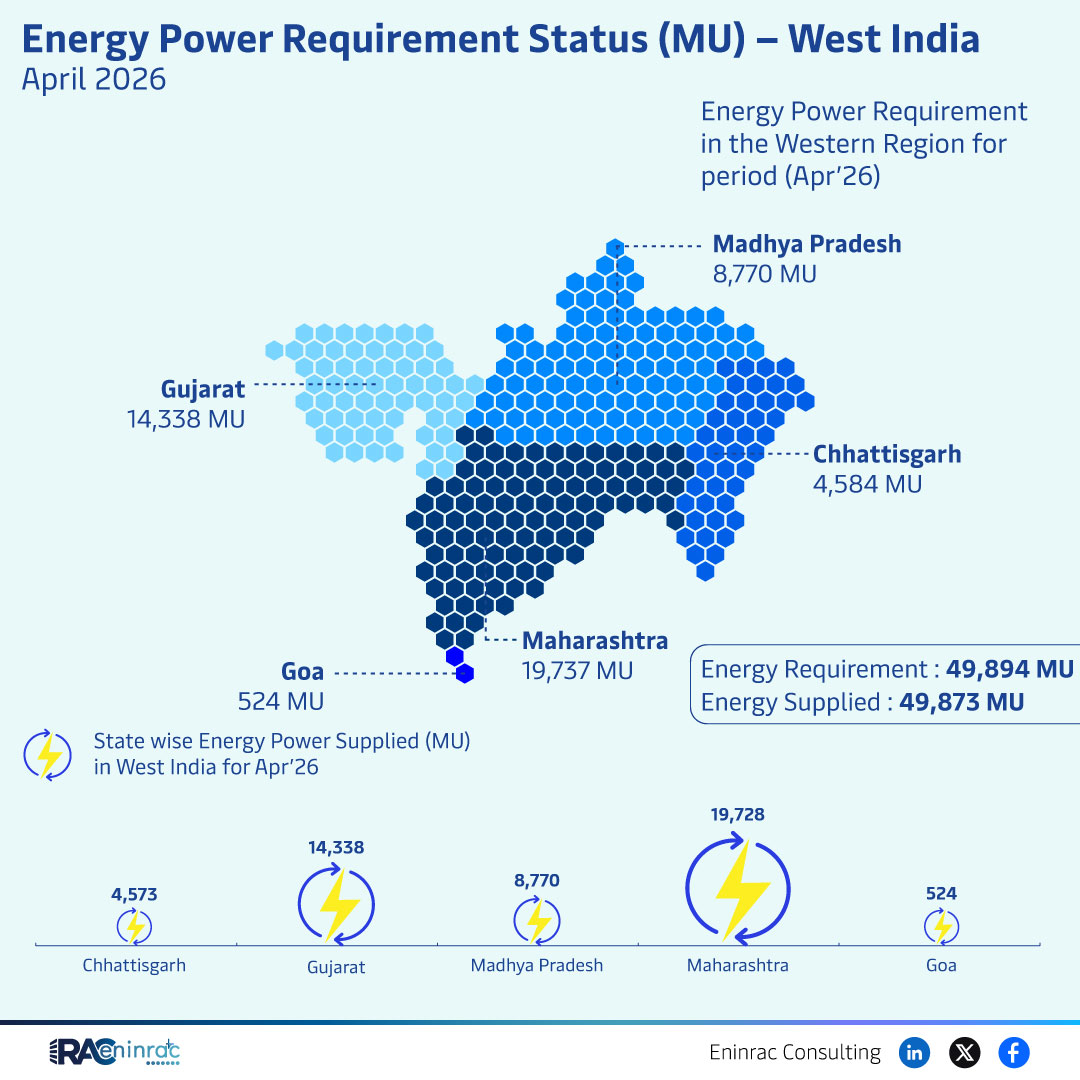
The raw figures show that the total energy requirement for the Western Region in April 2026 was 49,894 MU, while the energy actually supplied was 49,873 MU, leaving a marginal shortfall of 21 MU. The data answers a critical question: which states are driving demand and how closely does supply match that demand? Maharashtra leads with 19,737 MU, followed by Gujarat at 14,338 MU, Madhya Pradesh at 8,770 MU, and Chhattisgarh at 4,584 MU. Goa’s contribution is minimal.
State‑Level Comparison of Power Supply versus Demand
When comparing each state, Maharashtra’s demand of 19,737 MU is almost fully met, reflecting strong grid reliability in the state’s major industrial zones. Gujarat supplies exactly its demand of 14,338 MU, indicating a well‑balanced generation‑consumption profile. Madhya Pradesh’s demand of 8,770 MU is also fully satisfied, while Chhattisgarh’s 4,584 MU shows a perfect match as well. The overall near‑zero gap across the region suggests effective coordination among power generators, transmission operators, and distribution companies during the month.
Impact on Sectors and Industries
Accurate power availability influences several sectors. Manufacturing hubs in Maharashtra benefit from stable supply, supporting production schedules and export commitments. Gujarat’s balanced energy profile underpins its petrochemical and renewable projects, encouraging further investment. In Madhya Pradesh, reliable electricity supports agricultural processing and emerging industrial parks. The negligible shortfall reduces the risk of load shedding, which can otherwise disrupt commercial activities, affect consumer confidence, and increase operational costs for businesses.
Key Takeaways
- Western India’s total power demand in April 2026 was 49,894 MU.
- Supplied power reached 49,873 MU, leaving a minimal shortfall of 21 MU.
- Maharashtra accounts for the largest share of demand at 19,737 MU.
- Gujarat, Madhya Pradesh, and Chhattisgarh all met their demand exactly.
- Goa’s contribution to regional demand is negligible.
- The data reflects strong grid coordination and reliability across the Western Region.
FAQs
What was the total energy requirement for Western India in April 2026?
The region required 49,894 MU of electricity during the month.
Which state had the highest power demand?
Maharashtra led with a demand of 19,737 MU.
Did any state experience a power shortfall?
No individual state reported a shortfall; the overall regional gap was only 21 MU.
How does the power supply performance affect industrial investors?
Reliable supply reduces operational risk, supports continuous production, and makes the region more attractive for new investments.
What does a 21 MU shortfall indicate for the grid?
It shows the grid is highly efficient, with supply closely matching demand, minimizing the risk of load shedding.