
Introduction
India’s on‑river pumped storage capacity is gaining momentum as developers accelerate projects across key states. By September 2026, several large‑scale facilities are under construction, promising to add thousands of megawatts of flexible generation to the national grid. This article explains the current capacity landscape, highlights regional differences, and examines how the new projects support India’s renewable energy goals. The projects also demonstrate how India is leveraging its riverine topography to create cost‑effective storage solutions, a strategy that many emerging economies are beginning to emulate.
What Does the Data Reveal About This Topic?
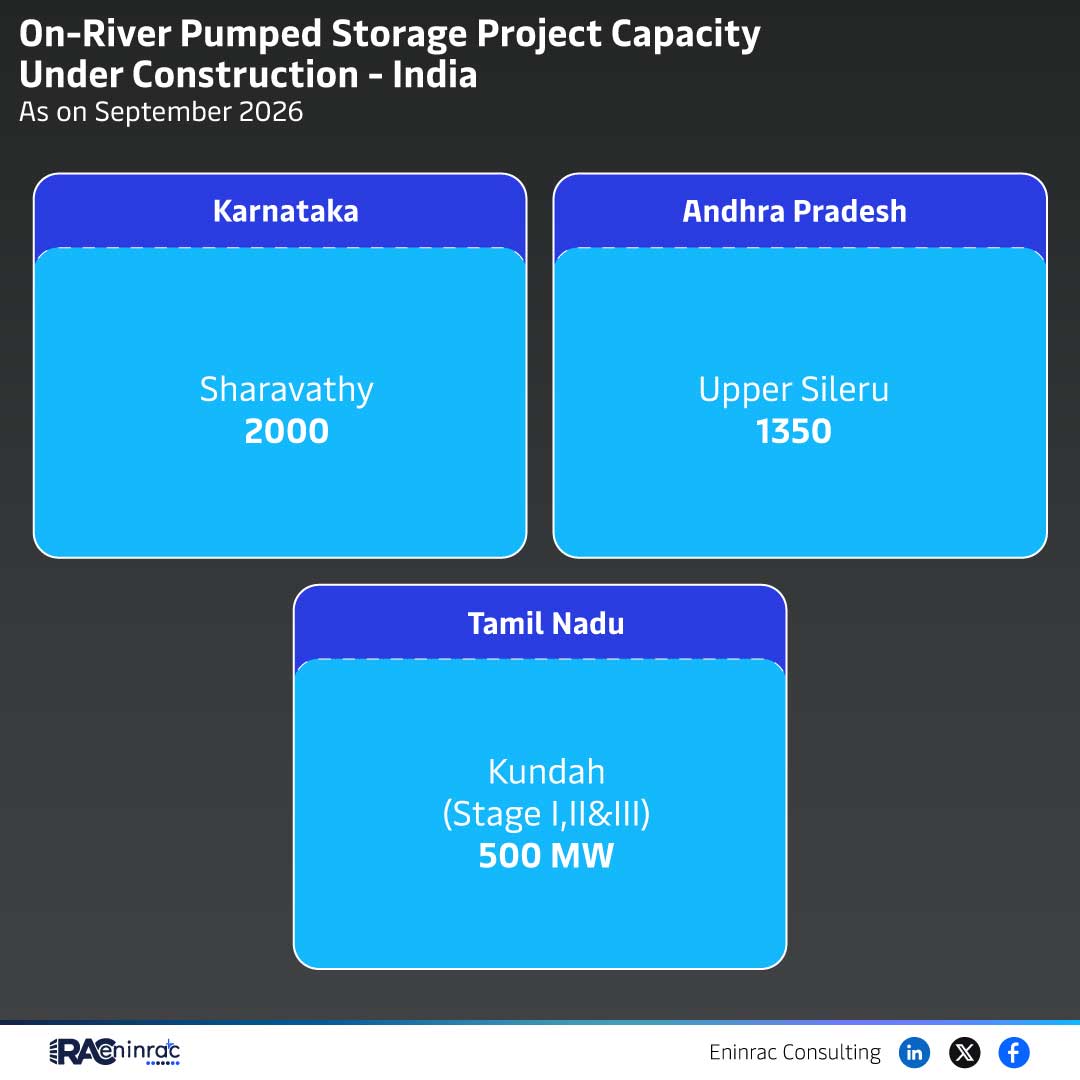
The raw data shows that Andhra Pradesh, Karnataka and Tamil Nadu host the most significant on‑river pumped storage projects in the country. Combined, these states account for roughly 3,850 MW of capacity, with the Sharavathy Upper Sileru scheme alone contributing 2,000 MW. These figures illustrate a strategic shift toward on‑river configurations rather than traditional off‑river reservoirs, reflecting environmental considerations and land‑use constraints.
Regional Capacity Comparison
In Andhra Pradesh the Sharavathy Upper Sileru project is slated for 2,000 MW, positioning the state as the leading host of on‑river pumped storage. Karnataka follows with the Sharavathy project of 1,350 MW, while Tamil Nadu’s Kundah Stage I, I1 & III adds 500 MW. The disparity reflects differing water resource availability and state‑level policy incentives, but all three regions share a common objective of bolstering grid stability. The Sharavathy projects in both Andhra Pradesh and Karnataka are part of a coordinated state‑level plan that aims to synchronize water management with power generation, while the Kundah development benefits from existing hydro infrastructure in the Nilgiris hills.
Impact on Sectors and Industries
These storage facilities enable higher penetration of intermittent renewable sources such as solar and wind by providing rapid, dispatchable power during peak demand. Investors see reduced risk, utilities gain a reliable balancing resource, and policymakers acquire a tool to meet national targets for clean energy and carbon reduction. Additionally, the construction phase stimulates local manufacturing, civil engineering, and skilled labor markets. Furthermore, the stored energy can be dispatched during night‑time demand spikes, reducing the need for costly diesel generators and improving overall system efficiency.
Key Takeaways
- India is adding nearly 4 GW of on‑river pumped storage capacity by the end of 2026.
- Andhra Pradesh leads with the 2 GW Sharavathy Upper Sileru project.
- Karnataka contributes 1.35 GW through its Sharavathy scheme.
- Tamil Nadu’s Kundah Stage I, I1 & III provides 500 MW, expanding south‑south‑west coverage.
- The projects enhance grid flexibility and support renewable integration.
- Construction activity generates economic benefits for regional supply chains.
FAQs
What is on‑river pumped storage?
It is a hydro‑electric technology that stores energy by moving water between reservoirs at different elevations along a river, releasing it to generate power when needed.
Why are these projects important for India’s energy future?
They provide large‑scale, quick‑response storage that helps balance intermittent solar and wind generation, reducing reliance on fossil‑fuel peaking plants.
Which state has the highest planned capacity?
Andhra Pradesh, with the 2 GW Sharavathy Upper Sileru project.
When are these facilities expected to become operational?
Most are slated for commissioning between 2027 and 2030, following completion of civil works and turbine installation.
How do these projects affect electricity prices?
By smoothing supply and reducing the need for expensive backup generation, they can help lower wholesale electricity prices over time.