
Introduction
The on‑river pumped storage landscape in India is entering a critical phase as several projects move from preliminary surveys to formal concurrence. As of September 2026, key initiatives in West Bengal, Odisha and the Balimela basin are flagged either under survey or approved for development. Understanding the status of these projects helps investors, policymakers and energy planners gauge future capacity additions, regional balancing of the power grid, and the role of pumped storage in supporting renewable integration. This article decodes the latest data, highlights regional differences, and outlines the strategic implications for the Indian energy sector.
What Does the Data Reveal About This Topic?
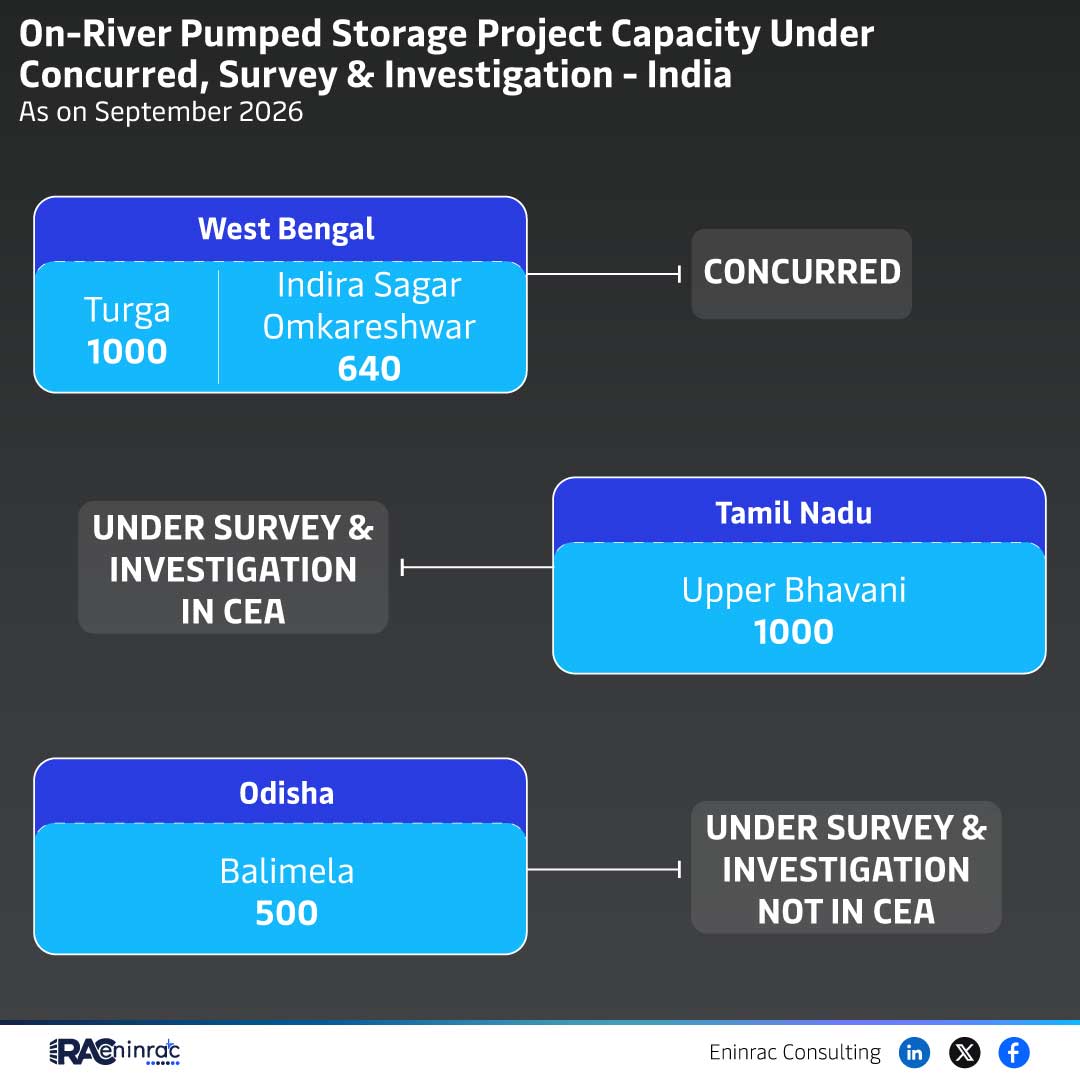
What does the raw data tell us about the progress of on‑river pumped storage projects in India? It shows that multiple sites are in distinct stages: some, like the project in West Bengal, have reached a concurrence stage, indicating regulatory approval and readiness for construction, while others in Odisha and the Balimela area remain under detailed survey and environmental investigation. The capacity figures, although limited in the snippet, suggest substantial potential, with numbers such as 640 MW under consideration, underscoring the growing importance of pumped storage for grid stability.
Regional Survey and Concurrence Overview
A comparative look at the three regions reveals divergent trajectories. West Bengal appears to be the most advanced, with projects marked as "concurred," meaning they have cleared key regulatory hurdles. In contrast, Odisha hosts projects that are still under survey, reflecting ongoing feasibility studies and environmental assessments. The Balimela site, located in a river‑rich zone, is listed under investigation, indicating early‑stage planning and data collection. These differences hint at varying state‑level incentives, resource availability, and stakeholder engagement, shaping the speed at which each project moves toward implementation.
Impact on Energy Sectors and Investment Strategies
The advancement of on‑river pumped storage projects influences several sectors. For the renewable energy market, these installations provide large‑scale storage that can absorb excess solar and wind generation, smoothing supply fluctuations. Conventional power generators benefit from ancillary services such as frequency regulation and peak shaving. Financial investors see new avenues for long‑term, infrastructure‑linked returns, especially as government policies favor clean‑energy storage. Policymakers can leverage these projects to meet national targets for renewable integration and reduce reliance on fossil‑fuel peaker plants, thereby supporting climate commitments and energy security.
Key Takeaways
- West Bengal projects have achieved concurrence, indicating near‑term construction potential.
- Odisha projects remain under survey, highlighting ongoing feasibility and environmental work.
- Balimela site is in the investigation phase, suggesting early planning and data gathering.
- Collectively, the projects point to a substantial increase in pumped storage capacity by the end of the decade.
- These installations will enhance grid flexibility, support renewable integration, and create investment opportunities.
- State‑level policies and river resource availability drive the pace of project development across regions.
FAQs
What is on‑river pumped storage?
On‑river pumped storage uses existing river channels to store electricity by moving water between upper and lower reservoirs, enabling large‑scale energy storage without constructing a full dam.
Why are West Bengal projects ahead of others?
West Bengal has streamlined approval processes and favorable topography, allowing projects to reach concurrence faster than in states where surveys are still ongoing.
How does pumped storage support renewable energy?
It stores excess solar or wind power during low demand periods and releases it during peak demand, helping balance the grid and reduce curtailment of renewable generation.
What are the investment risks for these projects?
Risks include regulatory delays, environmental clearances, river water rights, and construction cost overruns, especially for sites still under investigation.
When can we expect these projects to be operational?
Concurred projects in West Bengal could become operational within 2‑3 years, while survey‑stage projects in Odisha and Balimela may take 5‑7 years pending approvals.