
Introduction
The on‑river pumped storage capacity landscape in India is evolving rapidly as new projects move toward completion. As of June 2026, three major sites in Andhra Pradesh, Karnataka and Tamil Nadu are under construction, collectively adding thousands of megawatts to the nation’s renewable power mix. This article explains the significance of these projects, breaks down the capacity figures, and explores the broader implications for energy storage, grid stability and investment trends.
What Does the Data Reveal About This Topic?
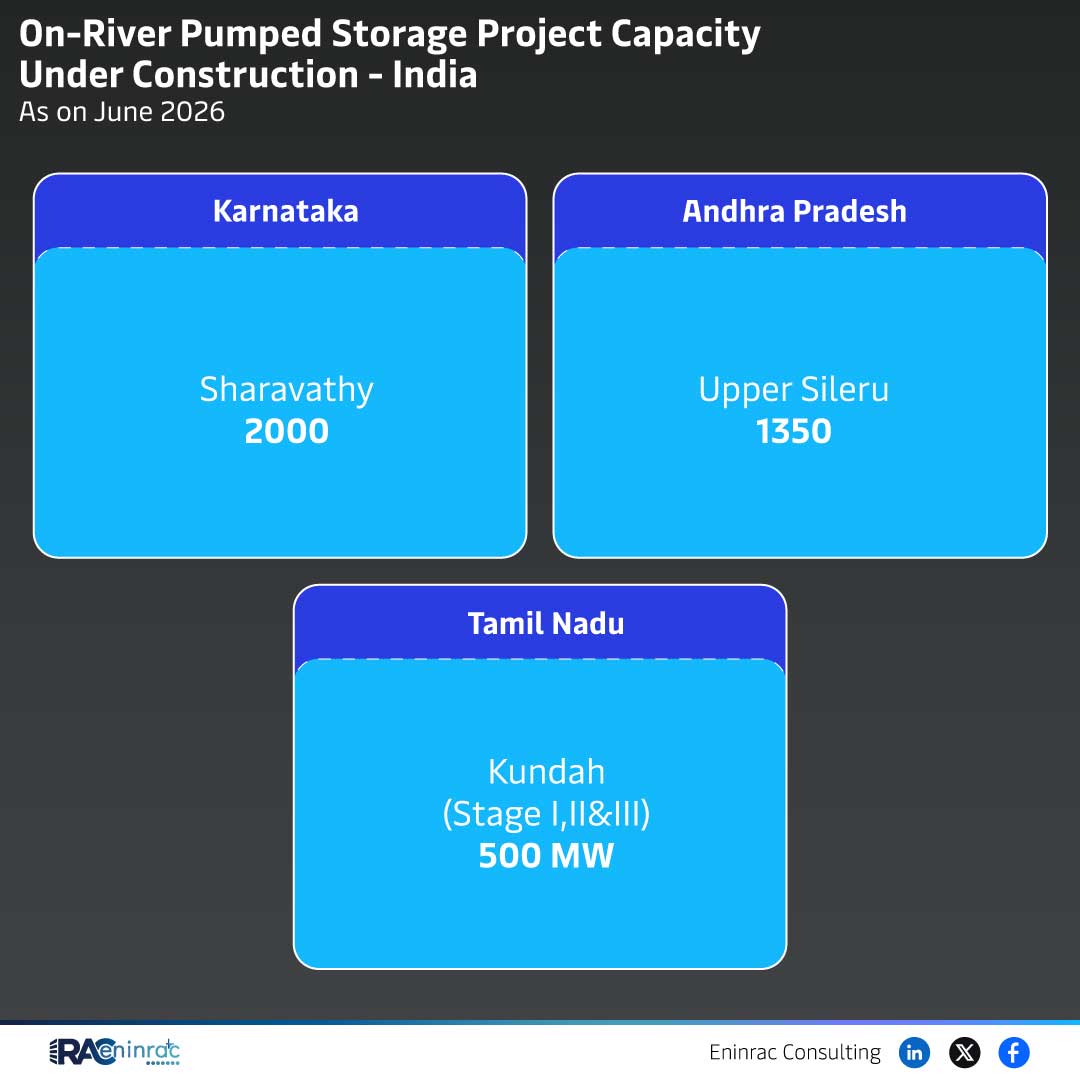
The data shows that India’s on‑river pumped storage capacity under construction totals 3,850 MW, with 2,000 MW planned for Andhra Pradesh, 1,350 MW for Karnataka’s Sharavathy Upper Sileru scheme, and a 500 MW Kundah project in Tamil Nadu. The figures illustrate a clear regional focus on leveraging river corridors for large‑scale energy storage, highlighting the country’s commitment to expanding flexible, low‑carbon generation.
Regional Capacity Distribution of On‑River Pumped Storage Projects
Andhra Pradesh leads with a 2,000 MW facility, reflecting the state’s abundant river flow and supportive policy framework. Karnataka follows with the Sharavathy Upper Sileru project, delivering 1,350 MW, positioning the state as a key player in hydro‑electric diversification. Tamil Nadu’s Kundah Stage I, I1 & III adds a modest 500 MW, yet its strategic location supports southern grid balancing. The distribution underscores a trend where southern Indian states are capitalising on existing river infrastructure to meet rising renewable demand while enhancing storage capabilities.
Impact on Sectors and Industries
These on‑river pumped storage installations affect multiple sectors. Utilities gain reliable peak‑shaving resources, reducing reliance on fossil‑fuel peaker plants. Renewable developers benefit from an ancillary storage option that smooths intermittent solar and wind output. Investors see attractive long‑term contracts and stable cash flows, encouraging further capital inflow into the energy sector. Policymakers can meet national targets for renewable integration and carbon reduction more confidently, while equipment manufacturers experience heightened demand for turbines, pumps and control systems.
Key Takeaways
- India adds 3,850 MW of on‑river pumped storage capacity under construction.
- Andhra Pradesh contributes the largest single project at 2,000 MW.
- Karnataka’s Sharavathy Upper Sileru scheme supplies 1,350 MW.
- Tamil Nadu’s Kundah project offers 500 MW, supporting southern grid stability.
- These projects enhance renewable integration and reduce peak‑load dependency on fossil fuels.
- Capital investment and manufacturing demand are expected to rise alongside project completions.
FAQs
What is on‑river pumped storage?
It is a form of hydro‑electric energy storage that uses river water to pump water to an upper reservoir during low demand and generates power when released back downstream.
Why focus on Andhra Pradesh, Karnataka and Tamil Nadu?
These states have favorable river gradients, existing infrastructure, and supportive policies, making them ideal for large‑scale pumped storage development.
How does pumped storage support renewable energy?
It provides fast‑responding reserve capacity, smoothing out variability from solar and wind, and enables better grid balancing.
When will these projects become operational?
Most are slated for commissioning between 2027 and 2030, depending on financing, environmental clearances and construction progress.
What are the investment opportunities?
Opportunities exist in project financing, equipment supply, engineering‑procurement‑construction contracts, and long‑term power purchase agreements.