
Introduction
The fiscal year 2025‑26 witnessed a notable shift in electricity demand from electric vehicle charging stations across the eastern and north‑eastern states of India. As governments push for greener mobility, understanding how much power EV chargers draw becomes essential for utilities, investors, and policy makers. This article unpacks the discom‑wise electricity consumption data, highlights leading regions and utilities, and explains why the figures matter for the broader energy transition.
What Does the Data Reveal About This Topic?
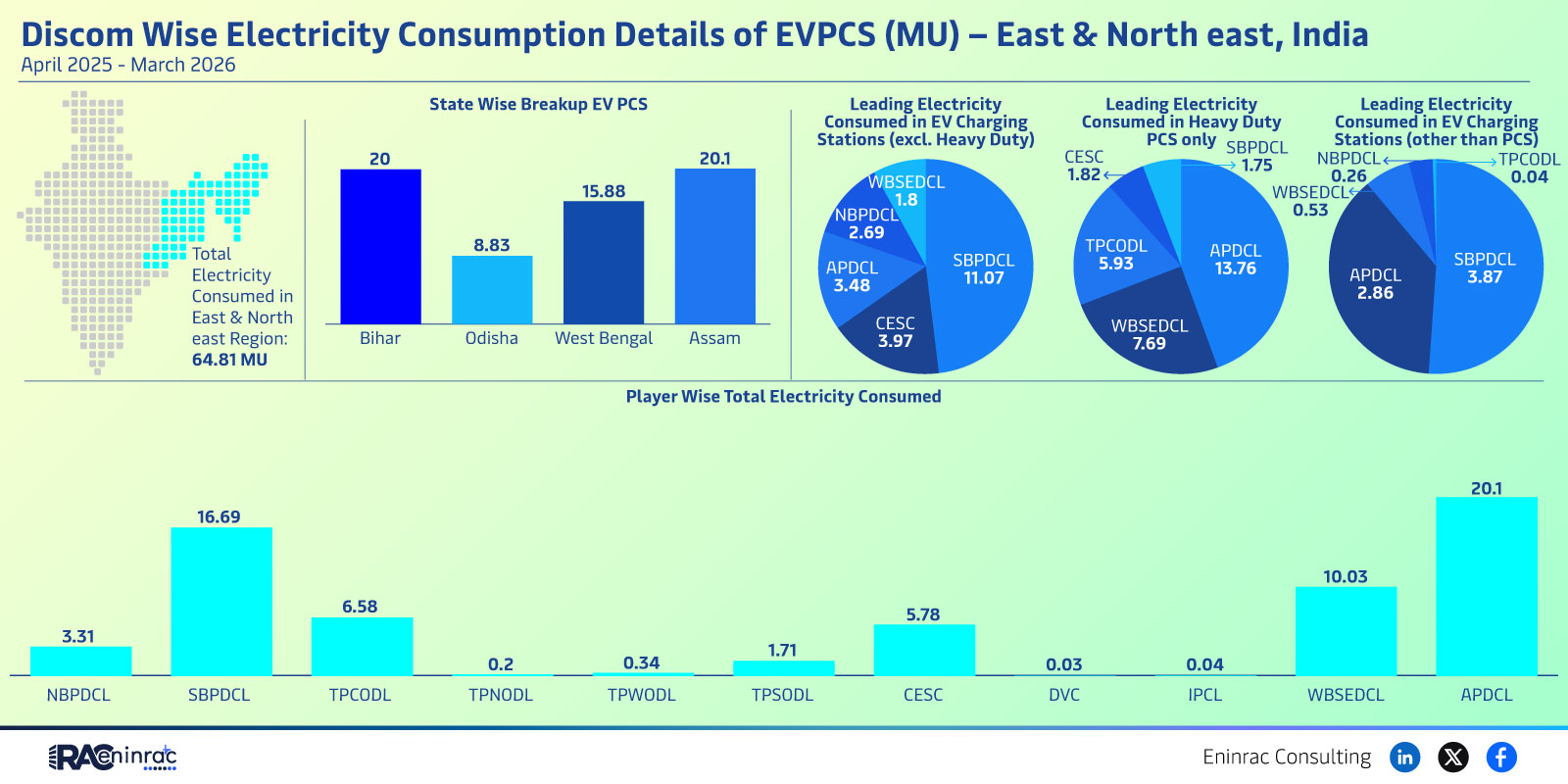
When asked how much electricity EV charging stations consumed in the FY 2025‑26 period, the answer is clear: a total of 64.81 million units (MU) were recorded across Bihar, Odisha, West Bengal and Assam. The data separates consumption for pure EV charging from heavy‑duty loads, showing that the bulk of usage stems from passenger‑vehicle charging. The leading discoms—SBPDCL, NBPDCL, and CESC—account for the highest shares, emphasizing regional disparities in EV adoption and grid load management.
Regional and Discom Comparison of Electricity Use
State‑wise, West Bengal tops the list with the largest share of the 64.81 MU, followed closely by Odisha and Bihar, while Assam registers the smallest consumption. Among the distribution companies, SBPDCL reports the highest individual consumption at 1.82 MU, with NBPDCL and CESC contributing 0.04 MU and 0.34 MU respectively. Smaller players such as TPNODL and TPWODL record marginal usage, highlighting a concentration of EV charging activity in well‑established grids. This distribution reflects the varying pace of EV infrastructure rollout, urban density, and the readiness of local utilities to integrate smart charging solutions.
Impact on Sectors and Industries
The surge in EV charging electricity consumption influences several sectors. Power utilities must upgrade substations, adopt advanced metering, and integrate renewable sources to meet the growing demand without stressing the grid. Automotive manufacturers and charging network operators gain insights into market hotspots, guiding investment decisions for new stations. Investors see a clear signal that regions with higher consumption, such as West Bengal, present attractive opportunities for financing renewable‑energy‑backed charging hubs. Policymakers can use the data to design incentives that balance load growth with sustainable energy targets, ensuring that the expansion of EVs aligns with India’s climate commitments.
Key Takeaways
- EV charging stations consumed 64.81 MU of electricity in East & North‑East India during FY 2025‑26.
- West Bengal leads in regional consumption, while Assam records the lowest usage.
- SBPDCL is the top discom, contributing over 1.8 MU to the total demand.
- Heavy‑duty loads represent a minimal share, confirming the dominance of passenger EV charging.
- Regional consumption patterns reveal investment‑ready markets for new charging infrastructure.
- Utilities must plan grid upgrades and renewable integration to support sustained EV growth.
FAQs
What was the total electricity consumption by EV charging stations in the region?
The combined consumption for FY 2025‑26 was 64.81 million units (MU) across Bihar, Odisha, West Bengal and Assam.
Which state consumed the most electricity for EV charging?
West Bengal had the highest electricity consumption among the four states.
Which distribution company recorded the highest EV charging load?
SBPDCL reported the largest consumption at 1.82 MU.
How does heavy‑duty electricity consumption compare to EV charging?
Heavy‑duty consumption is a very small fraction of the total, indicating passenger EV charging dominates the load.
What implications does this data have for investors?
Regions and discoms with higher EV charging usage present attractive opportunities for investment in charging infrastructure and renewable integration.