
Introduction
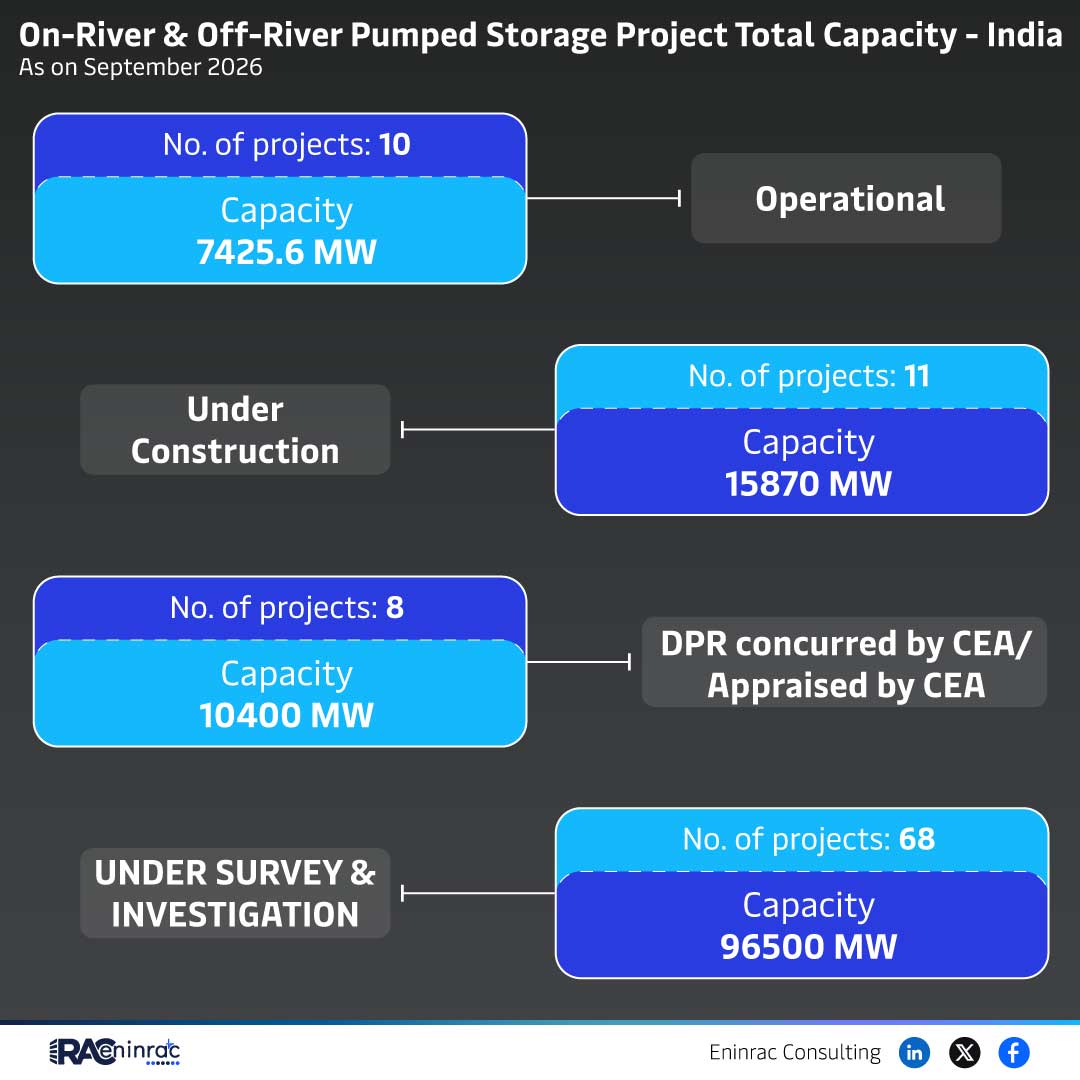
India is rapidly expanding its pumped storage portfolio, blending on‑river and off‑river schemes to strengthen grid reliability and support renewable integration. As of September 2026 the country tracks ten operational projects, eight under construction, and a massive surveyed potential of 96,500 MW. India pumped storage capacity is a critical metric for assessing the nation’s energy resilience. This overview explains the significance of these figures, the distribution of capacity, and the strategic implications for investors, policymakers, and the energy market.
What Does the Data Reveal About This Topic?
The data asks a simple question: how much pumped storage capacity does India currently have versus what is planned? The answer shows 15,870 MW already generating power, while the surveyed horizon suggests an additional 80,630 MW could be developed. The eight projects under construction are expected to bridge a significant portion of this gap, highlighting a strong pipeline that could more than double the operational base within the next decade. These figures also illustrate the pace at which the country is closing the gap between current capabilities and its ambitious storage roadmap.
Capacity Distribution Across Operational and Planned Projects
The current operational capacity of 15,870 MW represents roughly 16 % of the total surveyed potential of 96,500 MW. This disparity underscores a massive untapped reservoir of storage that can be mobilised to balance intermittent renewable generation such as wind and solar. The eight under‑construction sites collectively aim to add close to 12,000 MW, a figure that will push the operational share toward one‑quarter of the total surveyed capacity, signaling accelerated commitment from both public and private stakeholders. Regional analysis shows that the majority of completed facilities are located in the northern and western states, where topographic conditions favour gravity‑based storage.
Impact on Sectors and Industries
Expanding pumped storage directly influences several key sectors. For utilities, it provides a reliable frequency‑control mechanism and a cost‑effective alternative to fossil‑fuel peaking plants. Investors see a growing pipeline of projects that can deliver long‑term power purchase agreements and stable returns. Policymakers gain a tool to meet national renewable targets and reduce carbon intensity, while manufacturers of turbines, generators, and ancillary equipment stand to benefit from increased orders. Furthermore, the increased storage capacity is expected to reduce reliance on imported fuel, lower emissions, and stimulate local job creation in engineering and construction sectors. Consumers ultimately experience a more resilient grid with fewer outages and smoother electricity pricing.
Key Takeaways
- Operational capacity stands at 15,870 MW, about 16 % of surveyed potential.
- Surveyed total capacity reaches 96,500 MW, indicating large future growth.
- Eight projects under construction aim to add roughly 12,000 MW.
- Projected operational share could rise to around 25 % after completions.
- Pumped storage supports renewable integration and grid stability across India.
- Investment and policy focus are intensifying to unlock untapped storage.
FAQs
What is pumped storage and why is it important for India?
Pumped storage moves water between reservoirs to store energy, providing quick‑response power that balances solar and wind fluctuations.
How many pumped storage projects are operational in India as of 2026?
Ten projects are operational, delivering a combined capacity of 15,870 MW.
What is the total surveyed pumped storage capacity in India?
The surveyed potential totals 96,500 MW across on‑river and off‑river sites.
How many pumped storage projects are currently under construction?
Eight projects are under construction, expected to add about 12,000 MW of capacity.
How does pumped storage affect renewable energy goals in India?
It provides firm, dispatchable power that smooths renewable intermittency, helping the nation meet its clean‑energy targets.